Shares declined on Monday in Asia following reports from China that investment weakened in November, highlighting ongoing softness in demand within the world's second-largest economy. This downturn came after a challenging close to the previous week on Wall Street, where sharp drops in leading artificial-intelligence-related stocks pulled major indexes down from their recent record highs.
In Tokyo, the Nikkei 225 index dropped 1.5% to close at 50,092.10, as market participants awaited the Bank of Japan's potential decision on raising its benchmark interest rate later in the week.
The Bank of Japan's quarterly “tankan” survey, released on Monday and covering sentiment among large manufacturers, indicated a modest improvement in business outlook. The diffusion index, which measures the percentage of companies reporting favourable conditions minus those reporting unfavourable ones, rose to 15 from 14 in the previous quarter. This marked the highest level in four years, according to the central bank.
Although the survey reflected overall progress, projections for the upcoming quarter appeared less optimistic.
Japan's economy had contracted at an annualised rate of 2.3% in the July-September period, representing the first quarterly decline in six quarters. However, an agreement reached between Japan and the United States regarding higher tariffs proposed by President Donald Trump—capping baseline import duties at 15%—has alleviated some uncertainty for major Japanese automakers and electronics firms.
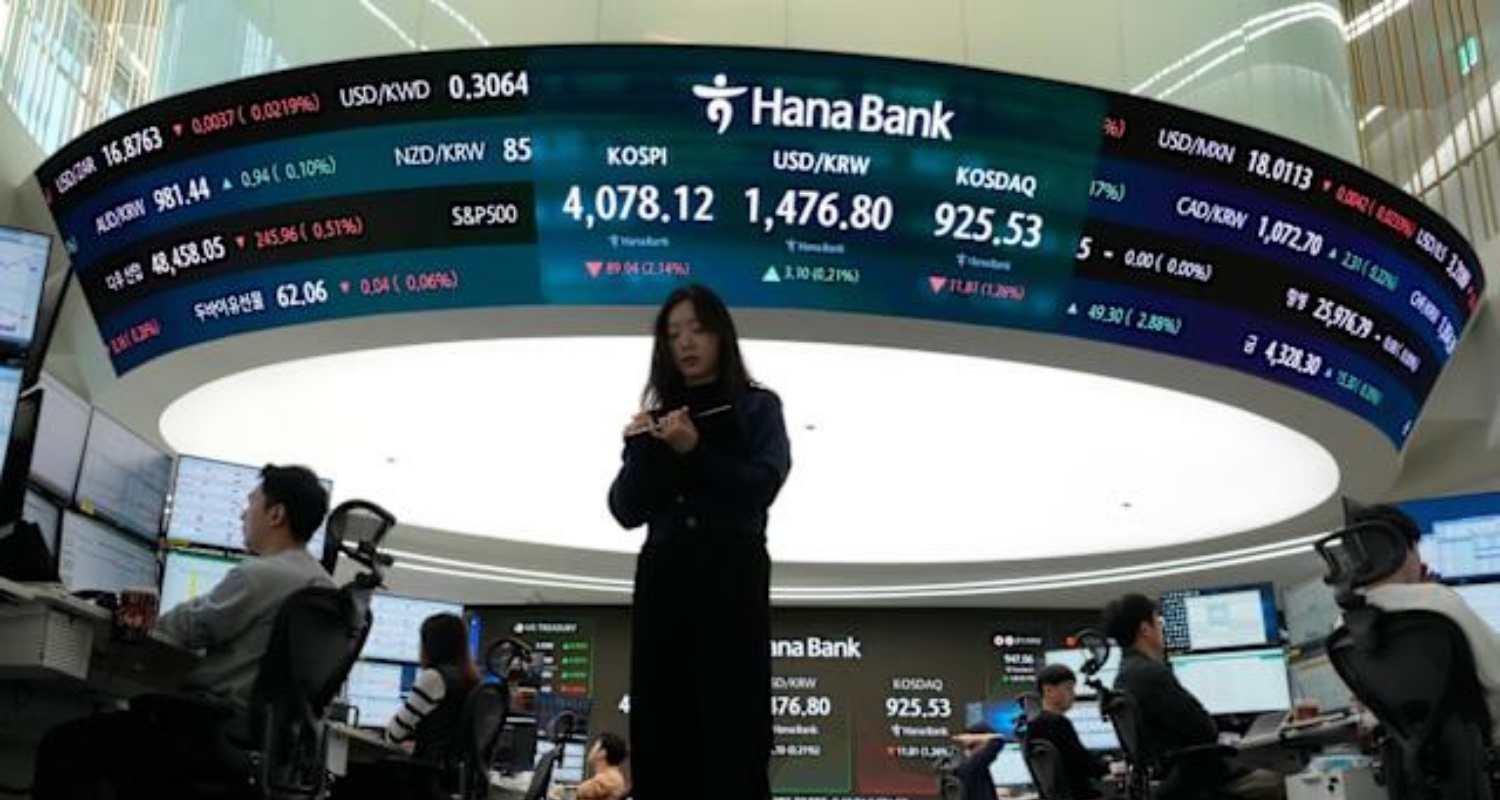
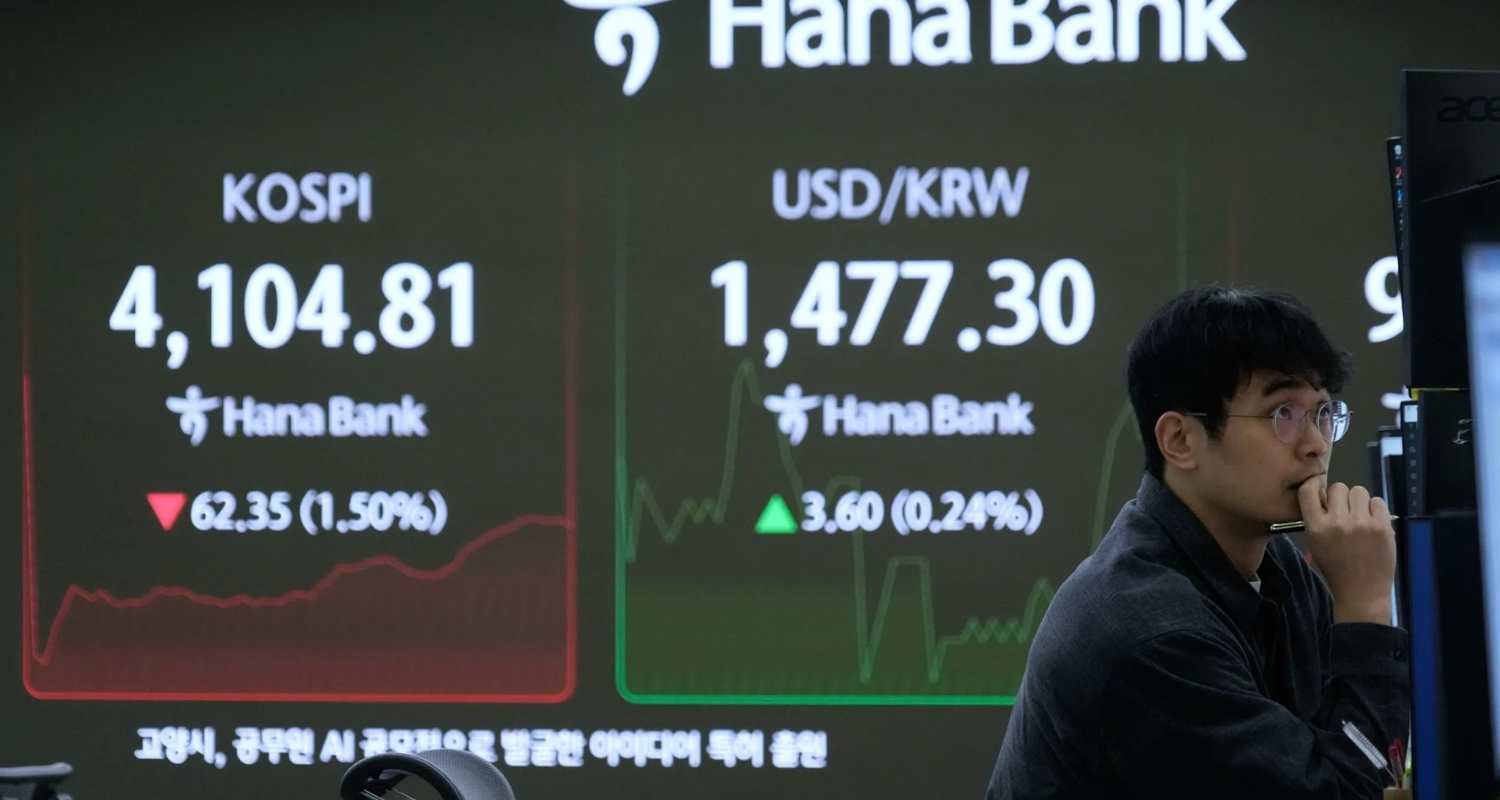
Analysts noted that the improved survey results could encourage the Bank of Japan to proceed with a planned 0.25 percentage point increase in its key interest rate, bringing it to 0.75%.In South Korea, the Kospi index fell 1.2% to 4,117.68.
Hong Kong's Hang Seng index decreased 0.7% to 25,786.45. Meanwhile, the Shanghai Composite index managed a slight gain of 0.1%, finishing at 3,892.45.
On Monday, Chinese authorities reported that fixed-asset investment—encompassing areas such as factory equipment and infrastructure—declined 2.6% in November compared to the prior year. This figure suggested a cumulative year-on-year drop of 11.1% for such investments over the first 11 months of the year.
Retail sales increased 4% over the January-November period from a year earlier, and industrial output rose 4.8%, according to official data.
These figures emerged shortly after a high-level meeting of China's Communist Party leadership the previous week, which produced no significant new policy announcements beyond commitments to further efforts aimed at stimulating consumer spending and investment to bolster domestic demand.
“Policy support should help drive a partial recovery in the coming months, but this probably won't prevent China's growth from remaining weak across 2026 as a whole,” Zichun Huang of Capital Economics said in a commentary.
Other regional markets also saw declines: Australia's S&P/ASX 200 fell 0.7% to 8,640.60, while Taiwan's benchmark index dropped 1.1%.
U.S. futures indicated a modest rebound, with those for the S&P 500 and Dow Jones Industrial Average each up 0.3%.
On Friday, Wall Street experienced its weakest session in three weeks. The S&P 500 declined 1.1% from its all-time high, closing at 6,827.41. Technology-heavy stocks led the losses, dragging the Nasdaq Composite down 1.7% to 23,195.17. The Dow Jones Industrial Average shed 0.5%, ending at 48,458.05.
Also Read: Gems, jewellery exports grew 20 pc in Nov: Export council
Broadcom proved a major drag on the market, tumbling 11.4% despite reporting quarterly profits that exceeded analyst expectations. Analysts described the results as solid, with CEO Hock Tan highlighting robust 74% growth in AI semiconductor revenue as a key driver.
The decline intensified concerns about the sustainability of the AI boom, building on worries sparked the prior day when Oracle shares fell nearly 11% after similarly beating profit forecasts.
Nvidia dropped 3.3%, and Oracle declined an additional 4.5%.
In contrast, stocks tied to U.S. consumer spending held up relatively well on Friday, with two out of every five S&P 500 components posting gains. Easing oil prices during the week may have supported this resilience by potentially reducing pressure on household expenses.
In early Monday commodity trading, U.S. benchmark crude oil rose 30 cents to $57.74 per barrel. Brent crude, the global standard, increased 29 cents to $61.41 per barrel. Currency markets saw the U.S. dollar weaken slightly to 155.37 Japanese yen from 155.75 yen late Friday. The euro remained steady at $1.1739.
Also Read: Inflation data, foreign investment, global trends to drive stocks

 Follow us