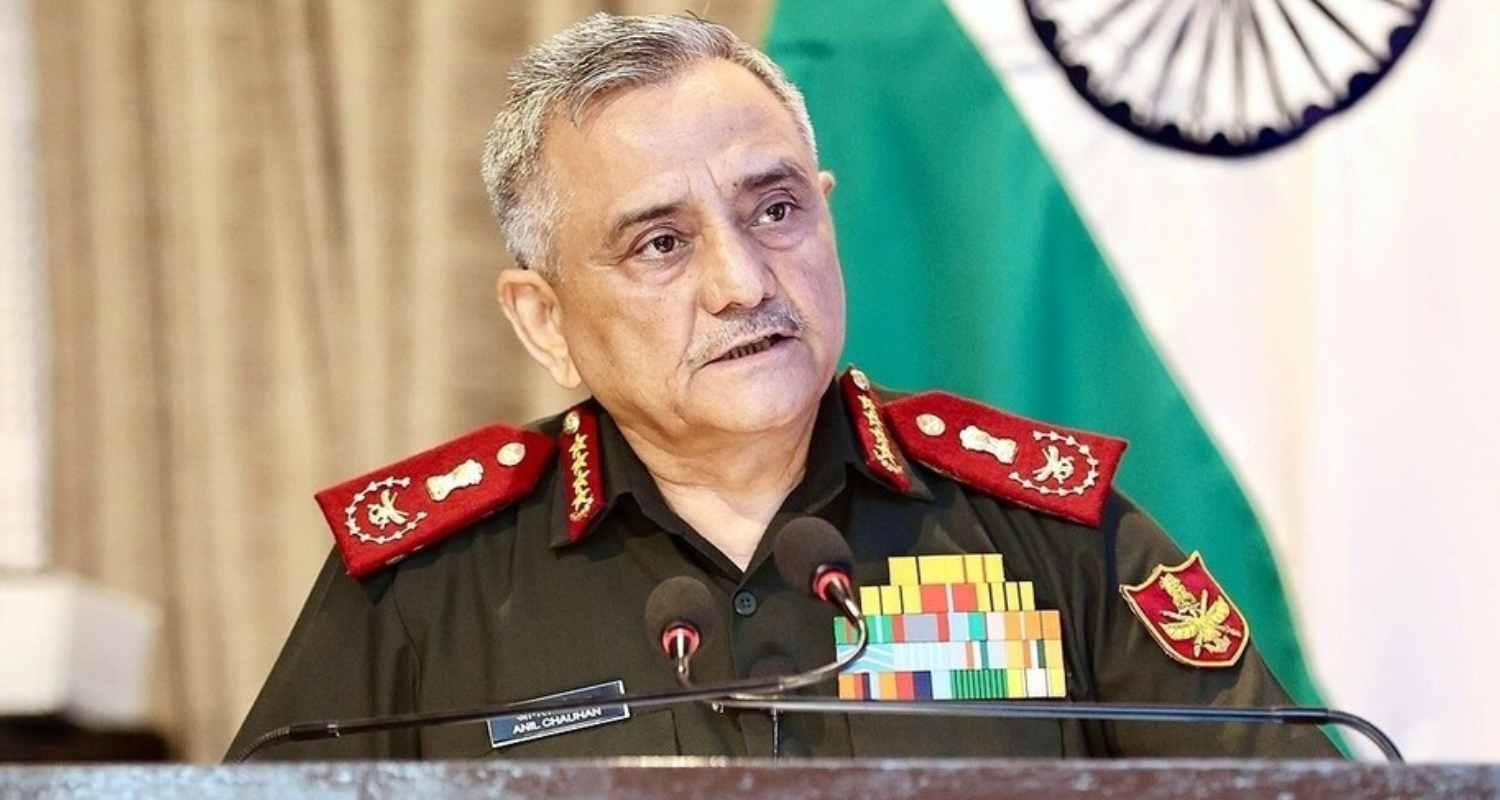
Chief of Defence Staff (CDS) General Anil Chauhan, speaking on Friday, provided historical context regarding India’s decision to sign the Panchsheel Agreement with China on April 29, 1954.
Addressing the Bharat Himalayan Strategic Forum (BHISHM), General Chauhan explained that the agreement, signed by then-Prime Minister Jawaharlal Nehru and Chinese Premier Zhou Enlai, was rooted in India’s strategic assumption that formalizing the status of Tibet would lead to a definitive and peaceful settlement of the northern border.
"On independence, the British left, and it was for India actually to decide where a front is. Nehru probably knew that we had something, as the McMahon Line was in the east, and we had some kind of a claim in the Ladakh area, but it was not here. So that's why he wanted to go in for a Panchsheel agreement, and for the Chinese also. When they had kind of liberated Tibet, they had moved into Lhasa...,” the CDS cited.
“This particular area was extreme at both ends. So they wanted stability, probably in this particular region... Independent India was keen to build a good relationship with China... In 1954, India recognised Tibet as part of China. Both countries signed the Panchsheel Agreement...", he added.
The agreement was signed between the two neighbouring countries to strengthen the bilateral relations, focusing on trade and intercourse regarding the Tibet region.

 Follow us