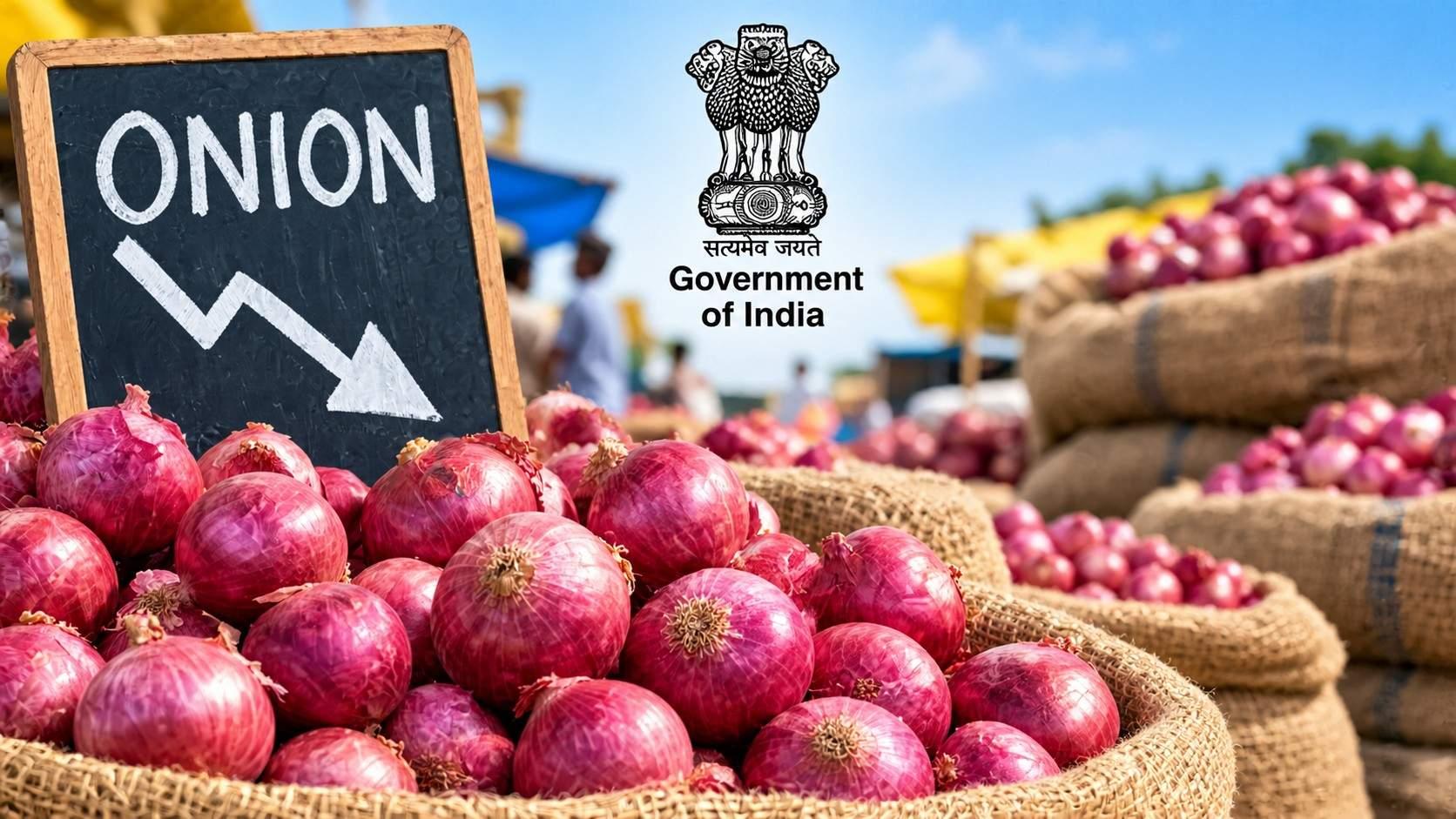
Onion prices have started easing across India after the Union government released stocks from its Price Stabilisation Fund buffer and strengthened supplies to major consuming centres ahead of the festive season.
More than 2 lakh quintals of onions have so far been transported to 123 cities using 467 trucks and eight Kanda Express trains. Additional rail rakes are being planned to maintain supplies in markets with high consumption and support faster distribution.
The Ministry of Consumer Affairs, Food & Public Distribution said the improving availability was supported by fresh Kharif onion arrivals from Karnataka, Andhra Pradesh and Rajasthan, along with the continued release of stored stocks. Arrivals from these producing states are expected to increase in the coming weeks.
The ministry said higher Kharif acreage, favourable crop conditions and strong market arrivals had improved the supply outlook. The India Meteorological Department’s rainfall forecast for the harvesting period is also considered supportive, with no expectation of excessive rain in key Kharif onion-growing regions in the coming weeks. This is expected to aid harvesting, drying and transportation while reducing the risk of moisture-related crop damage.
All-India Kharif onion acreage is estimated to be around 5 per cent higher than last year’s already strong level. The positive crop outlook, together with the arrival of fresh produce, is helping moderate prices in mandis and major retail markets.
In Maharashtra, the weighted average mandi price fell by nearly 13 per cent, from around Rs 4,030 per quintal on September 16 to approximately Rs 3,475 per quintal on October 3. The decline indicates that stronger arrivals are improving supply conditions in one of the country’s key onion markets.
Retail onion prices dropped by Rs 1-21 per kg over the past two weeks across 126 cities. Prices moderated in Tamil Nadu, Madhya Pradesh, Uttar Pradesh, Karnataka, Odisha, Andhra Pradesh, Bihar and West Bengal, indicating that the easing trend has extended across several regions rather than remaining confined to individual markets.
The government is continuing to move buffer stocks to consumption centres to ensure uninterrupted availability during the festive period. The transportation measures are intended to reinforce market supplies and help contain pressure on household food expenses.

 Follow us