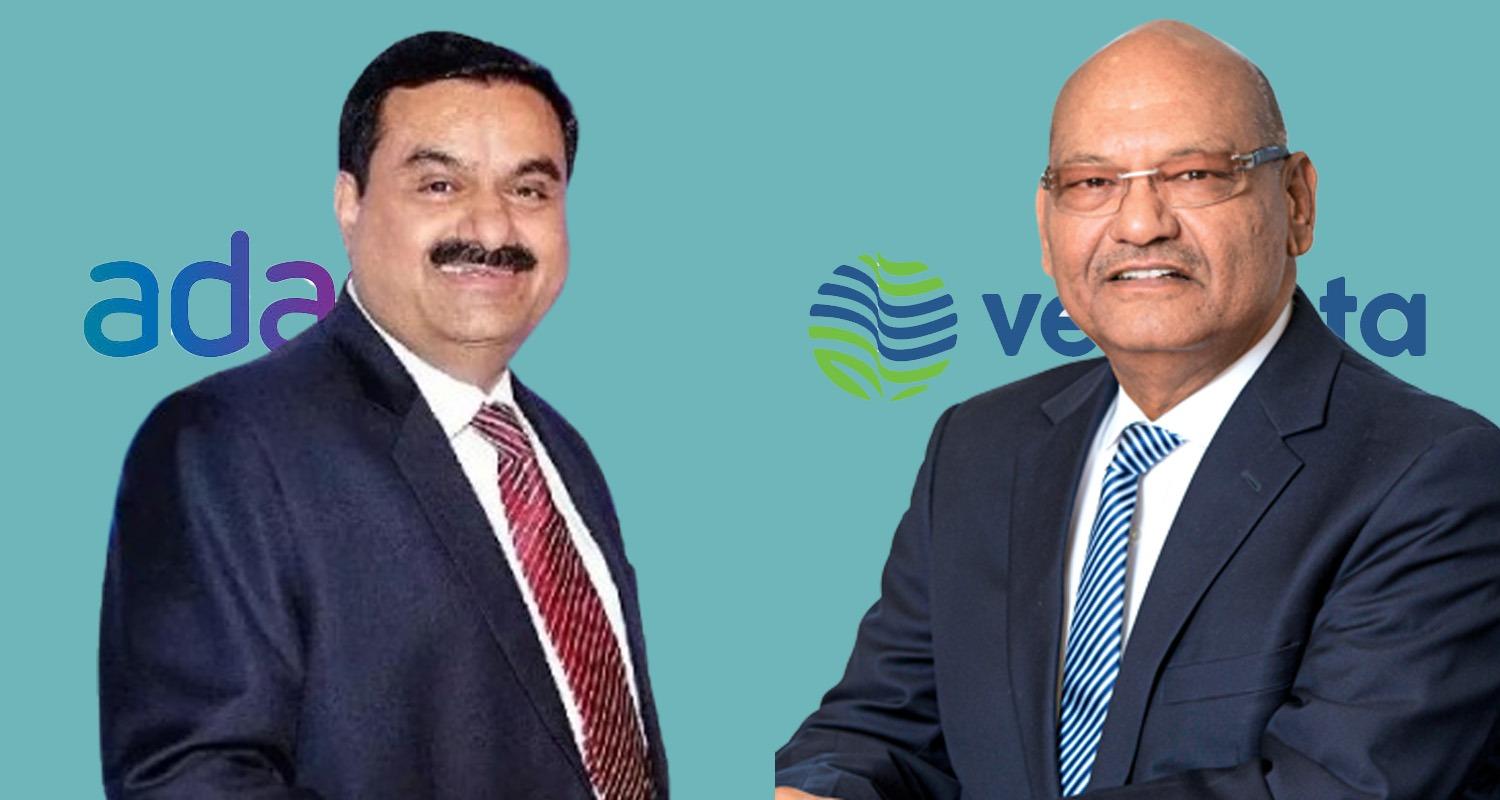
Vedanta Ltd, led by billionaire Anil Agarwal, has told the Supreme Court of India that its revised bid for the bankrupt Jaiprakash Associates Ltd (JAL) was unfairly rejected despite being financially superior to the offer from the Adani Group.
Challenging lenders’ decision to back Adani’s takeover proposal, Vedanta argued that its revised (addendum) bid was around ₹3,400 crore higher in gross value and about ₹500 crore more in net present value than Adani’s offer.
In its original resolution plan submitted on October 14, 2025, Vedanta proposed ₹3,770 crore as upfront payment and ₹3,100 crore after 365 days to secured creditors, along with an equity infusion of ₹400 crore into JAL. It later revised the offer on November 8, 2025, increasing the upfront cash payout to ₹6,563 crore and equity infusion to ₹800 crore, while keeping the total bid value at ₹12,505.85 crore.
However, the Committee of Creditors (CoC) chose Adani’s proposal, citing its roughly ₹6,000 crore upfront payment and a faster repayment schedule within two years, compared to Vedanta’s longer timeline of up to five years.
Also read: Sensex tanked over 11 since West Asia war began
Vedanta has alleged in its petition that lenders acted ‘arbitrarily’ in rejecting its proposal and also questioned the conduct of the resolution professional during the insolvency proceedings. It further argued that the National Company Law Tribunal (NCLT) erred in treating the commercial wisdom of lenders as absolute, stating that such decisions can be challenged in cases of arbitrariness or perversity.
JAL, which entered insolvency in June 2024, saw its CoC approve a ₹14,535 crore resolution plan from Adani Enterprises Ltd in November last year. The company has diversified operations across cement, power, hospitality, and real estate. Vedanta has claimed that its total bid value stood at ₹17,926.21 crore, including ₹1,200 crore towards settlement of sports city dues.
Earlier this month, the NCLT approved Adani’s plan. Vedanta then approached the National Company Law Appellate Tribunal (NCLAT), which declined to stay its implementation, prompting the company to move the Supreme Court.
In its plea, Vedanta has sought an interim stay on the NCLAT order, arguing that allowing Adani’s plan to proceed would lead to irreversible consequences. These include transfer of JAL’s shares, management control, and key assets, which would render its appeal ineffective.
The company also contended that the evaluation process lacked transparency, particularly in not disclosing key criteria used in decision-making. It argued that the NCLT wrongly downplayed the ₹500 crore difference in net present value as marginal and allowed qualitative factors to override a significantly higher financial bid.
Vedanta further claimed that the CoC failed to adequately deliberate on the bids and instead relied heavily on an external consultant, effectively abdicating its decision-making responsibility. It also criticised the resolution professional for exceeding a neutral role by commenting on its revised bid and labelling it non-compliant without enabling independent evaluation by lenders.
Additionally, Vedanta warned that proceeding with Adani’s resolution plan during the pendency of the appeal could create third-party rights—such as payments to creditors and statutory approvals—that cannot be reversed, making the legal challenge largely academic.
The Supreme Court is now expected to examine whether the insolvency process adhered to the core objective of value maximisation under the Insolvency and Bankruptcy Code, or whether procedural lapses warrant intervention.

 Follow us