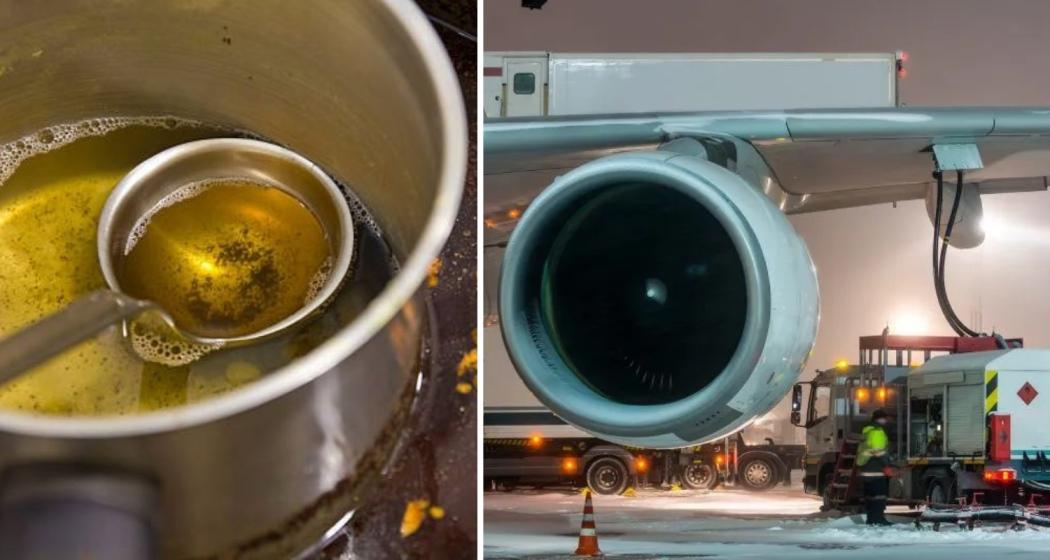
The SAF Association (SAFA) has urged the government to promote the use of used cooking oil (UCO) as a feedstock for producing Sustainable Aviation Fuel (SAF), saying it could help India meet future aviation fuel blending targets while advancing efforts to decarbonise the sector.
In a recommendation to the Ministry of Petroleum and Natural Gas, the industry body called for the inclusion of UCO-based SAF production under the Extended Producer Responsibility (EPR) framework and for stronger systems to collect used cooking oil from restaurants, hotels, catering services and food processing units.
SAFA noted that aviation accounts for about 2–3 per cent of global greenhouse gas emissions, and accelerating the adoption of SAF is essential to reducing the sector’s carbon footprint. It emphasised the need to develop multiple technology pathways and feedstock sources to build a robust SAF ecosystem in India.
According to the association, collecting even 15 per cent of commercial UCO could enable the production of around 1.36 million tonnes of SAF annually, significantly exceeding the estimated demand of 0.8 million metric tonnes required to meet India’s proposed 5 per cent SAF blending target by 2030.
SAFA also called on the government to fast-track the introduction of a SAF blending mandate, noting that India is expected to adopt a roadmap targeting 1 per cent blending by 2027, 2 per cent by 2028 and 5 per cent by 2030, in line with international aviation decarbonisation commitments.
Among various production pathways — including agricultural residues, municipal solid waste, algae, power-to-liquid fuels and waste lipids — UCO is considered one of the most readily deployable feedstocks because of its availability from commercial kitchens.
Also Read: MSME credit boost to fuel India’s biogas growth
India consumes nearly 29 million tonnes of edible oil annually, according to NITI Aayog estimates for FY 2022–23. Of this, around 40 per cent is used in commercial kitchens and 60 per cent in households.
However, estimates based on the FSSAI RUCO framework indicate that only about 6 per cent of available UCO is currently collected, leaving nearly 94 per cent untapped.
Rohit Kumar, Secretary General of SAFA, said, “The same oil that cooks India's meals can power India's flights.”
The association added that with technological innovation and investment across diverse feedstocks, India could emerge as a major regional hub for SAF production, potentially producing up to 40 million tonnes annually by 2050 and generating USD 40–50 billion in economic value.

 Follow us