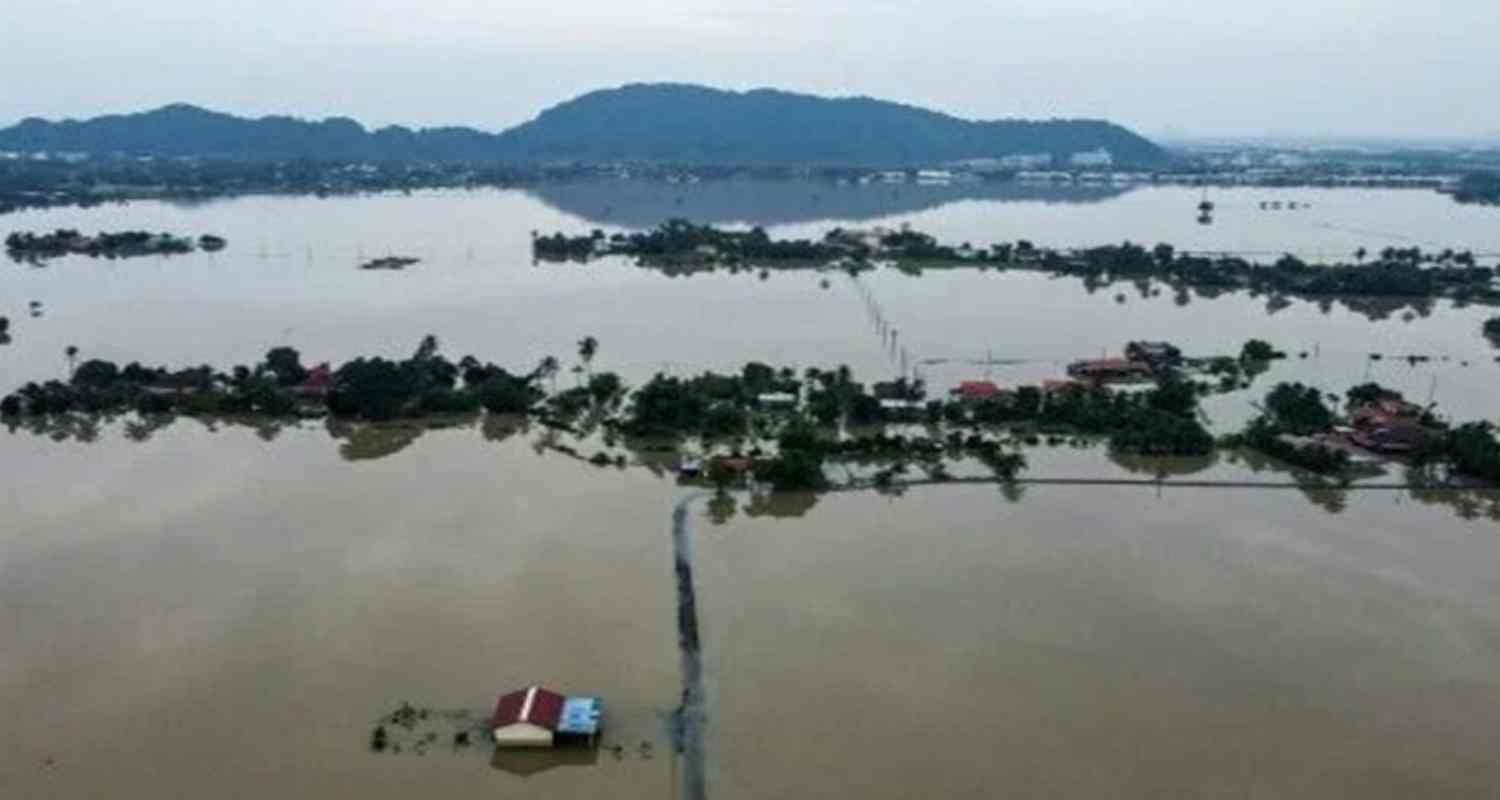
The death toll of the devastating floods in parts of Asia, including Indonesia, Sri Lanka, Thailand and Malaysia has risen to 1,400. Indonesia has borne the heaviest blow, recording at least 753 deaths, followed by Sri Lanka with 465. Sri Lankan President Anura Kumara Dissanayake said it was too early to determine the exact number of those killed. At least 185 people in Thailand and three in Malaysia have also been confirmed dead.
Rescue teams on Wednesday were racing against time to reach isolated communities, as more than 1,000 remain missing, and as villages lie buried under mud and debris, amid ongoing power and telecommunications outages.
Hard-hit Indonesia and Thailand, both middle-income economies with comparatively stronger fiscal capacity, are able to mobilise extensive rescue operations, deploy military assets and channel emergency funds, while Sri Lanka is responding under far more strained conditions.
Prime Minister Harini Amarasuriya met with diplomats in Sri Lanka last week to urge them to support the government's efforts on relief and reconstruction.
Still recovering from a severe economic crisis, the country faces limited resources, foreign exchange shortages and weakened public services, making a large-scale disaster response significantly more difficult and increasing its reliance on outside assistance.
Authorities in Indonesia, the worst-hit country, said the destruction from days of relentless downpours and a rare tropical storm that pounded the island of Sumatra was the deadliest disaster since the 2018 Sulawesi earthquake and tsunami that led to the death of 4,300 people.
Also Read: Floods batter Sri Lanka, 132 dead
Washed-out roads, collapsed bridges and continuing landslides have left rescuers struggling to reach some of the hardest-hit areas, with the National Disaster Management Agency saying about 650 people are still unaccounted for in devastated North Sumatra, West Sumatra and Aceh provinces, where thousands in flooded towns were forced to cling to rooftops and treetops awaiting rescue in previous days.
More than 1.5 million residents have been displaced during the disaster that damaged tens of thousands of homes and public facilities. With some 2,600 people injured and local hospitals overwhelmed, the government has deployed three ‘hospital ships’ to the devastated provinces.
In Sri Lanka, the flooding is expected to have significant repercussions on the economy, which has only recently stabilised after an unprecedented economic crisis.
The island nation is currently under an International Monetary Fund bailout programme that requires it to conserve foreign currency to repay defaulted external debt starting in 2028.
Although the full extent of the economic damage is still being assessed, the costs of rebuilding infrastructure, restoring livelihoods and reviving economic activity are likely to put severe pressure on the treasury.

 Follow us