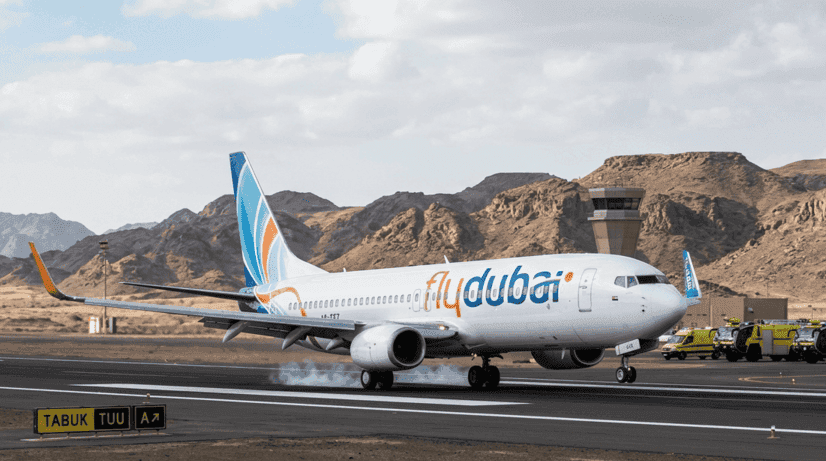
A flydubai aircraft travelling from Dubai to Tel Aviv landed at Tabuk airport in Saudi Arabia on Wednesday after declaring an in-flight emergency. A hijacking was later ruled out.
The aircraft first transmitted squawk code 7700, the internationally recognised emergency signal, and later switched to code 7500, which indicates hijacking or unlawful interference. Israeli security sources said the signal may have been triggered by an altercation between the pilots.
The 7500 transmission led Israeli Air Force fighter jets to scramble towards the aircraft. Carrying around 180 passengers, the flight turned back while flying over Saudi Arabia and was subsequently tracked near Tabuk airport before landing there.
The aircraft had briefly disappeared from flight-tracking platforms after sending the emergency signals. Israeli security authorities had earlier indicated that the circumstances on board would become clearer once the plane reached the ground in Saudi Arabia.
Following the incident, IDF Chief of Staff Lt. Gen. Eyal Zamir convened an assessment with senior officers. Those present included Israeli Air Force chief Maj. Gen. Omer Tischler, Operations Directorate chief Maj. Gen. Itzik Cohen and Intelligence Directorate chief Maj. Gen. Shlomi Binder.
Hebrew media also reported that Israeli Prime Minister Benjamin Netanyahu and Defence Minister Israel Katz held emergency consultations while the aircraft was unaccounted for on flight-tracking services.
The aviation incident came after Netanyahu warned that Israel's enemies could attempt attacks ahead of the elections. Speaking at the IDF Air Force Tel Nof base, he said Israel was under pressure to withdraw and surrender what he described as achievements secured through the efforts of its fighters.
Netanyahu said Israel had achieved significant results but was facing equally strong pressure to give them up. He said he would not permit such a withdrawal and warned that Israel's “long arm” would reach those attempting to attack the country, anywhere and at any time.

 Follow us