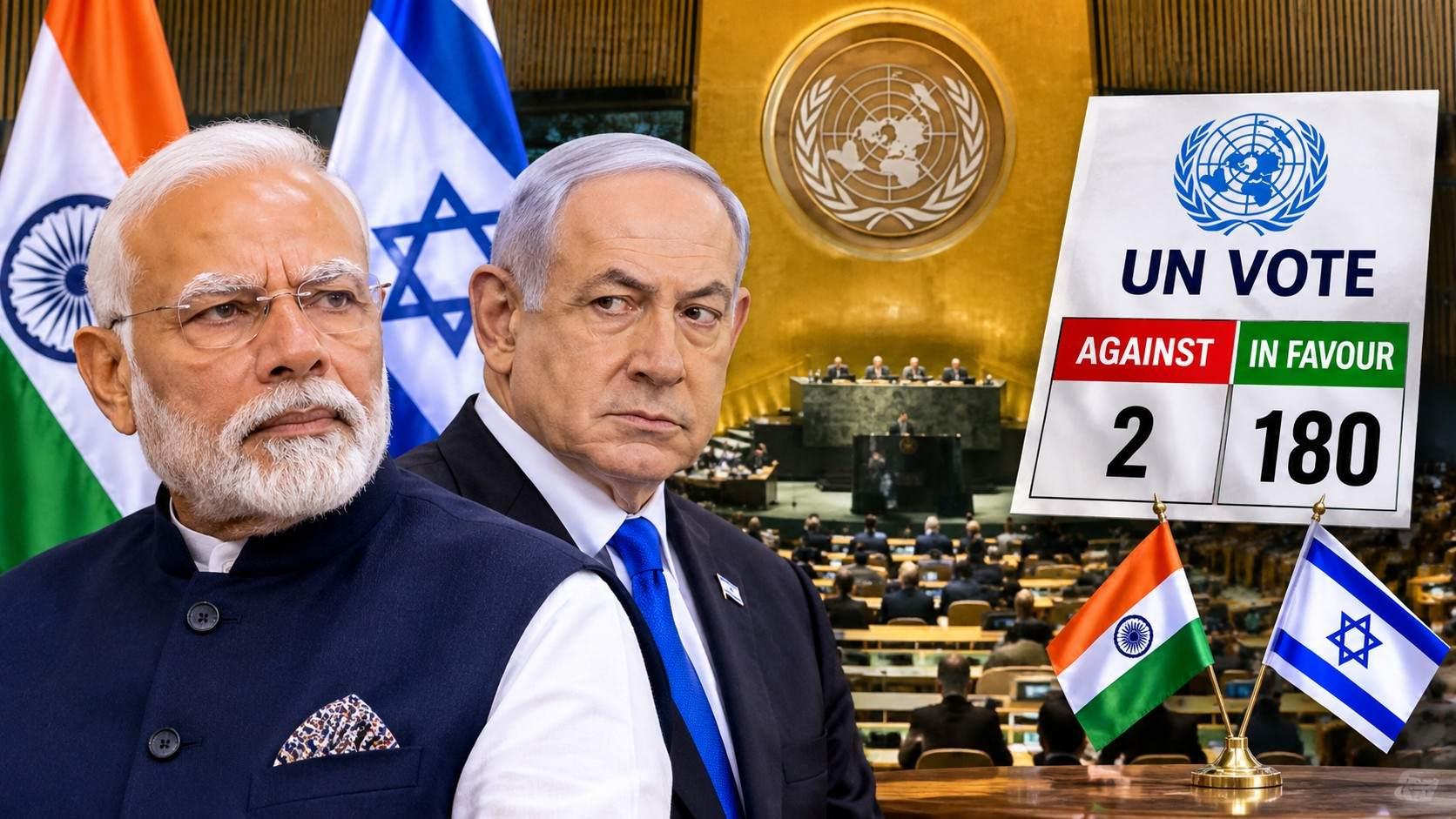
India and Israel have voted against a draft resolution on conventional arms control introduced by Pakistan and Belarus at the United Nations, with New Delhi arguing that countries’ security concerns cannot be restricted to regional or subregional boundaries.
The resolution, titled ‘General and Complete Disarmament: Conventional Arms Control at the Regional and Subregional Levels’, was adopted by the UN General Assembly’s First Committee with 180 votes in favour, two against and no abstentions. India and Israel were the only countries among the 193 UN members to vote against it.
India questions regional focus
Explaining India’s position, Anmol Sher Bedi, First Secretary at India’s Permanent Mission to the UN, said conventional arms control was a global issue. He said India was not convinced that the matter should be pursued mainly through regional and subregional frameworks.
Bedi stated that India’s vote was consistent with its earlier position. He also questioned the resolution’s request for the UN Disarmament Commission to consider framing principles that could guide regional agreements on conventional arms control.
He noted that the Commission had already adopted, by consensus, guidelines and recommendations on regional disarmament in 1993, guidelines on conventional arms control and disarmament in 1999, and recommendations on practical confidence-building measures concerning conventional weapons in 2017.
India said these three consensus outcomes had already addressed the subject within the same UN body that the resolution was asking to begin a fresh exercise. Bedi questioned the need for another round of deliberations on an issue that had previously been examined at length.
New Delhi rejects regional balance approach
India also opposed the resolution’s emphasis on maintaining a balance in defence capabilities within a particular region or subregion. Bedi said this approach appeared to assume that the security concerns of states end at their regional borders.
He maintained that such concerns extend beyond narrowly defined regions and subregions. India also described the idea of preserving a defence balance within a region or subregion as unrealistic.
The draft resolution states that conventional arms control should primarily be pursued at regional and subregional levels because most threats to peace and security since the end of the Cold War have emerged among countries located within the same region or subregion.
It further calls for agreements that strengthen regional peace and security while keeping armaments and military forces at the lowest possible level.
India opposes reference to South Asia
India separately voted against a paragraph referring to proposals for conventional arms control in the context of South Asia.
The paragraph took note, with “particular interest”, of initiatives in various regions, including consultations involving some Latin American countries and proposals for conventional arms control made in the context of South Asia. It also recognised the importance of conventional arms control for regional security.
The resolution additionally states that militarily significant states and countries with larger military capabilities carry a special responsibility to promote agreements aimed at strengthening regional security.

 Follow us