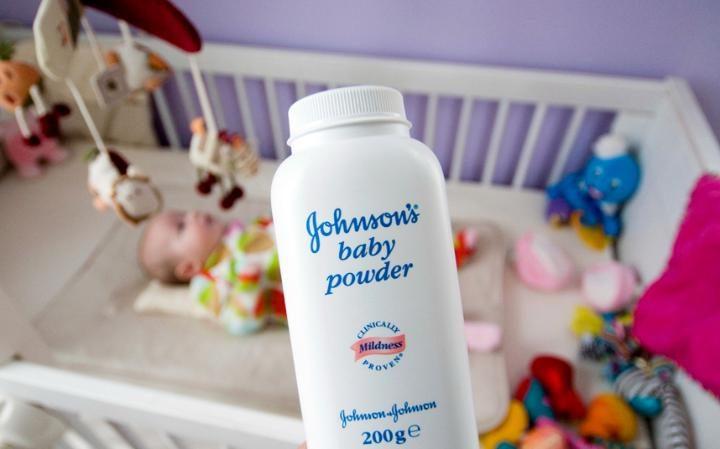
Johnson & Johnson and Kenvue Inc. lost a lawsuit against the family of an Illinois woman who alleged that their baby powder caused her terminal cancer.
The court ordered J&J to pay $45 million to the family of the victim. The court finally closed the case after a decade-long lawsuit over the product.
The jurists in the Chicago case ruled that Kenvue was 70% liable for the death of Theresa Garcia, a mother of six and grandmother who died in 2020 after contracting mesothelioma, a kind of cancer related to asbestos exposure.
Her family claimed that J&J and Kenvue's parent company distributed talcum-based baby powder, knowing that the said product contained “asbestos” as per court records.
In response, J&J has claimed that its talc-based products do not cause cancer and that its baby powder has been properly marketed for over a century.
Similarly, Kenvue officials announced earlier this month that the company no longer manufactures or distributes talc-based baby powder.
Meanwhile, spokespersons Melissa Witt and Erik Haas of Kenvue and J&J said the corporations will appeal the jury's decision.
"We expect to prevail as we typically do with aberrant adverse verdicts that have no basis in the law or science and are predicated on clearly erroneous rulings by the trial court," Haas said.
J&J is one of several large drugmakers that have sold or intend to divest themselves of lower-margin, but consistently lucrative, consumer operations to focus on the high-stakes industry of developing new medications.
J&J raised $13.2 billion in cash through the issuance of Kenvue debt and the sale of its shares. Kenvue now stocks popular J&J items like Tylenol pain reliever, Listerine mouthwash, and a new cornflour-based baby powder.
Garcia's family was prepared to go to trial in 2021 when J&J's LTL Management business filed its first Chapter 11 petition, attempting to facilitate a settlement of all current and future talc claims, according to Jessica Dean, the family's attorney.
“After years of delay caused by evasive tactics used by Johnson & Johnson's to avoid paying the lawsuit,” the family is happy that judges didn’t fall for the deceptions regarding whether talc may cause cancer, Dean said in a statement.
"The defendants knew that talc contains asbestos impurities that were mined and put in the bottles of baby powder J&J sold," she added.
"J&J knew that asbestos exposure, including exposure from inhaling asbestos-containing talc, can and does cause fatal diseases such as mesothelioma," the family said in their complaint against the firms.

 Follow us