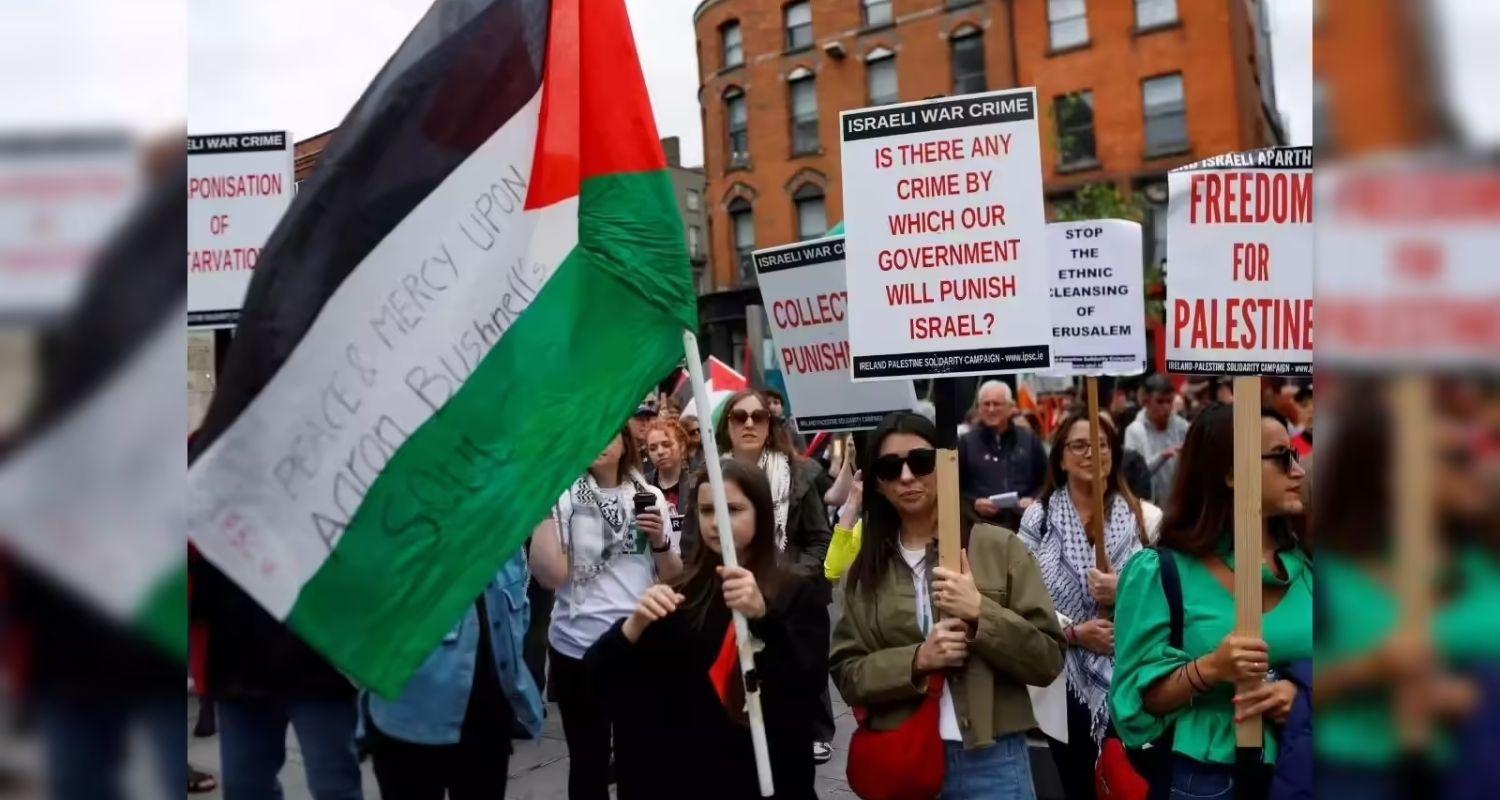
An Indian-origin woman was among three Singaporean activists who were each fined USD 2,341 on Thursday for organising a procession outside the Presidential Palace in solidarity with Palestine.
The High Court overturned the earlier acquittal of the trio—Malay-origin Mossammad Sobikun Nahar, 26, Siti Amirah Mohamed Asrori, 30, and Indian-origin Annamalai Kokila Parvathi, 37—who had been accused of organising the procession on February 2, 2024.
Justice See Kee Oon allowed the prosecution’s appeal against their acquittal. Each woman had faced a charge under the Public Order Act (POA) for organising a procession within the restricted perimeter of the Presidential Palace, the Istana. Their lawyer, Derek Wong, proposed a fine of SGD 3,000, while Deputy Public Prosecutor Hay Hung Chun did not make any sentencing recommendation. The three had contested the charges during a joint trial that began in July 2025.
CCTV footage presented in court showed about 70 people gathering outside Plaza Singapura, a shopping mall near the Istana, before walking toward the Palace while holding umbrellas painted with a watermelon symbol—representing the colours of the Palestinian flag.
Also read: Pak HC to hear Imran Khan’s plea in Al Qadir Trust case
In October 2025, district judge John Ng had acquitted the trio, stating that although they had conducted a procession, they did not reasonably know the route fell within a prohibited area. He noted that the prosecution was required to prove both the physical act and the mental element of the offence.
However, during the appeal on April 30, DPP Hay argued that the judge had erred in applying the correct legal standard regarding the mental element. He clarified that the charges were not based on actual knowledge but on whether the women “ought reasonably to have known” that the route was within a restricted area.
Hay added that the women were aware of a police advisory stating that events linked to the Israel-Hamas conflict would not be allowed. He also pointed out that Siti and Sobikun knew about a previous event related to the same cause that had been cancelled.
Furthermore, he argued that information regarding public assemblies and processions was readily accessible at all times through online statutes.
In response, Wong maintained that the district judge had applied the correct legal test, arguing that being aware of the POA was not the same as knowing what constituted a prohibited area.

 Follow us