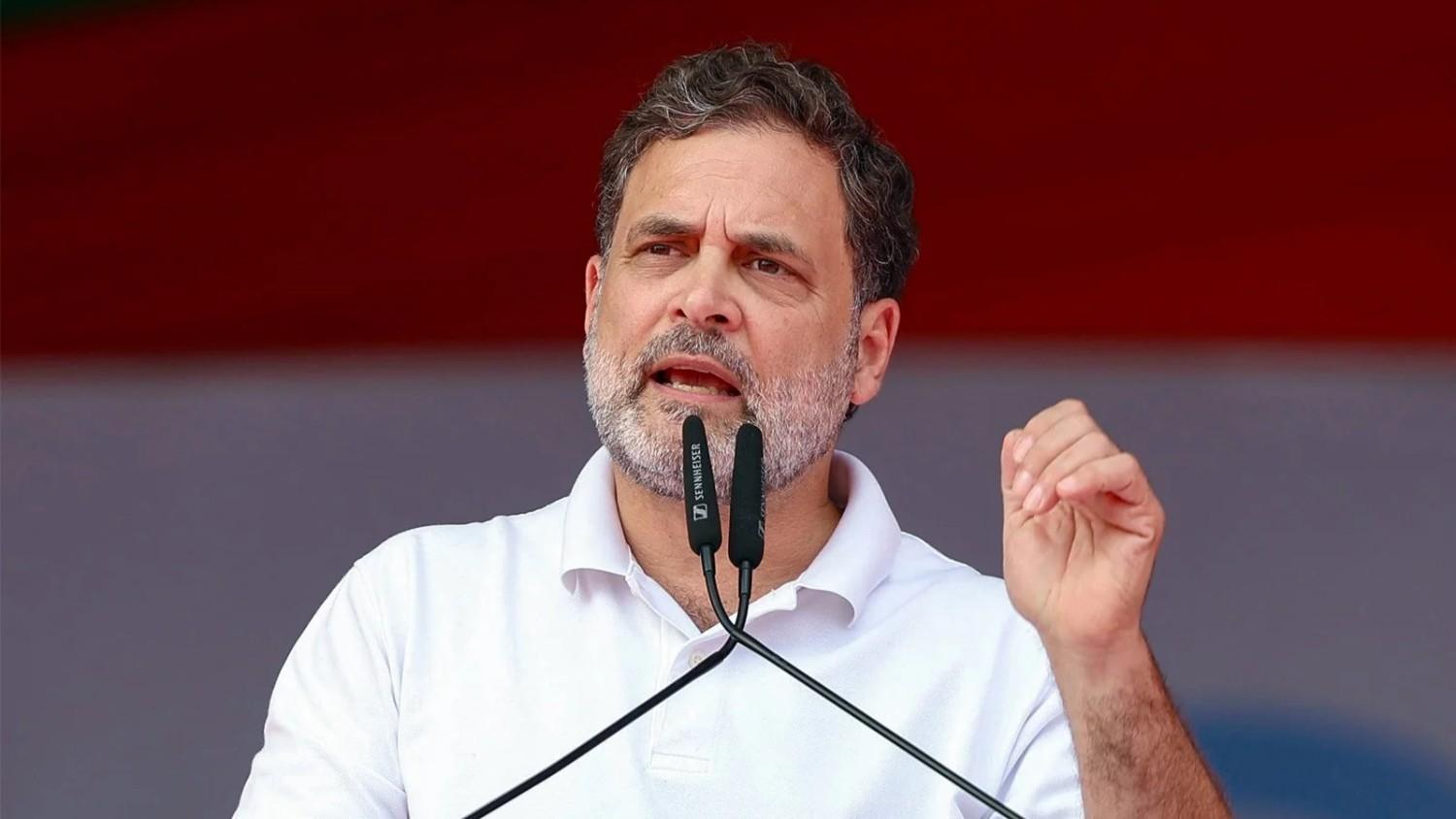
Congress leader and Leader of the Opposition in the Lok Sabha Rahul Gandhi has accused the government of “stealing petrol” from consumers by allowing ethanol-blended fuel to contain more than the prescribed limit.
In a Hindi post on X, Gandhi wrote, “E20 turned into 420 — stealing petrol from the public’s cars!” His reference was to Section 420 of the erstwhile Indian Penal Code, which dealt with cheating.
Gandhi said the government describes E20 petrol as fuel containing 20 per cent ethanol, but claimed tests conducted on samples collected from seven districts in Karnataka showed higher proportions. He cited results in which 11 of 14 samples reportedly contained more than 20 per cent ethanol, including readings of 31.2 per cent for Indian Oil Corporation Limited (IOCL) and 30.5 per cent for Hindustan Petroleum Corporation Limited (HPCL).
He alleged that samples from IOCL, HPCL, Bharat Petroleum Corporation Limited (BPCL), Nayara and Shell outlets exceeded the limit, and claimed the companies’ own laboratories had not disclosed the ethanol content. Gandhi also questioned why fuel stations did not display labels showing the actual ethanol proportion in petrol.
The Congress leader reiterated his demand for an open debate with Prime Minister Narendra Modi. He said the ethanol-blending issue could be included in the discussion, which he has otherwise sought over alleged irregularities in the special intensive revision of electoral rolls.
Karnataka cites laboratory test results
The allegations followed the Karnataka government’s claim that major oil marketing companies were supplying petrol with ethanol content above the prescribed 20 per cent ceiling. The state has sought action against the companies.
Karnataka Food, Civil Supplies, Consumer Affairs and Legal Metrology Minister Rizwan Arshad said the samples were collected from Bengaluru, Kolar, Chikkaballapura, Bengaluru Rural, Ramanagara, Mangaluru and Tumakuru.
The results were issued by the Shriram Research Institute in Bengaluru, which is accredited by the National Accreditation Board for Testing and Calibration Laboratories and certified under ISO standards. The tests recorded ethanol levels of 31.2 per cent in the IOCL sample and 30.5 per cent in the HPCL sample. The minister said samples from several major fuel companies showed ethanol content above 20 per cent.
IOCL, BPCL and HPCL have rejected the Karnataka government’s conclusions. In a joint statement, the state-run oil marketing companies said E20 petrol supplied through their retail networks, including in Karnataka, complies with the Bureau of Indian Standards’ IS 17021 specifications, which prescribe ethanol content between 19 per cent and 21 per cent.
The companies questioned the sampling and testing methods used by the state government. They also said certificates issued by a third-party laboratory did not provide adequate information about the testing methodology, making it difficult to independently verify the reported results.
Concerns over vehicle efficiency and maintenance
E20 refers to petrol blended with 20 per cent ethanol. Ethanol used for the programme is produced largely from sugarcane.
Gandhi claimed that excessive ethanol blending could affect vehicle performance, reduce mileage and increase maintenance expenses. Many motorists have also expressed concern that E20 fuel could harm engines designed to operate with lower ethanol blends.
The government has previously acknowledged that E20 may cause a limited reduction in fuel efficiency, estimated at 3 per cent to 5 per cent, but has rejected claims that the blend damages vehicle engines.
“Modi ji, tell us — what is being put in the country’s tank? How much ethanol is actually in the petrol? When will action be taken against companies mixing more than 20 per cent ethanol?” Gandhi asked.
India’s ethanol programme and reported gains
India has pursued biofuels for decades, partly because it relies on other countries for more than 80 per cent of its crude oil requirements. The Narendra Modi government has accelerated the ethanol-blending programme over the past decade.
Ethanol blending increased from less than 1.5 per cent in 2013-14 to 20 per cent in 2025-26.
Data from the Petroleum Ministry cited by the oil companies stated that the programme, since the 2014-15 ethanol supply year, has generated foreign exchange savings of more than Rs 1.97 lakh crore. It has also replaced approximately 316 lakh metric tonnes of crude oil, reduced carbon dioxide emissions by around 952 lakh metric tonnes and led to payments of more than Rs 1.66 lakh crore to farmers.

 Follow us