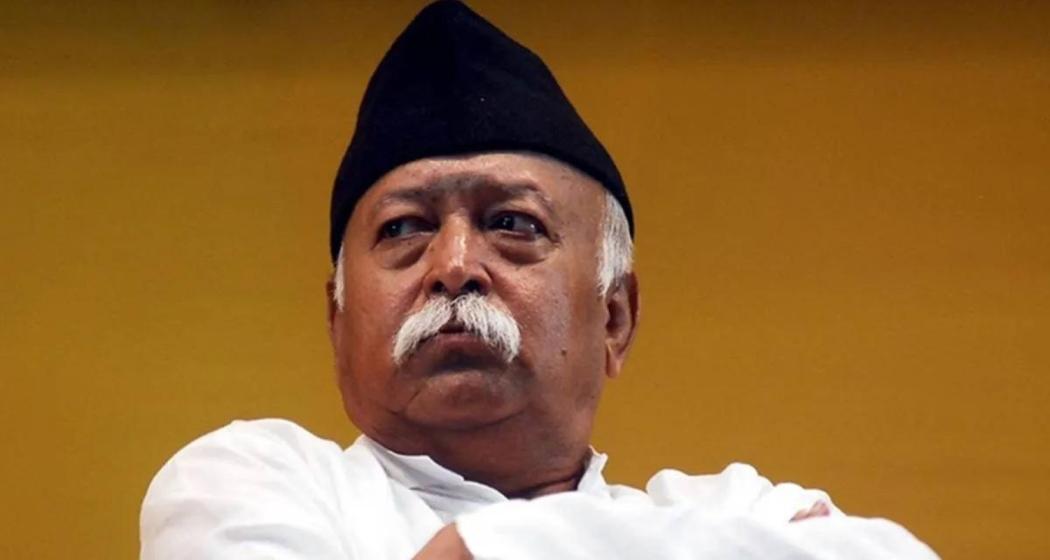
Officials of the US Commission on International Religious Freedom (USCIRF) have called for sanctions against members of the Rashtriya Swayamsevak Sangh (RSS) and urged the US government not to extend high-level diplomatic courtesies to its leaders.
The remarks come ahead of RSS chief Mohan Bhagwat’s scheduled visit to the United States to attend the ‘Universal Oneness Celebrations’ organised by American Hindus for Engagement and Dialogue in New York on August 29.
USCIRF chair Asif Mahmood said Prime Minister Narendra Modi is a member of the RSS, which he described as an “umbrella organisation” whose affiliated groups have perpetrated attacks against religious minorities, including Christians and Muslims.
USCIRF Commissioner Gene Mills said RSS leaders should not be honoured with high-level meetings or diplomatic courtesies, including when they are affiliated with the Indian government.
“Instead, the USG should focus on imposing sanctions on RSS members found responsible for FoRB (freedom of religious belief) violations,” Mills said.
The commission shared the remarks on its X account.
Also read: Delhi HC asks Centre to consider curbs on children’s social media
Hindus for Human Rights, an advocacy group, also criticised Bhagwat’s planned visit, saying it could not be separated from allegations of violence against Muslims and Christians linked to the RSS network.
The USCIRF had in its annual report released in March recommended targeted sanctions against individuals and entities, including the RSS and Research and Analysis Wing (RAW), over alleged religious freedom violations. It also recommended designating India as a “country of particular concern” under the International Religious Freedom Act.
India has rejected the USCIRF’s assessment, accusing the commission of presenting a “distorted and selective” picture of the country based on questionable sources and ideological narratives.
External Affairs Ministry spokesperson Randhir Jaiswal had said the USCIRF should instead be designated an “entity of concern”, alleging that its criticism reflected a deliberate agenda rather than genuine concern for religious freedom.
Jaiswal had also accused the commission of ignoring incidents involving attacks on Hindu temples in the US and what he described as intolerance towards sections of the Indian diaspora.
The USCIRF is an independent, bipartisan US federal government agency that makes policy recommendations to the US President, Secretary of State and Congress on international religious freedom. Its recommendations are advisory and do not themselves impose sanctions.

 Follow us