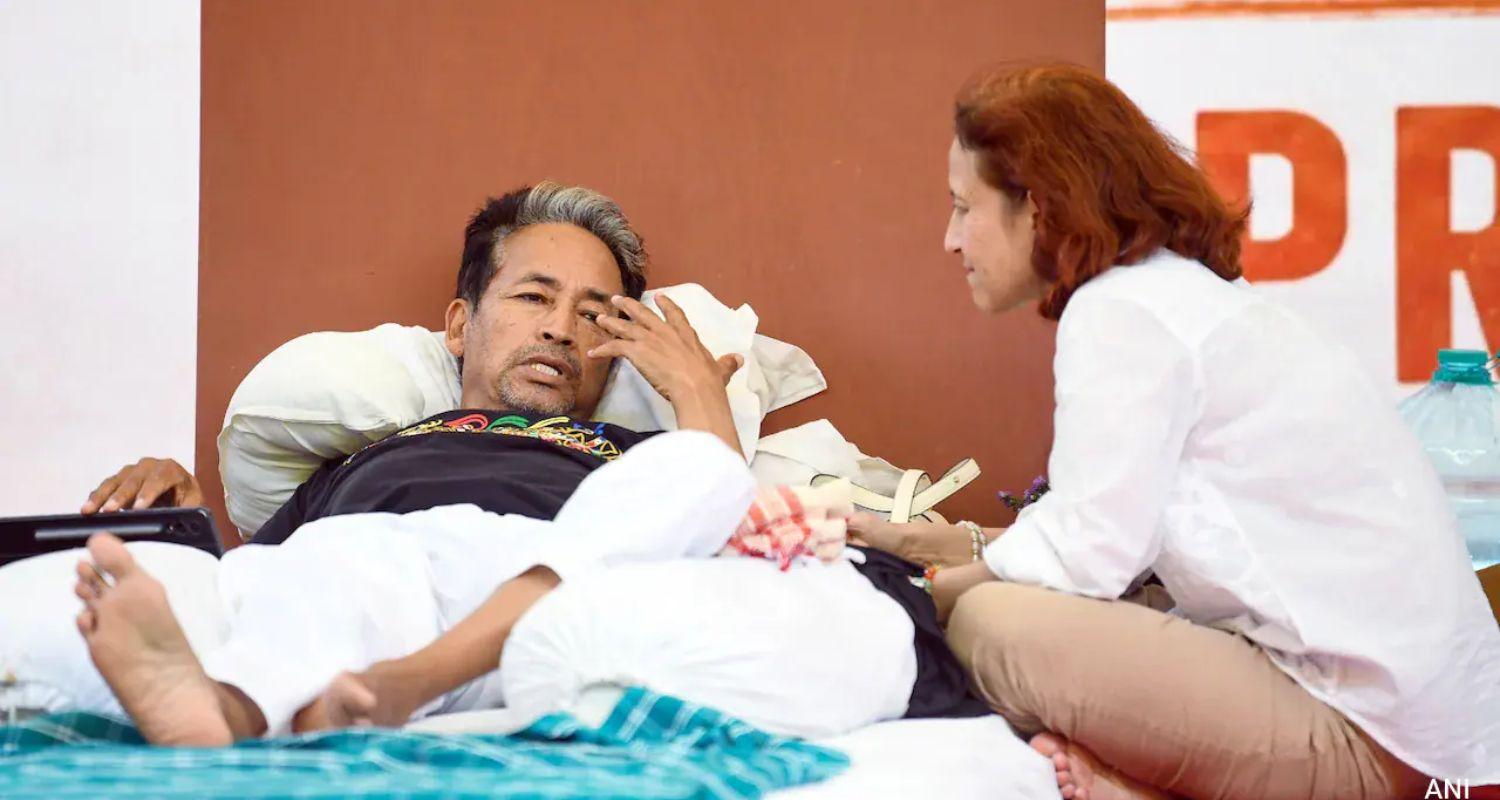
The Delhi High Court on Sunday declined to grant interim relief to activist Sonam Wangchuk on a plea seeking his transfer from the government-run Safdarjung Hospital to a private medical facility, ruling that no immediate directions were required at this stage. The court observed that the authorities acted within their powers in admitting Wangchuk to the hospital after concerns arose over his deteriorating health during an extended hunger strike.
Wangchuk was admitted to Safdarjung Hospital by the Delhi Police after remaining on a hunger strike for nearly three weeks in protest over the alleged NEET examination paper leak and to demand reforms in the country's education system. His fast, which began on June 28, was part of a campaign organised by the Cockroach Janta Party (CJP), targeting what the protesters described as serious irregularities in the conduct of public examinations.
Hearing an urgent petition filed by Wangchuk's wife, Gitanjali Angmo, Justice Mini Pushkarna noted that Wangchuk had not voluntarily sought medical treatment despite his declining health. The court held that the authorities were justified in shifting him to the hospital in view of his medical condition.
"This was not an arbitrary action. No interim orders are required to be passed at this stage," the court observed while declining the request for his immediate transfer to a private hospital.
During the proceedings, the medical team treating Wangchuk informed the court that he had been administered oral medication without sugar and that the treatment had been given with his consent. The court noted that the doctors were closely monitoring his condition and found no evidence to suggest that any medical procedure was being carried out against his wishes.
"Since doctors of the hospital are closely monitoring him and gave him oral medicine with his consent, it cannot be said that force is being used or his autonomy is being violated," Justice Pushkarna observed.
The High Court also recorded that Wangchuk's wife and other family members had been granted unrestricted access to meet him during his stay at the hospital, addressing concerns raised regarding communication and visitation.
The petition seeking Wangchuk's transfer was filed by Gitanjali Angmo, who expressed a lack of confidence in the treatment being provided at Safdarjung Hospital, citing what she described as insufficient transparency regarding his medical condition. Appearing on her behalf, senior advocate Kapil Sibal argued that Wangchuk should be shifted to Medanta Hospital, asserting that patients have the right to choose where they receive treatment.
"Whatever is to be done will have to be done by a doctor of my choice. It is my body, and I decide where I go," Sibal submitted before the court while advocating for Wangchuk's transfer.
Also read: India's yuva shakti continues to make global impact: PM Modi
Opposing the plea, Additional Solicitor General Chetan Sharma, representing the Centre, argued that Wangchuk's health remained a matter of serious concern and that shifting him from the government facility at this stage could pose significant risks. He told the court that the authorities had a responsibility to safeguard Wangchuk's life and requested that medical professionals be allowed to take whatever steps were necessary in his best interests.
Sharma also contended that treatment at a government hospital should not be viewed as inadequate, remarking that even the President of India receives medical care at government-run institutions. Government sources had earlier expressed concern that transferring Wangchuk to another hospital could adversely affect his already fragile condition.
While declining to intervene immediately, the High Court directed the authorities to file a detailed status report on Wangchuk's health and treatment within three days. The bench further clarified that decisions regarding his ongoing medical care would rest with the team of doctors supervising his treatment. The matter has been listed for further hearing on July 24.
Meanwhile, Gitanjali Angmo's legal team indicated that they would challenge the single-judge order before a division bench of the Delhi High Court and seek an urgent hearing. Senior advocate Vivek Tankha told reporters that the appeal would be filed at the earliest opportunity.
Outside the courtroom, supporters of Wangchuk continued to press for action on the issues raised during his hunger strike. According to his family, Angmo is expected to lead a march to Parliament on Monday to highlight their demands for greater accountability over the alleged NEET paper leak and comprehensive reforms in the country's examination system.

 Follow us