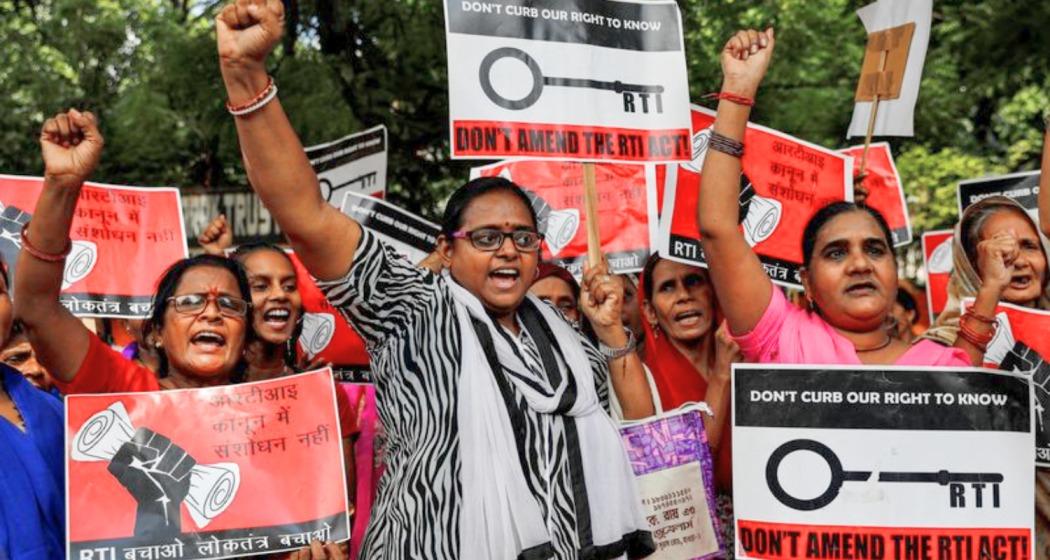
The Economic Survey 2025-26 has called for a calibrated re-examination of the Right to Information (RTI) Act, cautioning that unchecked disclosure could undermine effective governance by shrinking space for candid internal deliberation within the government.
While describing the RTI Act, 2005 as one of India’s most powerful democratic reforms and a cornerstone of anti-corruption efforts, the survey stressed that transparency should serve governance outcomes rather than become an end in itself. It warned against “disclosure celebrated regardless of its contribution to governance”, arguing that such an approach could weaken decision-making and promote excessive risk aversion among officials.
The survey, however, stopped short of recommending any dilution of the law’s core intent. Instead, it proposed refining RTI’s application in “narrowly defined areas of internal deliberation”, underlining that any recalibration must preserve its role as a key accountability mechanism.
The survey echoed long-standing concerns within the bureaucracy over misuse of RTI provisions, including repetitive and voluminous information requests that strain administrative capacity. Official data shows RTI applications rising steadily, crossing 17.5 lakh in 2023-24, compared with 13.7 lakh in 2019-20.
Also read: Economic Survey presented in Parliament by Finance Minister
It cited instances where RTI had allegedly been used as a tool of harassment rather than public interest disclosure. In Hyderabad last year, police filed a complaint against a retired officer accused of filing repeated RTI applications to disrupt administrative work. In Punjab, the State Information Commission dismissed multiple appeals as vexatious, while the Central Information Commission criticised an applicant for filing hundreds of RTI requests, terming it misuse.
Drawing on international comparisons, the survey noted that several democracies provide clearer exemptions for internal policy deliberations. In the United States, inter-agency memoranda are exempt, Sweden protects fiscal and monetary policy discussions, and the United Kingdom allows public interest exemptions, including ministerial veto powers.
The survey acknowledged that reopening debate on RTI could pose political and institutional challenges, given the law’s role in exposing corruption and empowering citizens. Framing the issue as one of “institutional design”, it argued that transparency works best when balanced with protected space for internal learning, debate and course correction.

 Follow us