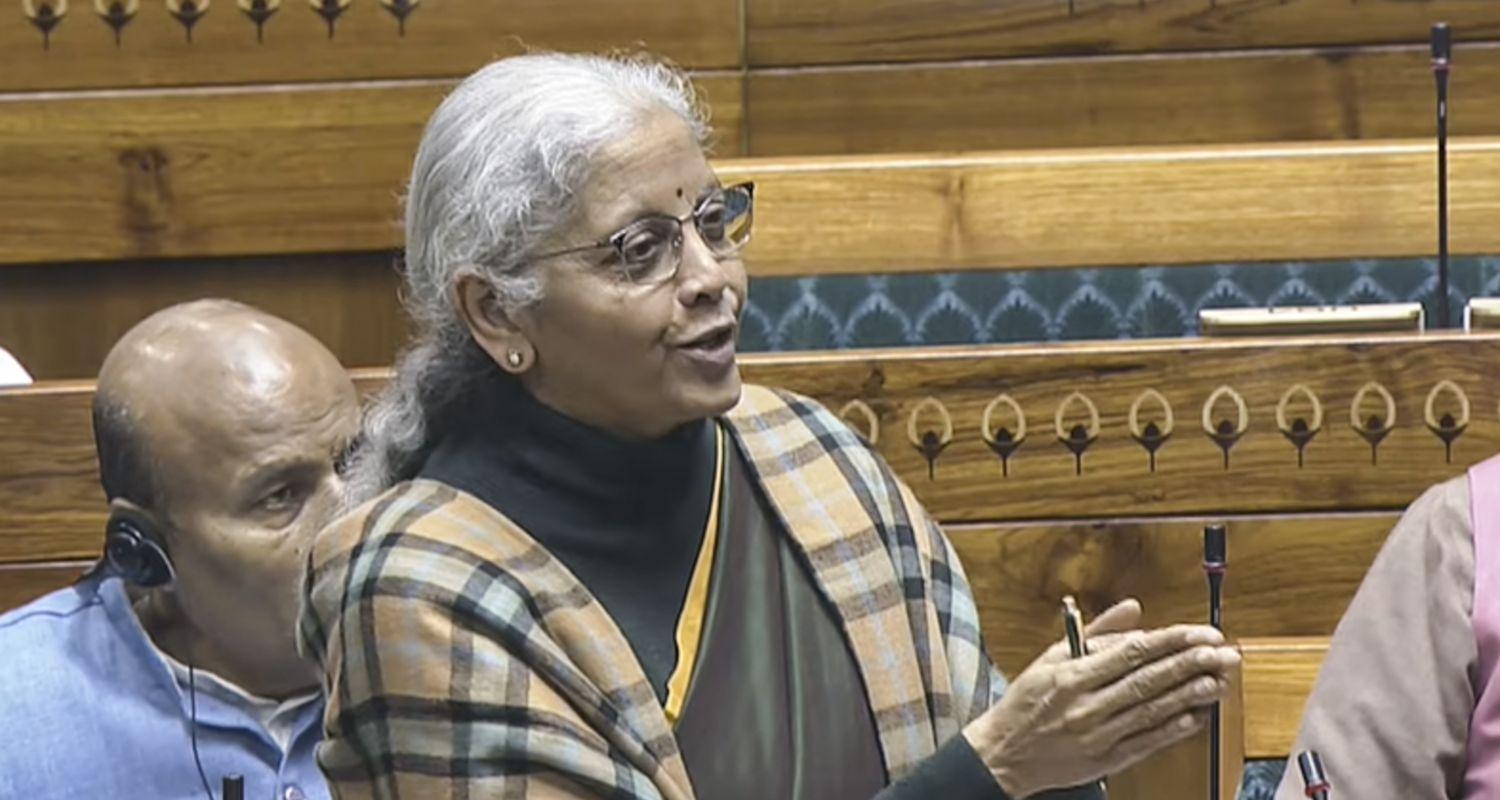
Union Finance Minister Nirmala Sitharaman presented the Economic Survey 2025-26 in the Lok Sabha on Thursday, listing out the gains, challenges, GDP growth forecast for the next financial year, and a future outlook that she said hints at cautious optimism amid global headwinds.
The Economic Survey projected the GDP growth in 2026-27 a tad bit lower in the range of 6.8 to 7.2 per cent from a previous forecast of 7.4 per cent.
“The outlook, therefore, is one of steady growth amid global uncertainty, requiring caution, but not pessimism,” Sitharaman said in her speech as the pre-Budget document was tabled in the Lok Sabha.
Sitharaman said the GDP growth projection indicates the cumulative impact of policy reforms over recent years that appear to have lifted the economy’s medium-term growth potential closer to 7 per cent.
“With domestic drivers playing a dominant role and macroeconomic stability well anchored, the balance of risks around growth remains broadly even,” she quoted the survey report.
The survey also points to trade policy in agricultural exports being used to meet short-term objectives amid price and production volatility, but warns against frequent policy changes, which it says, disrupt supply chains, create uncertainty, push foreign buyers elsewhere, and make lost export markets hard to regain.
It said that agricultural exports are influenced by a range of supply-side factors, including food security, processing facilities, infrastructure bottlenecks, and various regulations. Although these measures, it said, may temporarily stabilise domestic prices, they risk longer-term reputational costs, particularly as India is widely regarded as a source of high-quality agricultural products.
“Frequent policy changes can significantly disrupt export supply chains, create market uncertainty and cause foreign buyers to switch to other sources. Export markets once lost are not easily recovered,” it added.
Also Read: This is a glorious chapter for Indian democracy: PM Modi
According to estimates, the country has the potential to reach USD 100 billion of combined exports of agriculture, marine products and food and beverage in the next four years. It is also possible to stabilise domestic availability and prices while enabling farmers to tap global markets for better incomes.
The survey said that measures such as subsidised distribution of essential food items via the public distribution system, managing buffer stocks and intervening in the market via an open market sale scheme are the policy options available to ensure availability of agricultural products at fair prices for the domestic market.
“Exports also make farmers more productive and competitive by fostering knowledge accumulation and market feedback,” it said.
It also predicts rising imports for India. “India must explore all opportunities to increase its export earnings to pay for the import needs of a growing economy. Agricultural exports are a low-hanging fruit with immense export potential,” it said, adding they carry international leverage for India and policies should be aligned with this imperative.
The Economic Survey is an annual document presented by the government ahead of the Union Budget to review the state of the country’s economy. It is prepared by the Economic Division of the Department of Economic Affairs in the Ministry of Finance under the supervision of the chief economic adviser and provides an overview of the economy’s short-to-medium-term prospects.
The first Economic Survey was presented in 1950-51, at a time when it used to be part of the budget documents. In the 1960s, it was separated from the Union Budget and tabled ahead of the Budget presentation.
It is regarded as the nation’s official annual “report card” on the economy, providing a comprehensive, data-backed review of the financial performance over the previous year, while offering a broad roadmap for future policy direction. As the government’s flagship annual report, it reviews key economic developments over the past 12 months.
The survey plays a crucial role in the lead-up to the Union Budget, which focuses on future government spending, taxation, and policy measures. The Economic Survey, on the other hand, explains why those decisions are necessary by analysing past economic performance and trends.

 Follow us