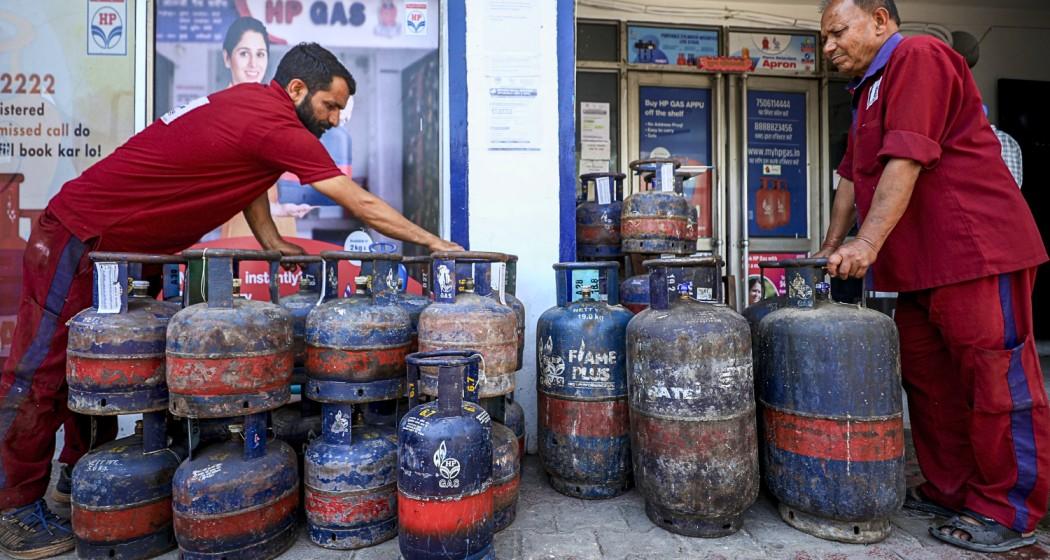
Commercial LPG prices were hiked by a record Rs 993 per cylinder and 5-kg cylinders saw a steep increase, while aviation turbine fuel (ATF) for domestic airlines was left unchanged and petrol and diesel prices may rise by Rs 4–5 per litre in the coming days amid a surge in global crude oil prices.
State-owned oil marketing companies (OMCs) raised the price of commercial LPG used by hotels and restaurants to Rs 3,071.50 per 19-kg cylinder, marking the steepest-ever increase. The price of 5-kg free trade LPG cylinders was also sharply revised upward from Rs 549 to Rs 810.50 per bottle.
Despite the sharp hikes in select segments, domestic LPG (14.2 kg), petrol and diesel prices were kept unchanged, insulating the bulk of consumers from global volatility for now. However, sources indicated that a decision on increasing petrol and diesel prices by around Rs 4–5 per litre, along with a Rs 40–50 hike in domestic LPG cylinders, may be taken within the next five to seven days.
Congress criticises hike
The Indian National Congress criticised the Centre for raising the price of commercial LPG cylinders, accusing Prime Minister Narendra Modi of repeatedly increasing prices and placing a burden on businesses. The party referred to Modi as “Inflation Man Modi” in a post on X, stating that the price hike adds to a series of increases over the past four months.
The Leader of Opposition in the Lok Sabha said he had earlier cautioned that inflationary pressures would intensify after the elections. “Today, commercial gas cylinders have become Rs 993 more expensive. This is the biggest single-day hike and amounts to an election bill,” Gandhi wrote in Hindi on X.
He pointed out that since February, prices have risen by Rs 1,380, an increase of 81 per cent in just three months. “Tea stalls, 'dhabas', hotels, bakeries, sweet shops, every kitchen is under pressure, and this will inevitably affect what reaches your plate,” he said. Gandhi added that the first blow has been on cooking gas, and the next could be on petrol and diesel.
The Congress also alleged that the government’s concern for ordinary citizens is limited to election periods, after which people are left to deal with rising costs on their own.
Record LPG hike, sharp jump in 5-kg cylinder rates
The Rs 993 increase in commercial LPG is the highest-ever revision and reflects the sharp rise in international energy prices driven by the ongoing West Asia conflict. The 5-kg cylinder, widely used in smaller establishments and by low-volume consumers, now costs nearly as much as the subsidised 14.2-kg domestic cylinder.
Bulk diesel prices, used by industrial consumers such as telecom tower operators, were also raised significantly from about Rs 137 per litre to over Rs 149 per litre, even as retail diesel prices at petrol pumps remain unchanged at Rs 87.62 per litre in Delhi.
Also read: Commercial, mini LPG prices hiked by ₹993 and ₹261
ATF unchanged for domestic carriers
In a relief to airlines, ATF prices for domestic carriers were left unchanged at Rs 1,04,927.18 per kilolitre. This comes even as fuel prices for international airlines were increased by USD 76.55 per kl, or 5.33 per cent, to USD 1,511.86 per kl.
The calibrated approach aims to shield domestic carriers such as Air India, IndiGo and SpiceJet from further financial stress. The Federation of Indian Airlines had earlier warned that rising ATF costs had pushed operational expenses to unsustainable levels.
Fuel price hike decision expected soon
Sources indicated that the government is closely monitoring global crude trends and may soon take a call on revising petrol, diesel and domestic LPG prices. Benchmark crude prices have surged nearly 50 per cent due to supply disruptions linked to the West Asia conflict, pushing input costs higher for OMCs.
With retail fuel prices frozen since 2022, oil companies have been absorbing losses, with estimates suggesting under-recoveries of Rs 14 per litre on petrol and Rs 18 on diesel. This has intensified pressure for a price revision.
Govt balances consumer relief, fiscal stress
OMCs maintained that over 80 per cent of petroleum products, including petrol, diesel, domestic LPG and kerosene, have seen no price change, reflecting a “consumer-centric approach”. Price revisions have been limited to select industrial segments, which account for a small share of total consumption.
“The measures reflect the calibrated and balanced approach adopted by oil marketing companies to align with global market trends while protecting domestic consumers,” Indian Oil Corporation said in a statement.
However, sustained high crude prices may limit the government’s ability to continue shielding consumers, raising the likelihood of a broader fuel price revision in the near term.

 Follow us