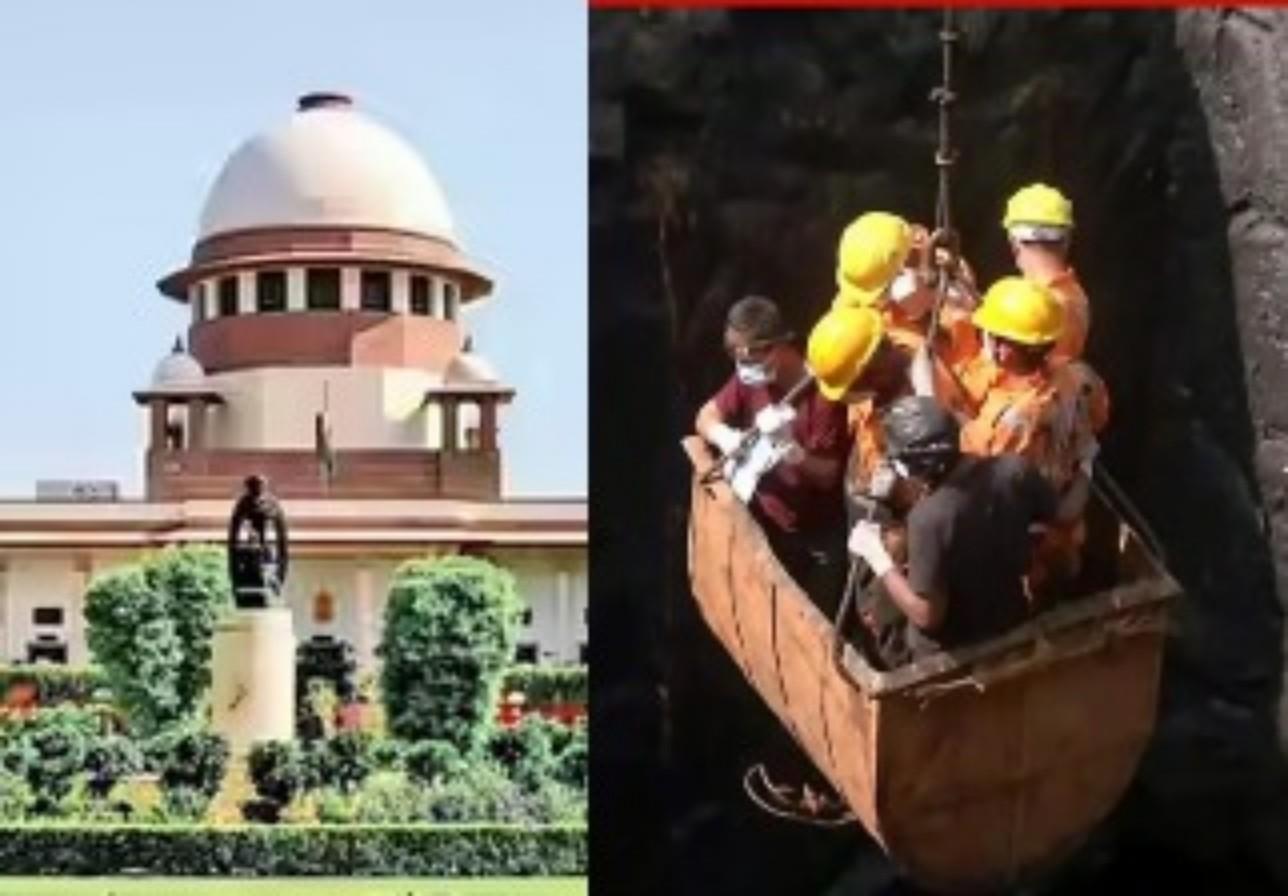
The Supreme Court has taken strong exception to what it termed as "total inaction" by a Rajasthan government official in an illegal mining case. The Apex Court has sought explanation from the state government in this regard.
While granting bail to a man convicted for his alleged role in vandalising a house during protests over illegal mining, a Bench of Justices Ahsanuddin Amanullah and R Mahadevan directed the state to furnish the names and designations of officers posted in the area during the relevant period, who allegedly failed to act on repeated complaints by villagers.
The Court made it clear that the case did not end with the bail order and the larger issue of official inaction required scrutiny. The petitioner, one Prakash, had approached the top court after the Rajasthan High Court rejected his plea for suspension of sentence. He had been convicted and sentenced to 10 years’ rigorous imprisonment in connection with an incident where a mob allegedly vandalised the complainant’s house.
According to the prosecution, Prakash was part of a crowd that attacked the house. The State claimed he was not just a participant, but leading the mob. However, before the Supreme Court, his counsel painted a larger background. He argued that villagers had been repeatedly approaching authorities to stop illegal mining and stone-crushing activities in their area. When officials allegedly failed to respond, tempers flared and the situation spiralled out of control.
The counsel for Prakash clarified that he was not justifying the violence. But he pointed out that the injuries suffered by the complainant and others were minor in nature. He also told the Court that Prakash had no criminal antecedents and was implicated because he was the brother of the local sarpanch. Importantly, all other co-accused had already been granted bail.
The state opposed the plea. It argued that the allegations were serious and that Prakash had played a major role in leading the mob, which justified denial of bail. After hearing both sides, the Supreme Court said it was inclined to suspend the sentence and release Prakash on bail during the pendency of his appeal before the High Court.
The bench did not stop there. It expressed anguish over what it saw as administrative apathy that may have triggered the incident. The judges observed that the violence appeared to be the result of repeated complaints by villagers about illegal mining being ignored. The Court said that the authorities had remained silent and failed to even verify whether the complainant and others were operating beyond their permitted mining areas or without proper clearances.
The Court also asked Prakash to file an affidavit within two weeks placing on record all relevant complaints, petitions and material to show that illegal mining or stone crushing was indeed taking place in the area. The case will be heard next on March 20.

 Follow us