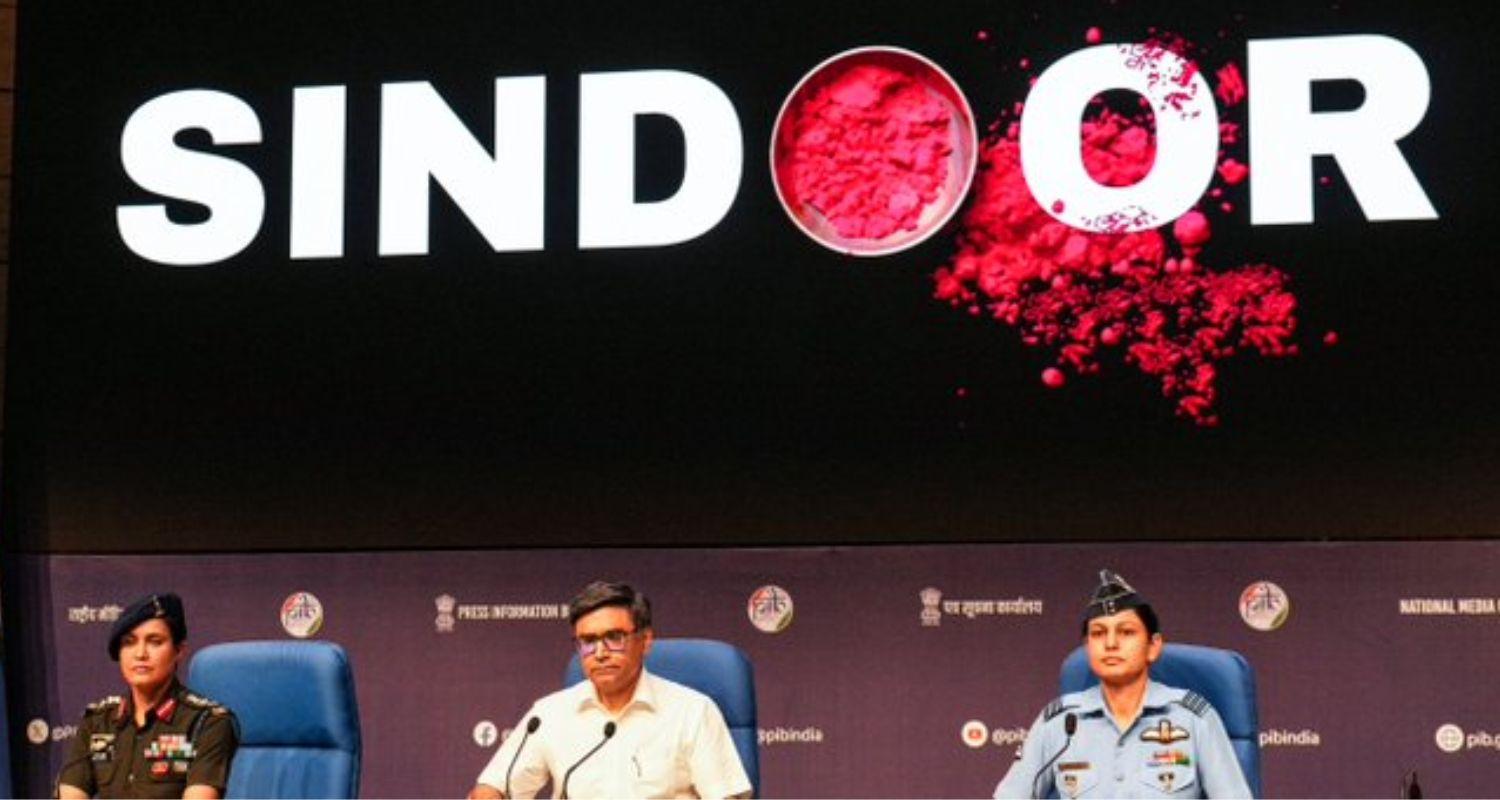
A little over a year has passed since the launch of Operation Sindoor, an offensive that fundamentally altered India’s national security doctrine. Triggered by the brutal terror attack in Pahalgam on 22nd April last year — which claimed 26 lives, many of them tourists — the operation was more than just a retaliatory strike; it was a sophisticated display of multi-domain warfare. As a result of the use of technology in the form of artificial intelligence, drone technology, and precise target identification, the Indian forces targeted nine main terrorist locations in Pakistan and Pakistan Occupied Kashmir including Bahawalpur base of Jaish-e-Mohammed terrorists and Muridke base of Lashkar-E-Taiba militants.
The approach adopted by Prime Minister Narendra Modi during this time is clearly different from his predecessors. As a result of the use of airstrike against terrorists, India showed a new political will against Pakistan's nuclear blackmail. Although the immediate conflict subsided due to hot line talks between military generals of both countries on May 10, the short-lived conflict acted as a wakeup call to the country which had an urgent need to upgrade its weaponry and military equipment.
The lessons learned on the front lines have since been translated into a massive spending spree aimed at modernisation. In the last twelve months, the government has fast-tracked several high-profile procurement projects that had previously been stuck in bureaucratic limbo for years. Most notably, the acquisition of 114 Rafale fighter jets from France was finally cleared in February, alongside a fresh batch of five S-400 missile systems from Russia. These additions, combined with the purchase of US-made Boeing P8-I surveillance aircraft, are designed to give the Indian Air Force and Navy a decisive edge in both regional surveillance and deep-strike capabilities.
The undersea and strategic deterrence capabilities have been enhanced too. The induction of the INS Arihant in April was an important achievement for India’s nuclear triad, offering a third home-built nuclear ballistic missile submarine to its fleet. On the other hand, securing a five-billion-euro deal from Germany’s ThyssenKrupp for six stealth submarines is a clear demonstration of their future intentions.
On the ballistic front, the successful test-firing of the Agni-V missile in August sent a clear message far beyond the border with Pakistan. The missile can be effective up to a range of 5,000 km, bringing most of Asia and some of Europe within striking distance, thus highlighting the transformation of India from being a regional power into a serious strategic player in the world stage. In the words of a senior military officer, the operation 'Sindoor' led to the change in India’s security policy from border control to security through technology.
Also read: Operation Sindoor a case study in joint warfare: Army Chief

 Follow us