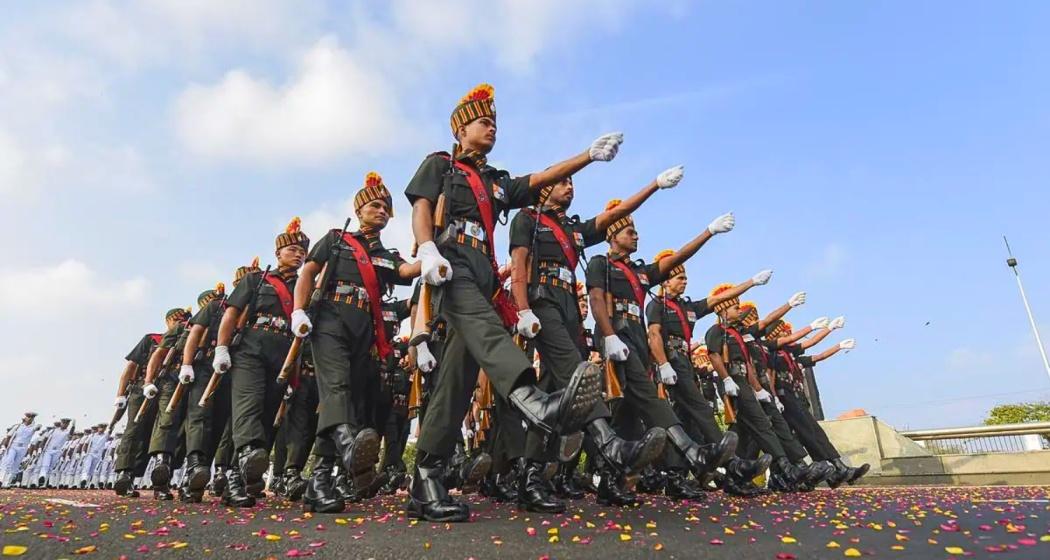
The Indian Army has removed several British-era customs and terminology from its dress regulations, including the use of the word “Royal”, mandatory carriage of swords by reviewing officers and other colonial vestiges, as part of a wider effort to align military traditions with India’s sovereign identity.
The changes are detailed in the newly issued Army Uniforms–2026 Pamphlet, which standardises dress codes across the force while introducing indigenous elements such as the Bandi jacket in civil formal attire for officers.
The Army said the reforms form part of “indigenisation and alignment with national ethos”, aimed at removing residual colonial practices while preserving the dignity and traditions of the institution.
Bandi jacket, revised ceremonial norms
A key change is the introduction of a closed-neck Bandi jacket, to be worn with a full-sleeved shirt, formal trousers and closed footwear in civil formal settings. The Army said the addition reflects an indigenous element in formal officer attire.
The manual has also discontinued the use of archaic terminology such as “Royal” across official references.
In another major change, the Army has made it optional for reviewing officers to carry swords during ceremonial parades. Swords will now be restricted to parade commanders, contingent commanders and designated personnel during major events such as Republic Day, Independence Day, Army Day and Guard of Honour ceremonies.
“Reviewing Officers will not carry sword on parade,” the document states.
Also read: Lt Gen Dhiraj Seth appointed next Indian Army Chief
Winter dress, conduct guidelines updated
The Army has introduced a new winter working dress featuring a Battle Jacket, which will replace the existing jersey-based winter uniform in phases by June 2029. The Battle Jacket will become standard outerwear for all ranks.
The revised regulations also impose strict guidelines on appearance and conduct in uniform, barring unauthorised hairstyles, beards, visible electronic gadgets, tattoos, body piercings and cosmetic make-up. Uniforms are also prohibited at political, religious or protest events, weddings and private functions without approval.
The reforms are part of a broader institutional effort to remove colonial-era symbols. Earlier this year, the Army renamed 246 roads, buildings and facilities across cantonments to honour Indian soldiers, commanders and gallantry award winners.
Officials said the exercise reflects a long-term commitment to building an identity rooted in India’s own military history and ethos.

 Follow us