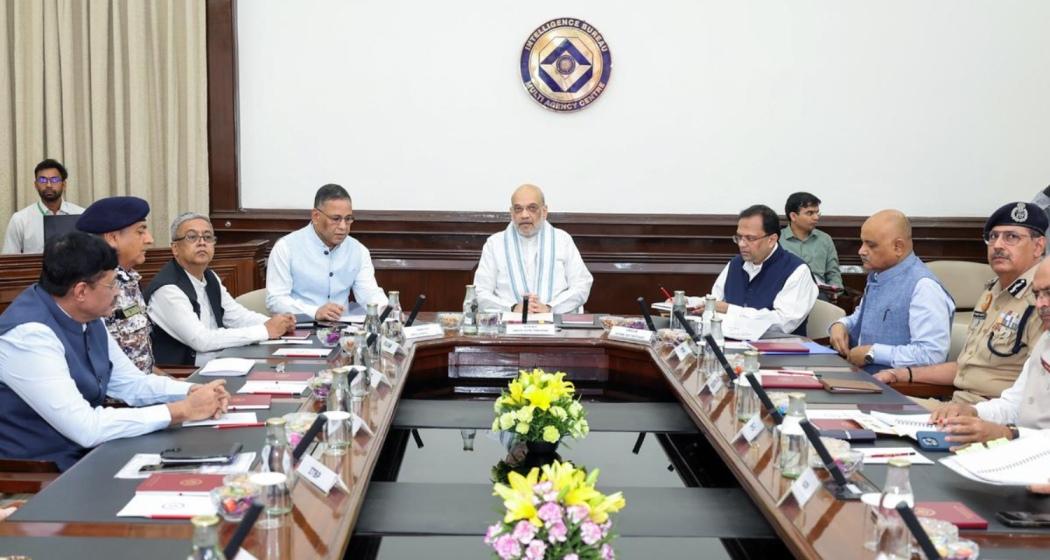
The Ministry of Home Affairs on Monday released India’s first comprehensive national counter-terrorism policy and strategy, titled ‘PRAHAAR’, setting out an intelligence-driven and prevention-focused framework to combat terrorism in all its forms.
PRAHAAR refers to:
- Prevention of terror attacks to protect Indian citizens and interests
- Responses that are swift and proportionate to the threat posed
- Aggregating internal capacities for achieving synergy in a whole-of-government approach
- Human rights and ‘Rule of Law’-based processes for mitigation of threats
- Attenuating the conditions enabling terrorism, including radicalisation
- Aligning and shaping international efforts to counter terrorism
- Recovery and resilience through a whole-of-society approach
The eight-page policy lays emphasis on pre-empting attacks, ensuring swift and proportionate responses, and strengthening coordination among central and state agencies through a “whole-of-government” and “whole-of-society” approach grounded in the rule of law.
Predicated on prevention, the strategy underscores intelligence gathering and dissemination as the cornerstone of counter-terror operations. It accords primacy to the Multi Agency Centre (MAC) and the Joint Task Force on Intelligence (JTFI) under the Intelligence Bureau as nodal platforms for real-time sharing of counter-terror inputs and coordinated action.
The document flags evolving threats, including misuse of the internet for recruitment, propaganda and radicalisation. It notes that terror outfits exploit encrypted platforms, the dark web and crypto wallets to operate anonymously. Law enforcement agencies, it states, regularly disrupt online networks, overground worker modules and terror funding channels under existing legal frameworks.
Highlighting emerging risks, the policy draws attention to the nexus between illegal arms syndicates and terrorist groups, and the increasing use of drones and advanced technologies in Punjab and Jammu and Kashmir. It also underlines the challenge of preventing access to CBRNED (Chemical, Biological, Radiological, Nuclear, Explosive, Digital) material and countering cyber-attacks by state and non-state actors.
Also read: 8th Pay Commission cyber scam: MHA’s warns govt employees
India, the policy says, faces threats across land, air and sea, necessitating advanced surveillance and border management systems. Capacities have been strengthened to safeguard critical sectors including power, railways, aviation, ports, defence, space and atomic energy.
The document reiterates India’s “zero tolerance” stance against terrorism, asserting that no religious, ethnic or ideological justification can legitimise violence. It also emphasises the need to align international efforts and enhance global cooperation to counter cross-border and sponsored terrorism.
Positioning India as a long-standing victim of global and regionally sponsored terror, the policy calls for sustained resilience, recovery mechanisms and community participation to mitigate radicalisation and foster societal harmony.

 Follow us