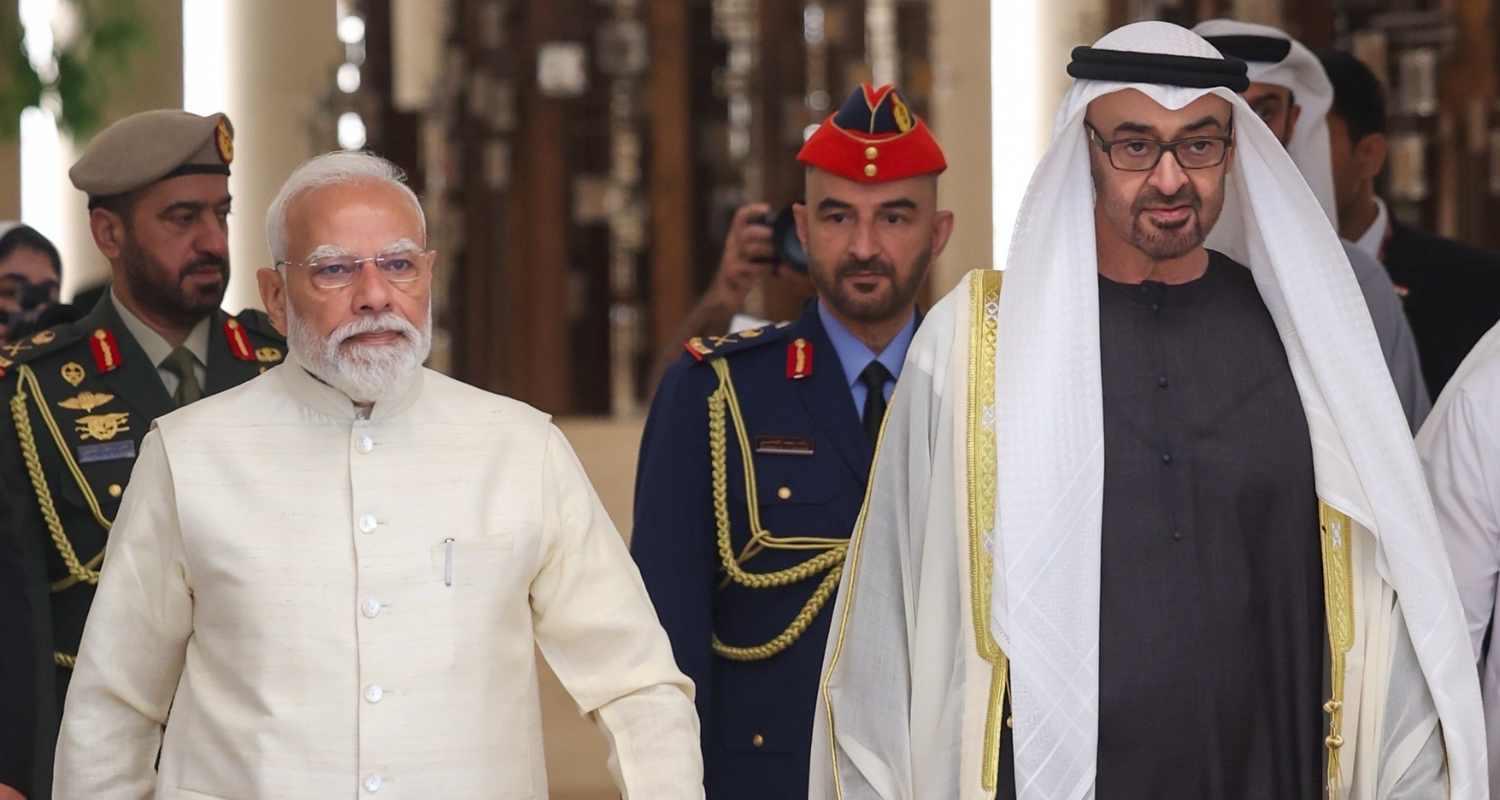
Indian Prime Minister Narendra Modi is on an official visit to the UAE, where he met with UAE President Sheikh Mohamed bin Zayed Al Nahyan, extending all possible support to the Middle Eastern nation to bring peace during the region's time of conflict. Meeting Al Nahyan on Friday, Modi said that India condemned the attacks on the UAE.
The UAE, which hosts a prominent US military base, has been at the receiving end of Iranian strikes during the ongoing US-Israeli war on Iran.
Modi further said, "The way UAE has been targeted is not acceptable,” but “the way UAE has handled the current situation with restraint is praiseworthy." The prime minister highlighted how the impact of the West Asian conflict is being felt globally, adding: "India is ready to extend all possible support to bring peace in West Asia."
Modi-Al Nahyan meeting took place shortly after the prime minister landed in the Gulf nation, the first leg of his five-nation tour, which also includes four European countries. The prime minister was received at the airport by Al Nahyan, reflecting the importance of the visit. The Indian leader was also accorded a guard of honour. In a special gesture, his aircraft was escorted by military jets of the UAE.
In a social media post, Modi thanked the UAE president for his "gracious gesture" in receiving him at the Abu Dhabi airport.
"I look forward to our discussions aimed at strengthening the ties between India and the UAE across key sectors, such as energy, investment, supply chains, and more," he said.
What else is on the agenda?
Modi is also expected to hold talks focusing on the India-UAE Comprehensive Strategic Partnership and detailed discussions on the rapidly evolving situation in West Asia. Energy security is likely to be a central theme of the discussions, as India monitors rising instability in the Gulf region amid concerns over oil supplies and maritime trade routes.
The visit comes against the backdrop of widening differences among Gulf powers over oil production policies, the Strait of Hormuz blockade, and regional alignments involving Israel and Iran. The changing geopolitical dynamics in West Asia — majorly shaped by the UAE, Saudi Arabia, and Iran — have added fresh complexity to India’s strategic and diplomatic calculations in the region.
UAE’s recent decision to leave the Organisation of the Petroleum Exporting Countries (OPEC) has also drawn attention, with analysts viewing the move as a sign of emerging strains within the oil producers’ bloc and Abu Dhabi’s attempt to pursue a more independent energy policy.
Following the UAE leg of the tour, Modi will travel to the Netherlands, Sweden, Norway, and Italy for meetings aimed at strengthening cooperation in areas including trade, technology, investment, and green transition initiatives.

 Follow us