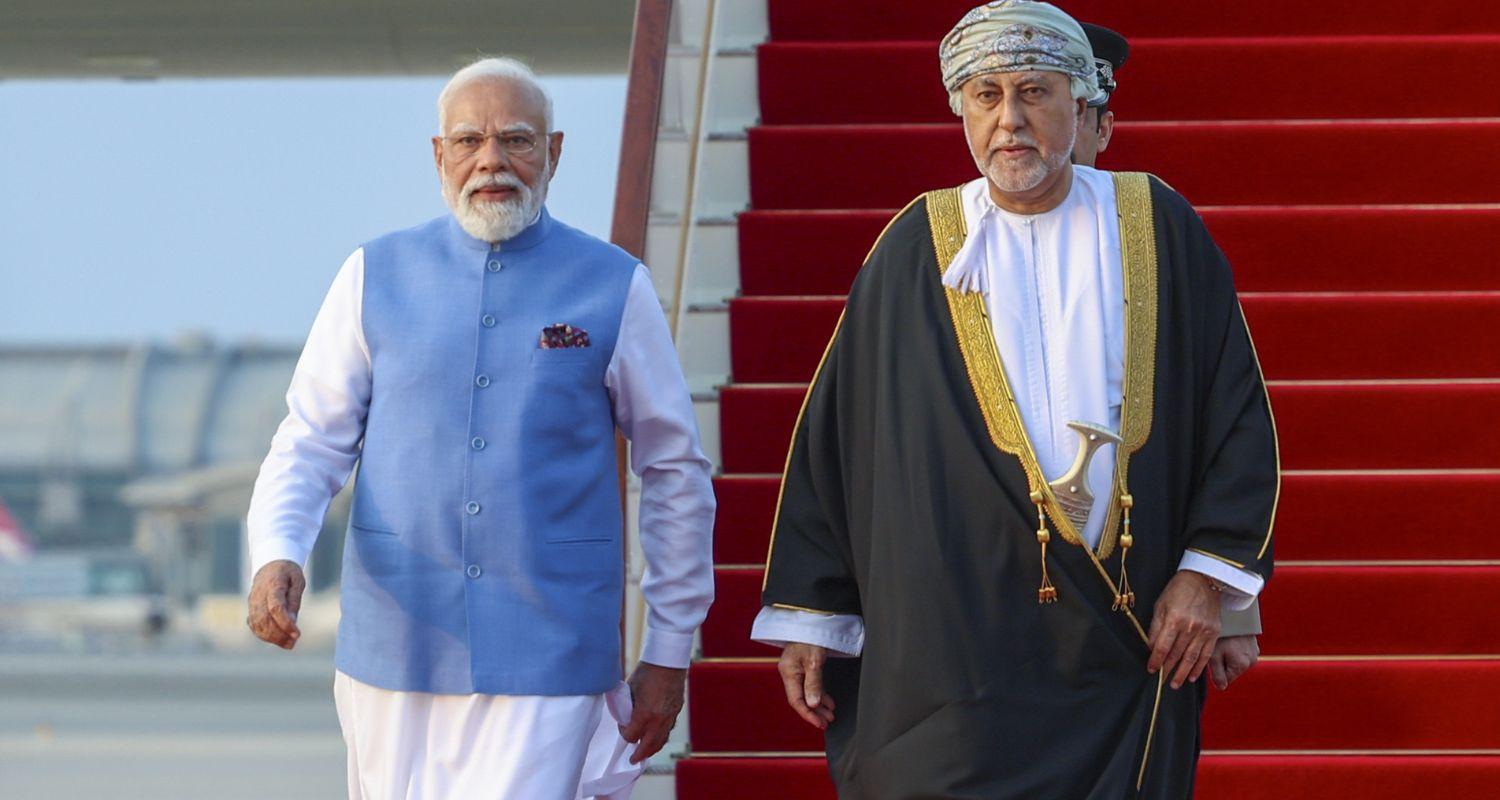
Prime Minister Narendra Modi arrived in Oman on Wednesday to a grand reception that included a guard of honour accorded to him. He was welcomed at the airport by Oman’s Deputy Prime Minister for Defence Affairs, Sayyid Shihab bin Tariq Al Said.
The Prime Minister is visiting Oman as part of his four-day, three-nation tour, and landed in Muscat at the invitation of Sultan Haitham bin Tarik.
The highlight of PM Modi’s trip would be the signing of the India-Oman free trade agreement (FTA), which was approved by the Union Cabinet on December 12.
Officially termed the Comprehensive Economic Partnership Agreement (CEPA), talks for the agreement officially began in November, 2023, and the negotiations concluded this year.
Earlier, the Ministry of External Affairs (MEA), in a statement, said that they were all “very optimistic” about it, especially since “teams from both sides have been working very hard for its early finalisation”.
“We have immense faith that this agreement, if signed during this visit, will significantly deepen the economic ties between India and Oman. And it will open up a new chapter in the history of India-Oman trade and commercial relationship,” said Arun Chatterjee, a Secretary in the MEA.
Also Read: PM Modi in Oman; FTA clinched
Besides addressing a gathering of the Indian diaspora in Muscat, PM Modi is scheduled to hold discussions with Sultan Tarik on strengthening the Strategic Partnership as well as strong commercial and economic relationship.
The MEA had also said earlier that the Prime Minister’s visit will be “an opportunity for both sides to comprehensively review the bilateral partnership, including in the areas of trade, investment, technology, agriculture, and culture”, as well as exchange views on “regional and global issues of mutual interest”.
This is PM Modi’s second visit to the Gulf nation, marking 70 years of the establishment of diplomatic relations between the two countries.
India-Oman bilateral trade was about USD 10.5 billion (exports USD 4 billion and imports USD 6.54 billion) in 2024-25, with key imports for India being petroleum products and urea – accounting for over 70 per cent of all imports.
Other key products that India imports are propylene and ethylene polymers, pet coke, gypsum, chemicals, iron and steel, and unwrought aluminium, while it exports mineral fuels, chemicals, precious metals, iron and steel, cereals, ships, boats and floating structures, electrical machinery, boilers, tea, coffee, spices, apparel, and food items.
In free trade agreements, the two trading partners either significantly reduce or eliminate customs duties on a maximum number of goods traded between them, while also easing norms to promote trade in services and attract investments.
India has already inked a similar agreement with another GCC member, the UAE, which came into effect in May 2022, while talks between India and Qatar for a trade pact are also expected to start soon.

 Follow us