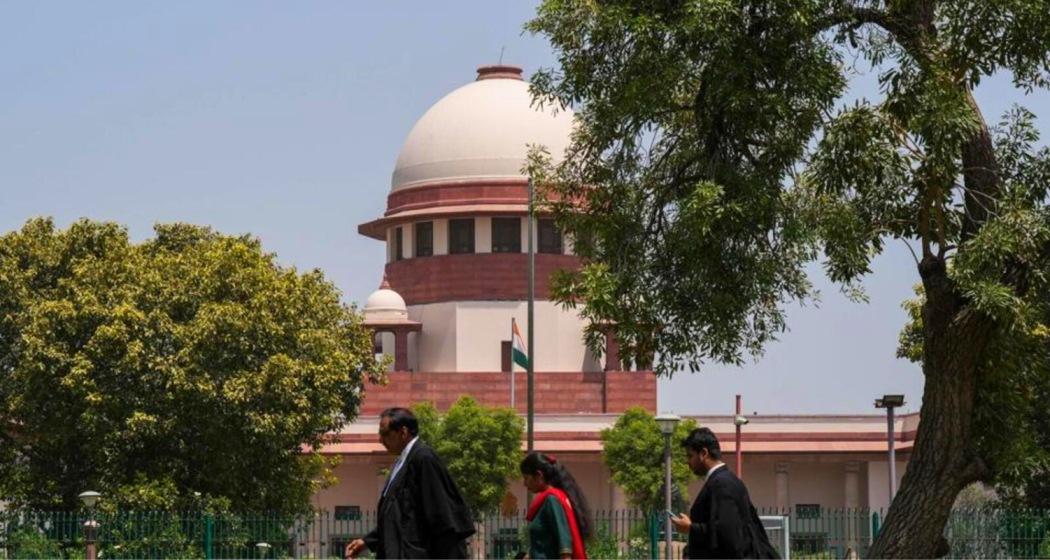
The Supreme Court has constituted a five-member High-Powered Enquiry Committee to independently examine allegations of excessive force by security personnel and violence during student protests in Delhi and other parts of the country.
The panel, headed by former Supreme Court judge Justice R Subhash Reddy, will investigate allegations arising from demonstrations linked to concerns over examination irregularities, paper leaks and the wider recruitment and competitive examination system.
The three-judge bench headed by Chief Justice of India Surya Kant, along with Justices Joymalya Bagchi and V Mohana, passed the order while hearing a batch of petitions concerning the protests.
The committee brings together former members of the judiciary and senior law-enforcement officials. Besides Justice R Subhash Reddy, it includes former Punjab and Haryana High Court Chief Justice Ravi Shankar Jha and former Delhi High Court judge Justice Shalinder Kaur.
Former CBI director Rishi Kumar Shukla and retired Meghalaya DGP Dr LR Bishnoi are the other members of the panel.
The committee has been asked to examine whether the force used by police and other security agencies was proportionate to the situation. Its mandate includes allegations involving lathi charges, tear gas, pellet guns and electric batons.
It will also look into allegations concerning the treatment of women protesters, including claims of molestation and sexual harassment, as well as allegations of surveillance and targeting of protesters on social media.
The panel will further examine instances of violence against security personnel and assess the injuries suffered by both protesters and members of the security forces. It has been directed to submit an interim report on its initial findings at the earliest.
The Supreme Court's intervention follows weeks of student demonstrations at Jantar Mantar and other locations over alleged examination paper leaks and concerns about the conduct of competitive examinations.
The agitation included hunger strikes and marches towards Parliament. During one such demonstration, tensions escalated as protesters attempted to move through police barricades, resulting in clashes with security personnel.
Protesters have alleged that police and other forces used excessive and disproportionate force to disperse them. Videos circulated on social media subsequently triggered questions over the treatment of demonstrators.
Authorities, however, have maintained that force was deployed after sections of the crowd became unruly and allegedly attacked security personnel.
With allegations now set to be examined by a panel comprising former judges and senior law-enforcement officials, the Supreme Court's order places the conduct of both protesters and security forces under scrutiny. The inquiry could determine whether the force used during the confrontations crossed the line between crowd control and excess, while also examining allegations of violence committed against security personnel.
Also read: Delhi HC asks Centre to consider curbs on children’s social media

 Follow us