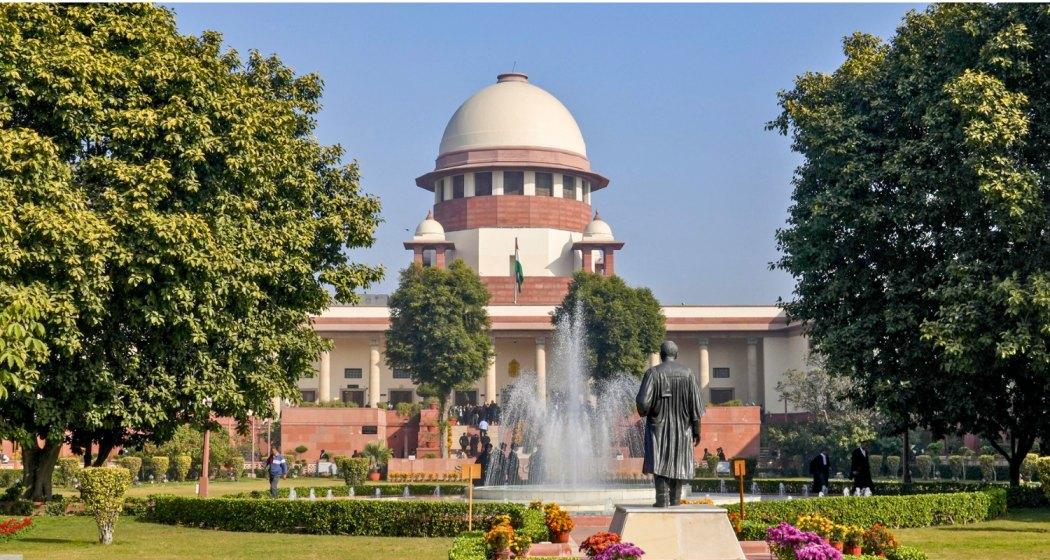
The Supreme Court on Wednesday upheld the Election Commission of India’s (ECI) decision to conduct a Special Intensive Revision (SIR) of electoral rolls, ruling that the exercise falls within the constitutional and statutory powers of the poll body and is necessary to ensure free and fair elections.
A Bench headed by Chief Justice of India Surya Kant and Justice Joymalya Bagchi held that the revision exercise does not violate the provisions of the Representation of the People Act, 1950, or the rules framed under it.
The apex court delivered its verdict on a batch of petitions challenging the legality of the revision exercise initiated by the Election Commission of India in Bihar and later extended to West Bengal, Kerala and Tamil Nadu.
The Bench said the ECI was empowered to undertake such an exercise under Article 324 of the Constitution and Section 21(3) of the Representation of the People Act.
“The credibility and accuracy of electoral rolls are essential to maintaining the democratic process,” the court observed, adding that the exercise strengthened the constitutional mandate of conducting free and fair elections.
Court backs ECI powers
The Supreme Court framed three key questions while examining the matter — whether the ECI had the authority to conduct the exercise, whether the revision served a legitimate purpose and whether the procedure adopted violated the statutory framework governing electoral rolls.
Answering all three issues in favour of the poll body, the Bench held that the law permits a special revision whenever necessary, provided reasons are recorded.
Also read: Name deletion in SIR can’t cancel citizenship: SC
The court noted that more than four decades had passed since the last intensive revision and observed that rapid urbanisation, migration and large-scale additions and deletions in voter lists had increased the possibility of duplication and inaccuracies.
Rejecting claims that the exercise was merely administrative, the court said the revision directly advanced the constitutional objective of ensuring fair elections.
Safeguards and citizenship checks
The Bench said the measures adopted by the ECI were proportionate and accompanied by safeguards, including mechanisms for participation, correction and grievance redressal.
The court also upheld the documentation framework prescribed by the poll body, saying it was necessary for administrative consistency and evidentiary reliability.
Importantly, the apex court ruled that the Election Commission has the authority to conduct a limited inquiry into citizenship during electoral roll revision, though such scrutiny would only be for electoral purposes and not a final determination of citizenship status.
The court directed that cases where names were deleted over doubtful citizenship must be referred within four weeks to the competent authority under the Citizenship Act, 1955, for adjudication before the next Assembly or local body elections.
Petitioners had argued that the exercise could disenfranchise genuine voters, especially marginalised and migrant communities unable to produce documentary proof. The ECI, however, maintained that the revision was necessary to prevent duplication and inclusion of ineligible voters.

 Follow us