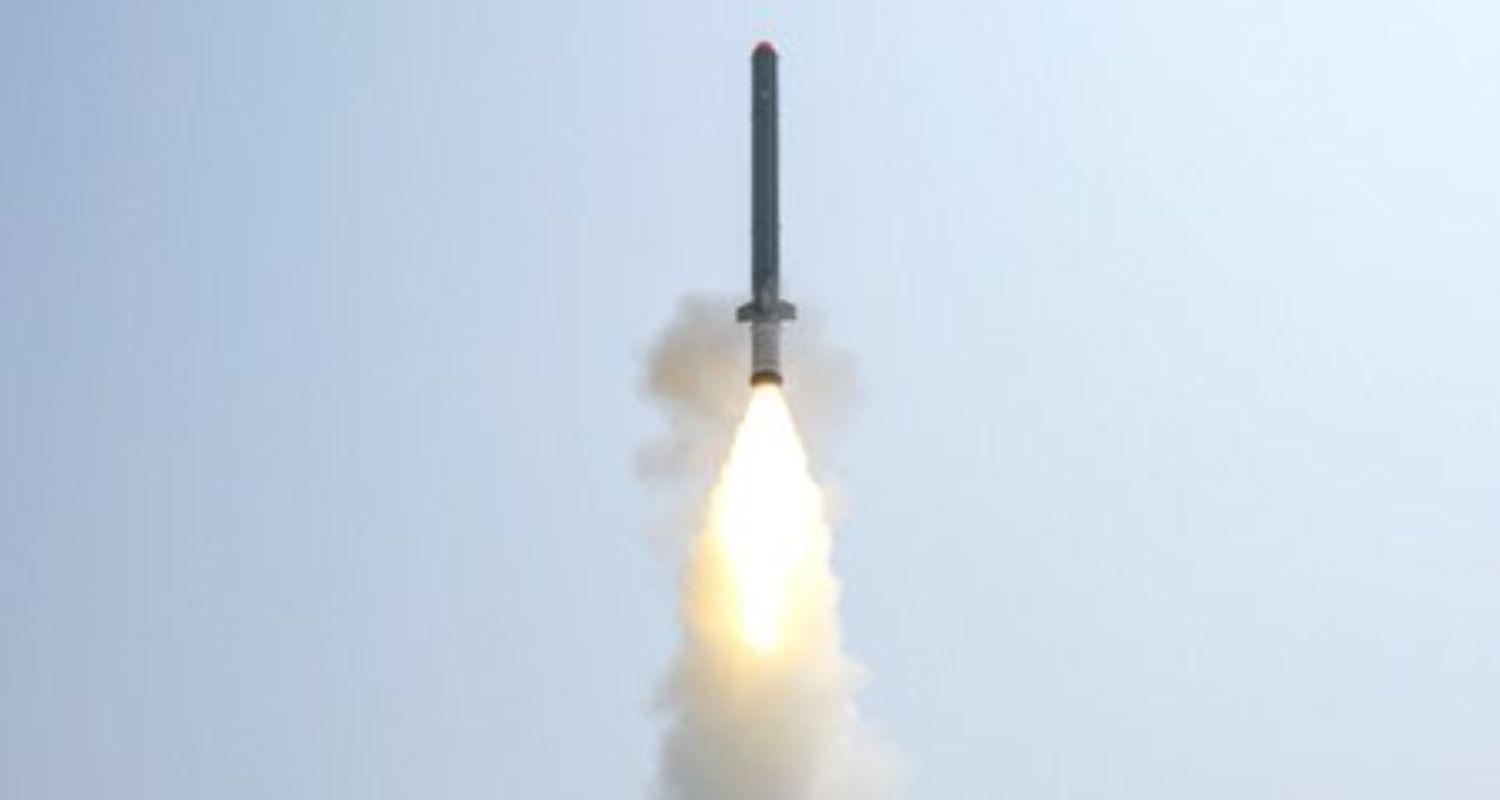
After the initial failures witnessed in the development process of the 'Nirbhay' cruise missile programme, there emerged an instance of perfection for the DRDO in the form of successful testing of the Indian version of the Tomahawk cruise missile. Launched from the Integrated Test Range (ITR) at Chandipur off the Odisha coast, the Long Range Land Attack Cruise Missile (LRLACM), which is yet to be officially named, successfully struck its target at a distance of 1,000 kilometres, demonstrating that all previous technical glitches have been resolved.
Defence officials stated that the new cruise missile, capable of being launched from land, sea, and sub-surface platforms, serves as a successor to the 'Nirbhay' but boasts an extended operational range and significantly improved guidance systems. The weapon system is scheduled to undergo two more developmental trials, followed by two user trials over the next two years, before it is formally inducted into the Indian armed forces.
Although the official DRDO press release was sparse on technical details, the missile, which can reach speeds of up to Mach 0.8, provides a much-needed capability for striking deep-seated targets while flying at terrain-hugging altitudes. Flying just metres above the ground, the missile presents a severe challenge to hostile radar systems, allowing it to evade detection before delivering a 500-kilogram warhead to destroy its objective.
The development comes as regional neighbours possess established cruise missile capabilities. Pakistan has operated its 900-kilometre range Babur cruise missile since 2010, a weapon reverse-engineered from an unexploded American Tomahawk missile recovered from Afghanistan after a 1998 US strike on an Al-Qaeda camp. Islamabad reportedly received extensive technical assistance from Beijing to develop the Babur, sharing the acquired American technology with China in return. China itself deploys a vast arsenal of both conventional and nuclear-armed cruise missiles.
As stand-off weaponry increasingly dictates the modern theatre of war, India is actively upgrading its conventional arsenal with long-range ballistic and cruise missiles. These conventional assets, alongside advanced rocket systems, are earmarked for the Indian Army’s artillery and rocket regiments to counter the missile capabilities of the People's Liberation Army along the border.
Also read: Odisha CM flags off Somnath Swabhiman Yatra

 Follow us