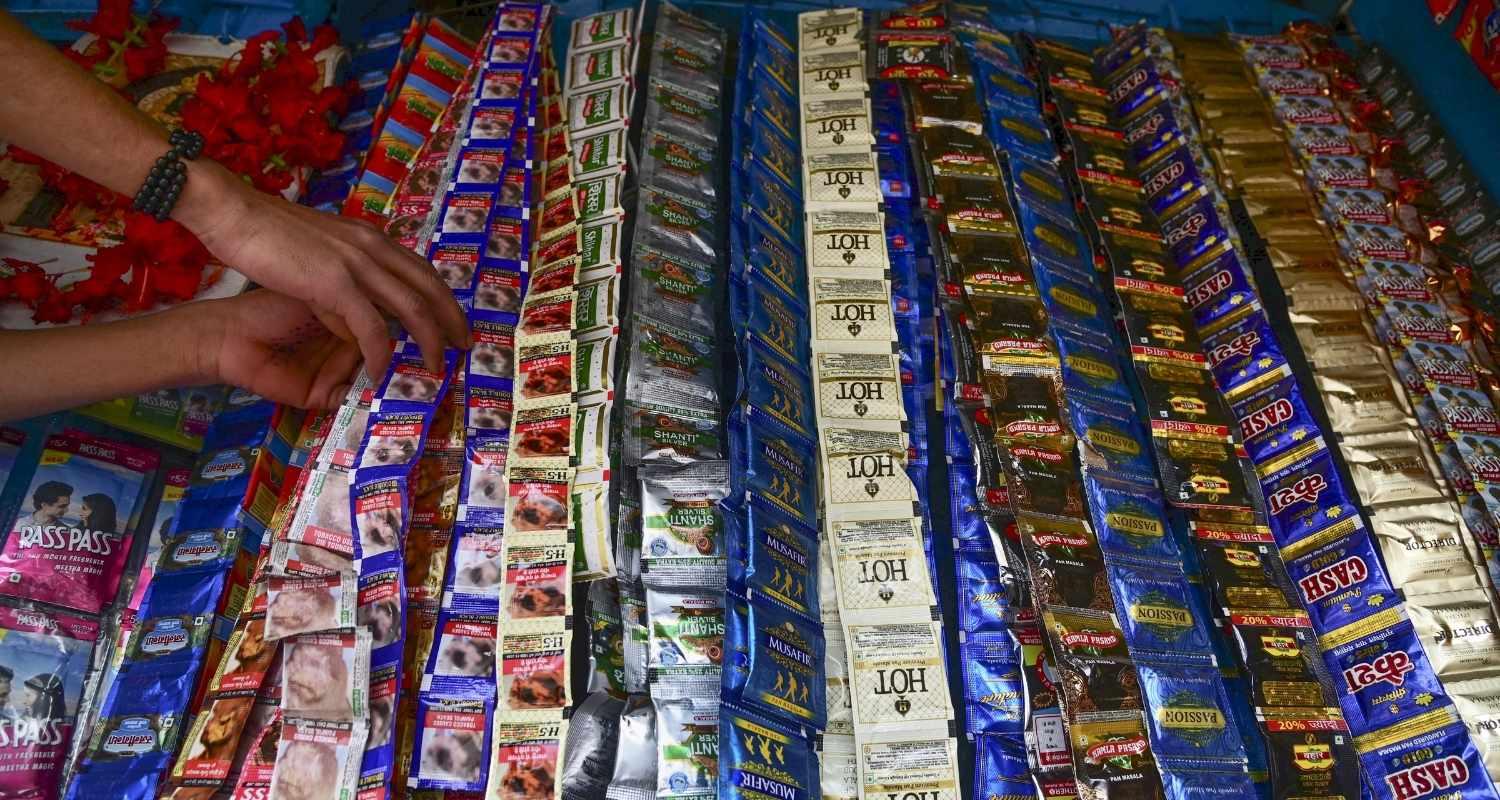
Sin goods such as tobacco products and cigarettes will invite an additional excise duty, while pan masala will have a health cess levied on it over and above the 40 per cent Goods and Services Tax (GST), from February 1.
Additionally, a new MRP-based valuation mechanism will also be introduced for tobacco products (chewing tobacco, filter khaini, jarda scented tobacco, gutkha) that determines GST based on retail sale price declared on the package.
As a result, pan masala manufacturers will need to apply for a new registration under the health and national security cess law from February 1, and install a functional CCTV system covering all packing machines and preserve the footage for at least 24 months. They will also be required to disclose with excise authorities the number of machines and their capacities and can also claim abatement in excise duty in case a machine is non-functional for a minimum of 15 consecutive days.
In September, 2025, the government replaced the 28 per cent GST and compensation cess that was being levied on such ‘sin goods’ since July 1, 2017, and replaced it with additional cess and excise levies as part of a major GST overhaul.
The Finance Ministry had notified February 1, 2026, as the date for the implementation of amendments to sin goods. The Central Excise Act has also been amended to impose excise duty ranging from ₹2.05-8.50 per stick based on cigarette length.
Besides, the health and national security cess Act levies cess on manufacturing capacity of pan masala units. The total tax incidence on pan masala after taking into account 40 per cent GST will be retained at the current level of 88 per cent.
The proceeds from excise duty on tobacco products will be redistributed among states as per Finance Commission recommendations, since the Centre’s tax revenues form part of the divisible pool and 41 per cent of it is shared among the states. Besides, the proceeds from the cess levied on production capacity of pan masala manufacturing units will be shared with states through health awareness or other health-related schemes/activities.
Also Read: New levies on tobacco, pan masala to be effective Feb 1
Under the new tax structure, short non-filter cigarettes (up to 65 mm) will attract an additional duty of about ₹2.05 per stick, while short filter cigarettes of the same length will be charged around ₹2.10 per stick.
Medium-length cigarettes (65-70 mm) will face an additional duty of roughly ₹3.6-4 per stick, and long, premium cigarettes (70-75 mm) about ₹5.4 per stick. The highest duty of ₹8.50 per stick applies only to unusual or non-standard designs of cigarettes and most popular cigarette brands do not fall under this slab.
Crisil Ratings in a report has said that the domestic cigarette industry will see a 6-8 per cent volume contraction in the next fiscal, following the imposition of additional excise duties.
Chewing and jarda scented tobacco, and gutkha will attract an excise duty of 82 per cent, and 91 per cent, respectively.
The Finance Minister Nirmala Sitharaman had said in Parliament in December that the purpose of the health cess is to create a “dedicated and predictable resource stream” for two domains of national importance – health and national security. The levy of such cess on pan masala and excise duty on tobacco was approved by Parliament in December.
In India, taxes on cigarettes had remained unchanged in the past 7 years since the introduction of GST in July 2017. This is in contrast to global best practices and public health guidance which emphasises annual increases in duties to ensure that cigarette prices rise faster than incomes.
According to World Bank estimates, India’s total tax incidence on cigarettes is approximately 53 per cent of the retail price, which is substantially lower than the World Health Organization’s recommended benchmark of 75 per cent or more for achieving meaningful reductions in tobacco consumption.
Countries like the United Kingdom and Australia tax cigarettes at 80-85 per cent of the retail price, while France, New Zealand, and several EU member states maintain tax incidence levels exceeding 75-80 per cent.
Middle-income countries – such as Turkiye, South Africa, the Philippines, and Chile – have over the past decade raised cigarette taxation to levels approaching or exceeding the WHO benchmark.
The GST Council, comprising finance ministers from Centre and states, had decided that the compensation cess will cease to exist after the repayment of loans taken to compensate states for GST revenue loss during Covid. The ₹2.69 lakh crore loan will be repaid by January 31, 2026.
At the time of the introduction of the GST on July 1, 2017, a compensation cess mechanism was put in place for 5 years till June 30, 2022, to make up for the revenue loss suffered by states on account of GST implementation.
The levy of compensation cess was later extended by 4 years till March 31, 2026, and the collection is being used to repay the ₹2.69 lakh crore loan that the Centre took to compensate states for the GST revenue loss during the Covid period.

 Follow us