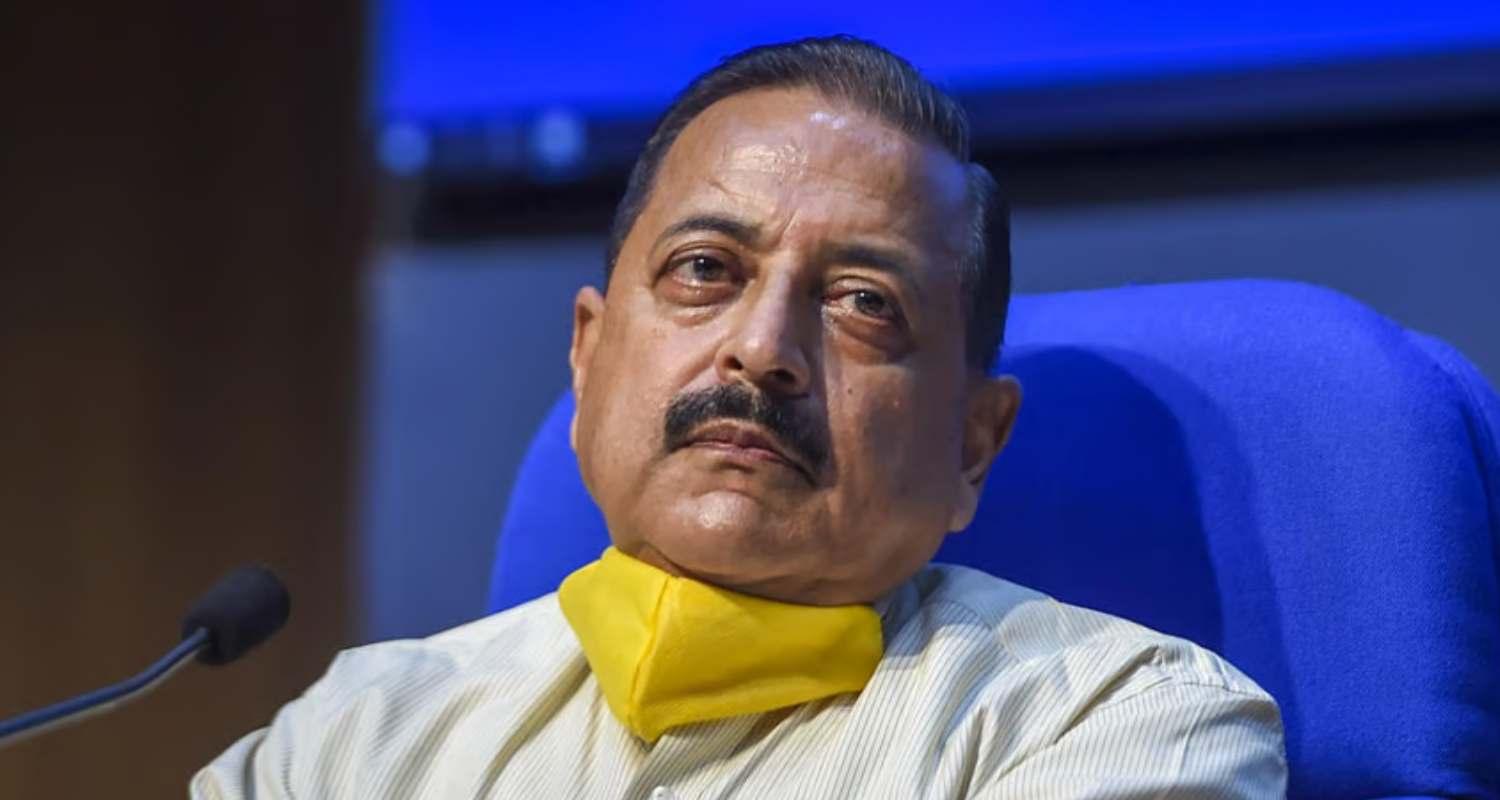
Union Minister of State (Independent Charge) for Science and Technology, Earth Sciences, Jitendra Singh, will be visiting the Andaman and Nicobar Islands on January 17. He is scheduled to visit the National Institute of Ocean Technology (NIOT) and will go through a DPR on pilot scale cultivation of marine fin fish like tuna, cod and snapper and seaweed cultivation in the open sea at Atal Centre for Ocean Science and Technology for Islands at Dollygunj in Sri Vijaya Puram.
The archipelago has a potential of 1,48,000 tonne of sea harvesting assets, and the current harvest figure stands at 49,138 tonne per year. When it comes to Tuna, the current oceanic harvest stands at 4,420 tonne, but the actual potential is 60,000 tonne tuna per annum.
"The Union minister will be shown how to increase the oceanic harvest of marine fin fishes," a senior official said.
Besides visiting NIOT, the Union minister will also inquire about the seaweed cultivation facility in the archipelago. Seaweed is used to produce various products, which also include cosmetics, medicines, food items and dyes.
"There are 244 species belonging to 100 genera of Seaweed available in the Andaman and Nicobar Islands. Out of 100 genera, nearly 58 Seaweed types are recognised as extremely useful and commercially viable. It will provide an alternate source of livelihood to the fishermen. Also, Seaweed marketing and its trading can further add significant value to our GDP. Also, it contains essential nutrients that help fight diseases like cancer, internal infection, diabetes, arthritis, heart problems, etc," a senior administrative official said.
In 2020 (for five years till 2025) - the government had earmarked Rs 640 crore exclusively to promote seaweed culture with a targeted production of more than 11.2 lakh tonne by 2025 under the Pradhan Mantri Matsya Sampada Yojana (PMMSY). The PMMSY aims to boost seaweed production to 1.12 million tonne in the coming five years (target year 2030).
Later, the researchers of the National Institute of Ocean Technology (NIOT) will also brief him about the importance of Andaman and Nicobar Islands in Samudrayaan Mission ' first manned deep-sea exploration, which is going to give a boost to India's 'Blue Economy'.
The Andaman and Nicobar Islands Sea is rich in Polymetallic Nodules and deep-sea exploration will help us to extract Polymetallic Nodules. It is valuable for extracting essential metals like manganese, nickel, copper, cobalt, etc. It is also a key component in making electric vehicles, batteries, and renewable energy devices.

 Follow us