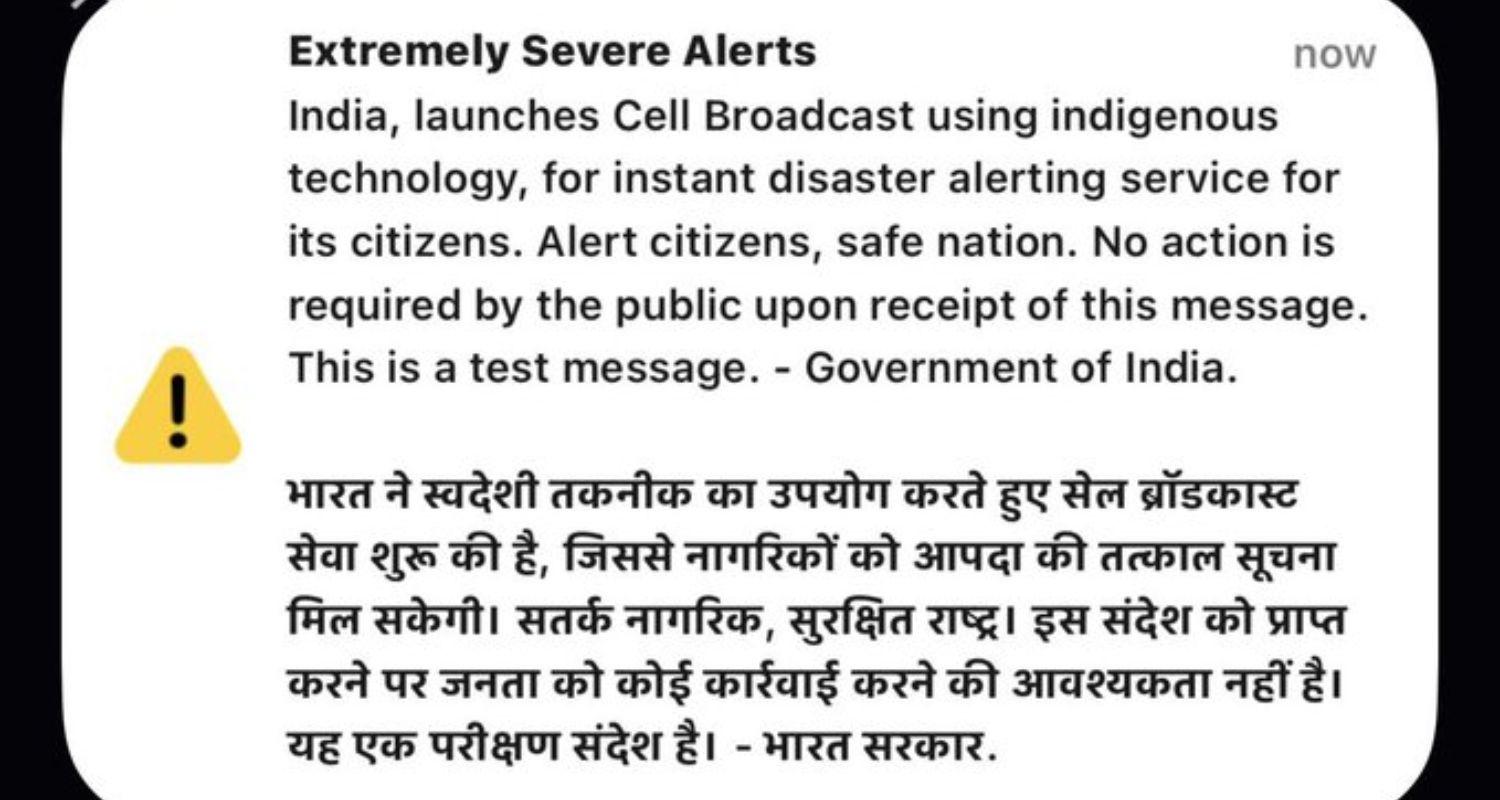
India took a significant step forward in public safety this Saturday with the launch of its indigenous Cell Broadcast messaging system. In a nationwide debut, the government triggered a test notification at approximately 11:42 am, sending a distinct siren-like alert to mobile phones across the country. Built on the Common Alerting Protocol (CAP), this technology is designed to act as a lifeline during crises, ranging from natural disasters to wartime emergencies.
What is SACHET?
At the heart of this initiative is SACHET— a name that appropriately translates to "alert." SACHET is an integrated platform that is designed to push urgent information to mobile users within specific geographic areas. It is developed by the Department of Telecommunications in tandem with the National Disaster Management Authority (NDMA). Whether it is a looming cyclone or a man-made hazard like a chemical leak, the system ensures that crucial warnings reach the public without delay.
The mechanics of the system are particularly clever because they do not rely on the internet or encrypted messaging channels. Instead, it uses mobile phone towers to broadcast signals directly to handsets. This one-way communication allows messages to reach billions of people in mere seconds, provided the device is connected to a cellular network. While the system can issue nationwide warnings, its real strength lies in its ability to target highly localised zones.
Although the government has already sent out some 134 billion SMS-based alerts in 19 languages across all 36 states and union territories, the introduction of Cell Broadcast (CB) technology significantly bolsters this capability. Unlike standard texts, which can get bottlenecked in a network, CB technology transmits to every device in a defined area simultaneously, thereby ensuring near real-time delivery during life-and-death situations. This upgrade was spearheaded by C-DOT, the government’s premier telecommunications research and development wing.
How to receive alerts?
For those who wish to manage how they receive these notifications, the settings are relatively straightforward. On most modern handsets, users can navigate to "Settings," then "Safety and Emergency," and toggle "Wireless Emergency Alerts" to manage test notifications.
For more comprehensive coverage, citizens are encouraged to download the SACHET mobile app from the PlayStore or App Store, which provides detailed weather updates and emergency news via the internet. It is also possible to receive these alerts through web browsers like Chrome or Firefox on a computer. In all cases, granting location permissions is essential to ensure that the warnings you receive are relevant to where you are actually standing.
Also read: India rolls out disaster alert system, citizens get test messages

 Follow us