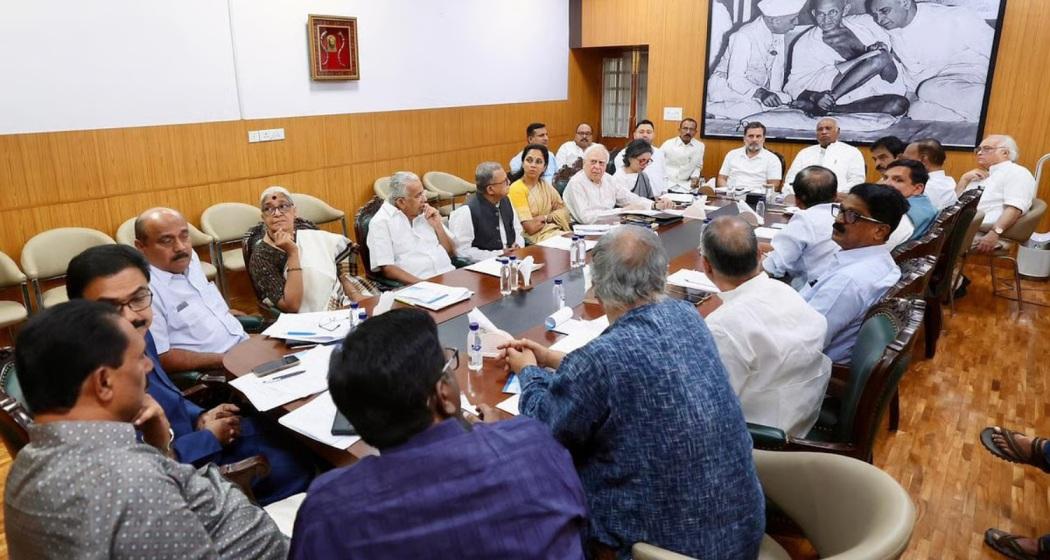
The Opposition INDIA bloc will oppose the proposed amendments to the women’s reservation law over its linkage with delimitation, Congress president Mallikarjun Kharge said on Wednesday, ahead of a special three-day session of Parliament.
“We all are in favour of the Women’s Reservation Bill. But the way in which they have brought it, we have reservations about that. It is politically motivated,” Kharge said, alleging the move was aimed at “suppressing the Opposition parties”.
The special sitting, scheduled from April 16 to 18, will take up amendments to the Nari Shakti Vandan Adhiniyam to operationalise 33 per cent reservation for women in the Lok Sabha and state Assemblies from 2029.
The government has circulated draft proposals linking implementation of the quota to a delimitation exercise. According to the plan, the total number of Lok Sabha seats could be increased from 543 to around 850 to accommodate the reservation.
The proposed Delimitation Bill 2026 seeks to redraw constituency boundaries based on the 2011 Census, instead of waiting for fresh population data.
Also read: Cong discusses women quota, LS delimitation ahead of session
Opposition parties have objected to this approach, arguing that the linkage between reservation and delimitation raises concerns about fairness and representation. The Congress has termed the intent behind the move “mischievous” and its design “devious”, warning of wider implications for parliamentary democracy.
The INDIA bloc’s position signals a coordinated pushback in Parliament, even as parties reiterated their support in principle for women’s reservation.
Senior Congress leaders, including Rahul Gandhi, have been part of discussions around strategy ahead of the session, which is expected to witness sharp exchanges between the treasury and Opposition benches.
The government, however, is pushing ahead with its plan, arguing that increasing the number of seats is essential to implement the quota without reducing representation for existing constituencies.
With the Bill set to be taken up during the special session, attention will now turn to whether the government has the numbers to push the amendments through amid unified Opposition resistance.

 Follow us