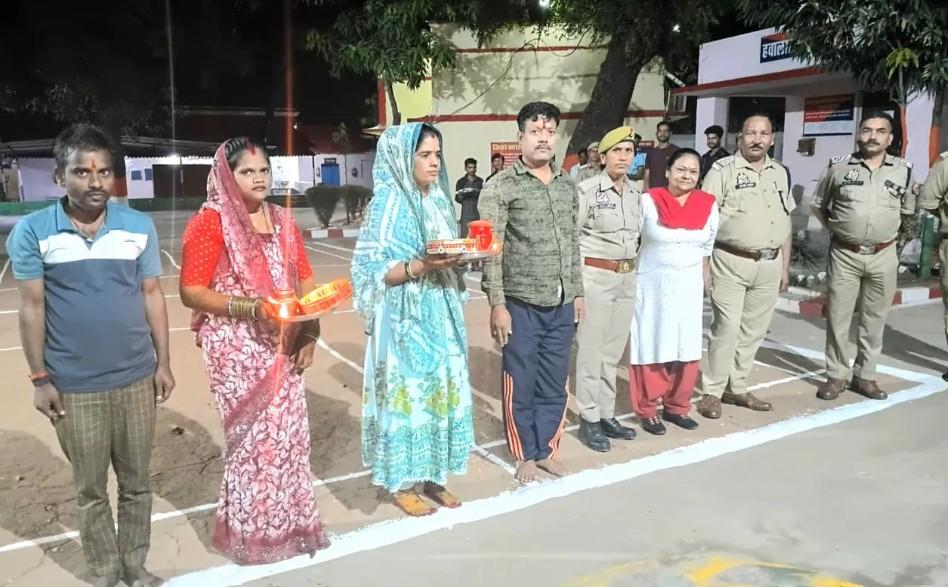
Five women prisoners at Lalitpur District Jail observed Karwa Chauth with traditional prayers and rituals for the long lives and well-being of their husbands. The prison administration arranged the necessary facilities so they could follow the festival customs despite being in custody.
Two of the women were permitted to perform the rituals in the presence of their husbands, who are also lodged in the same jail. The remaining three completed the observance after female prison staff showed them photographs of their husbands on mobile phones.
Preparations began in the women's barracks during the morning. The prisoners applied mehendi to one another, wore traditional clothes and took part in prayers under the supervision of female prison staff. A designated area was also arranged inside the jail for listening to the Karwa Chauth story and conducting the rituals.
After moonrise, the women viewed the moon through a sieve, prayed for their husbands' well-being and ended their fasts. Fruits, sweets and refreshments were provided as part of the arrangements.
Two couples allowed to perform rituals together
Chanda and Pushpa have husbands who are lodged in the same prison. The authorities allowed both couples to come together during the prayers, enabling the women to complete the traditional ceremony in their husbands' presence.
The other three women performed the rituals with the help of their husbands' photographs displayed on mobile phones by female prison staff.
Jaleb Raja, the wife of Pancham Singh, is serving a life sentence in a murder case. Chanda, the wife of Mitthu, is serving a 12-year sentence in a case registered under the Narcotic Drugs and Psychotropic Substances (NDPS) Act.
Pushpa, the wife of Harkishan, is facing trial under Section 103. Chandni, the wife of Mulayam, is an undertrial prisoner in a case under the DP Act. Reena, the wife of Jagdish, is also facing trial in an NDPS case.
Prisoners' Welfare Fund used for arrangements
Jail Superintendent Prashant Upadhyay said the prison should not be viewed only as a place of punishment and described it as a centre for reform. He said attention to inmates' religious beliefs and emotional needs formed part of the rehabilitation process.
The Prisoners' Welfare Fund was used to purchase traditional earthen pots, sieves, lamps, bangles, scarves, puja materials, fruits and seven varieties of sweets. Mehendi, traditional clothes and other items required for the observance were also arranged.
Upadhyay said the jail makes similar special arrangements for prisoners during festivals including Raksha Bandhan, Eid and Diwali. The facilities provided for Karwa Chauth allowed the five women to observe the festival according to tradition while remaining separated from their families.

 Follow us