Very few Indian states carry as heavy a political legacy as Bihar. Often described as the cradle of democratic politics, the state has produced leaders whose authority rested not merely on electoral victories but on moral credibility. From Shri Krishna Singh to Nitish Kumar, Bihar’s chief ministers have generally been figures whose public image remained largely free of criminal taint.
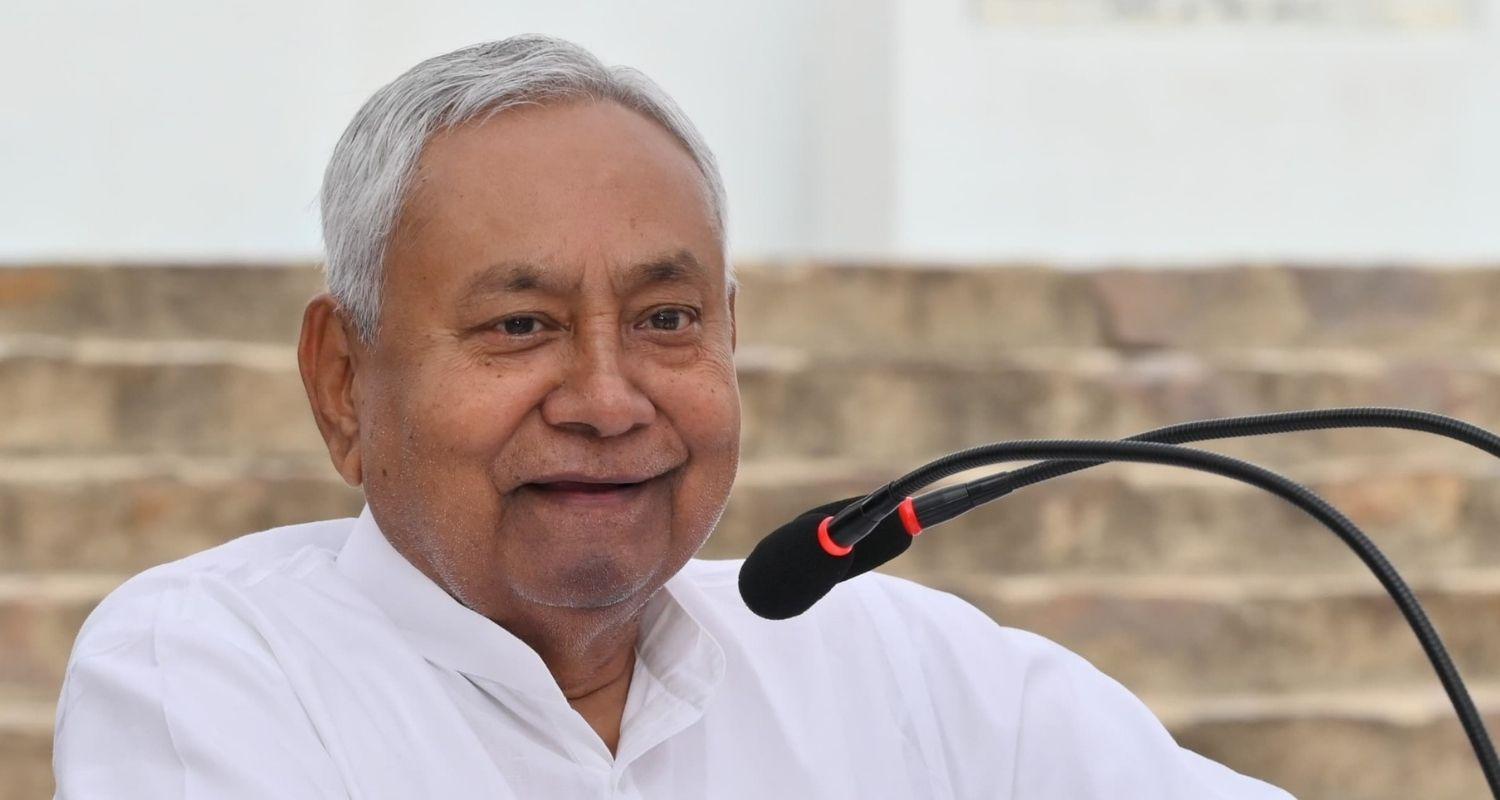
As Nitish Kumar prepares to move to the Rajya Sabha, the question of succession inevitably arises. Numerically, the answer appears straightforward. The Bharatiya Janata Party, now the dominant partner in the ruling coalition, would naturally claim the chief minister’s chair. Yet, politics in Bihar has rarely been dictated by arithmetic alone.
Bihar’s distinctive political expectations
Across several states, the BJP has recently adopted a strategy of appointing relatively low-profile leaders as chief ministers. In Rajasthan, Madhya Pradesh and Odisha, the party has elevated figures who were not previously considered front-runners. The logic is organisational: strong central leadership paired with state leaders who rely on the party rather than command independent power bases. Bihar, however, operates by a different political grammar.
Also read: Modi can broker peace in Middle East
The state’s voters are famously eclectic in their electoral choices. Legislatures have included politicians from unconventional backgrounds—singers, performers and individuals with limited formal education. Yet, when it comes to the chief minister, the electorate has historically demanded something more: a leader with political stature, moral authority and a reputation for fairness.
This expectation reflects Bihar’s political tradition, where leadership has often been intertwined with ideas of social justice and public integrity.
A delicate choice for the BJP
For the BJP, therefore, the challenge lies not in claiming power but in exercising it wisely. The party must select a leader who resonates with Bihar’s expectations of legitimacy.
Among the names frequently discussed is Samrat Choudhary, an influential figure within the state unit. Yet his political journey—marked by shifting affiliations and past controversies—may raise questions about whether he fits the mould of a chief minister whose public image is beyond reproach.
In Bihar’s political environment, perception matters almost as much as governance. Installing a leader whose credibility appears contested could hand the opposition an opportunity to frame the government as politically opportunistic.
Enduring example of Lalu
Any discussion of leadership in Bihar inevitably invokes Lalu Prasad Yadav. His tenure remains deeply polarising, yet his rise offers an instructive lesson.
Lalu emerged in the 1990s as a formidable mass leader, who embodied social empowerment for marginalised communities. His later conviction in the Fodder Scam severely damaged his political standing. Yet, even critics often acknowledge that his appeal was rooted in grassroots legitimacy rather than administrative credentials.
Bihar’s electorate has historically distinguished between flawed governance and criminal legitimacy. Leaders may survive political controversies, but the perception of criminality tends to erode public trust far more quickly.
The Nitish era and its legacy
The long tenure of Nitish Kumar—often in partnership with the late Sushil Kumar Modi—attempted to restore administrative credibility after years of political turbulence. Their governance focused on improving roads, strengthening law and order and expanding educational opportunities.
Nitish cultivated an image of austere and technocratic leadership. That reputation helped him maintain authority despite frequent shifts in political alliances. His departure from state politics therefore creates not merely a vacancy, but a void in the state’s carefully balanced political order.
A defining moment
For the BJP, Bihar now presents both an opportunity and a test. Choosing a chief minister with broad social legitimacy could consolidate the party’s influence in eastern India. A misstep, however, could revive familiar criticisms about leadership and credibility.
In Bihar, political power alone has never been sufficient. The state’s electorate still expects its chief minister to embody something larger than party strategy: a sense of justice, credibility and public trust.
Whether the BJP recognises this unwritten rule may well determine the stability of Bihar’s next political chapter.
By Vijay Deo Jha

 Follow us