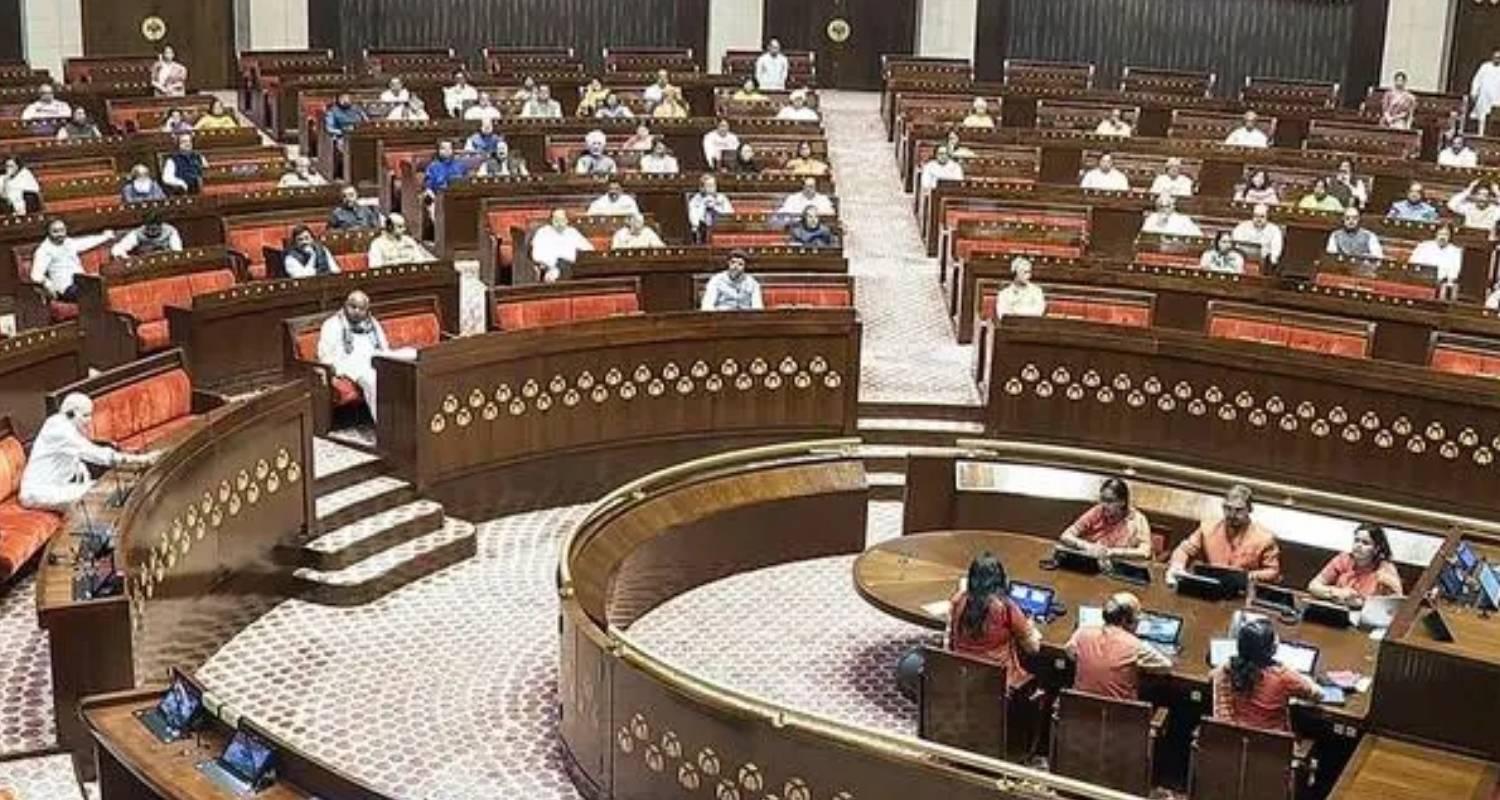
The Bharatiya Janata Party-led National Democratic Alliance has further consolidated its position in the Rajya Sabha, taking its total strength to 141, while the INDIA bloc came down to 55. Of the 37 seats for which elections were held recently, the NDA won 22 while the INDIA bloc/ others bagged 15.
The Rajya Sabha elections are mostly a matter of formality. In the current case also, of the 37 members, 26 were elected unopposed, while elections were held for 11 seats. For most of these seats again, the elections were just a procedural arrangement as the results were a foregone conclusion. These are more like nominations than elections.
However, in three states of Bihar, Orissa and Haryana, several legislators either cross-voted, by voting against their own party nominee, or abstained. Only in Haryana did the Congress manage to ensure the election of its candidate despite the fact that five of its legislators voted in favour of a BJP supported independent candidate, against the official nominee Karamveer Singh Baudh.
The BJP-led NDA won one extra seat in Bihar, while an independent supported by the party managed to win in Orissa, thanks to the cross voting and abstention by the opposition members. In Bihar, the INDIA bloc could have won one of the five seats, but due to the abstention of three Congress and one RJD legislators, it could not win this seat even.
In Orissa, 11 opposition legislators from the Biju Janata Dal and the Congress cross-voted and supported a BJP backed independent candidate.
The Congress and other opposition parties have come out with the same charge of “vote theft” by the BJP, a charge that does not hold. No legislator can be forced or intimidated to vote for a particular candidate. Yes, there may be different types of inducements and considerations, which can influence the legislators at the time of voting.
Interestingly, cross-voting in the Rajya Sabha elections does not come under the purview of the Tenth Schedule, the ‘Anti Defection Law’. While the parties do issue the ‘whip’ to the members, the whip, according to the Supreme Court of India, does not hold for the elections. This is apparently because voting is a personal right and individual choice of the person. Just because he belongs to a particular party does not mean he is bound to cast his/ her Rajya Sabha vote at its behest.
The Supreme Court ruled in 2006 in Kuldeep Nayar vs Union of India case that voting against a party whip in the Rajya Sabha conducted via open ballot, does not qualify for defection, as no formal whip applies in elections.
While most of the political parties appear to have resigned to the outcome, there indeed is a serious need to reconsider and review the process of elections for India's Upper House. In the indirect elections, it is obviously the majority/ ruling political party in a particular state that manages to get maximum members elected, at times, it also manages to exercise “extra-constitutional” influence that leads to cross-voting.
Also read: RS poll cross-voting: Congress to serve notices to Haryana MLAs
As argued earlier also in these columns, the system of elections to the Rajya Sabha needs to change from “indirect” to “direct elections”. The Rajya Sabha in India has been modelled after the British House of Lords, although there the “peers” are actually nominated, while in India they are supposedly “elected”.
Until recently, while 90 per cent peers were nominated from different sections of the population on the recommendation of the Prime Minister, 10 per cent were hereditary peers. Now the British parliament has abolished the hereditary peerage.
In India, the Rajya Sabha is “relatively” representative since the members are “elected”. But most of these elections are more like nominations than elections.
India should seriously consider adopting the US model of Senate where senators are directly elected. Each state elects two senators irrespective of its population or geographical size. This helps in providing a legislative balance against the dominance by more populated and geographically larger states over the less populated and smaller ones.
In India, some states, particularly Tamil Nadu, are against delimitation of the parliamentary constituencies on the basis of the latest census. Such states have a justified argument as to why they should be penalised for having less population, as they will have fewer MPs than the states with larger population.
But the larger populations will certainly need more legislators and parliamentarians. To balance this dominance, India, like the US, can provide parity in the Upper House by introducing direct elections with an equal number of seats for each state, no matter how big or how small.
This will address the perennial problem of “cross-voting” for good. Besides, this will also ensure better quality of people making it to the house, as people will have the discretion to accept or reject a particular candidate. Otherwise, right now, the absolute authority lies in the political parties, their leaders in particular.

 Follow us