
Trending:
Examining Omar Abdullah’s poaching claims against BJP
His claims about BJP trying to bribe and buy his MLAs are aimed more at the people of Kashmir and the PDP than the BJP itself. Follow us
News Arena Network - Chandigarh - UPDATED: July 12, 2026, 05:48 PM - 2 min read
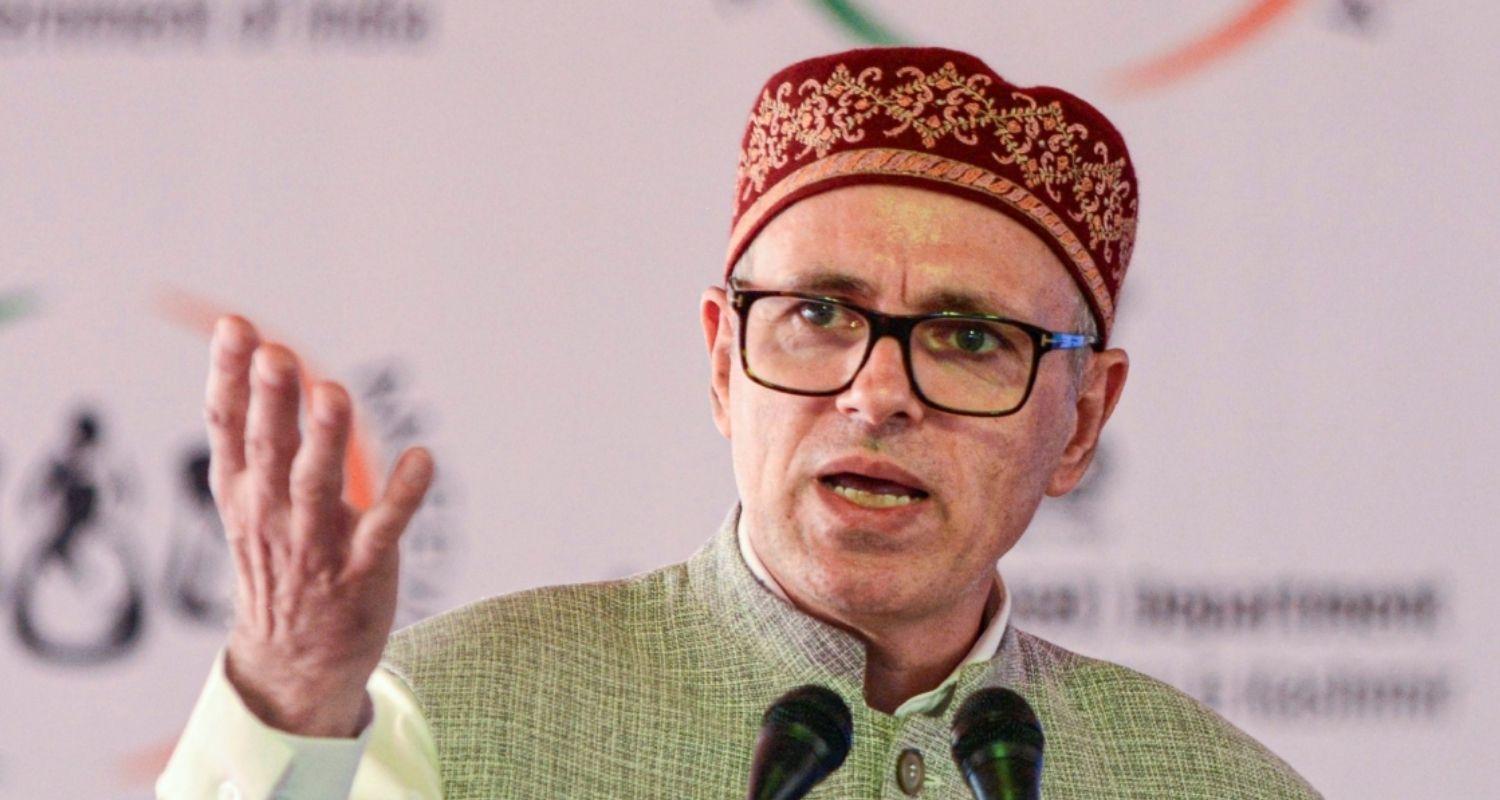
The BJP has strongly denied the charge and asked Omar to either name the leader who had made this offer or apologise.
Jammu and Kashmir Chief Minister Omar Abdullah is one of the very few opposition leaders who has always sounded conciliatory and cooperative towards the Bharatiya Janata Party-led NDA government at the Centre. To the extent that he even disputed the Congress’ allegations that the election results were rigged through the manipulation of the electronic voting machines (EVMs). This is despite his party the National Conference being a part of the INDIA bloc.
However, on Saturday, Omar came out with a shocking allegation against the BJP that it was trying to buy his party’s MLAs with offers to the tune of Rs 20-30 crore, ministerial berths and statehood for Jammu and Kashmir, which right now is a union territory.
The BJP has strongly denied the charge and asked Omar to name the leader who had made this offer or apologise.
The JK assembly has a strength of 95 members. While 90 are directly elected, five are to be nominated. Even after about two years since the elections, the BJP government has not nominated any of the MLAs. The effective strength of the assembly remains 90. Omar has the support of 52 MLAs. They include 41 from his own party, the National Conference, six from the Congress, one CPM and four independents.
The BJP has 29 legislators. Had it nominated five members to the assembly, its support would have been 34. Since even the five additional members would make no difference, the party showed no urgency in nominating the members, which otherwise is a Constitutional requirement. Two years of the assembly’s tenure have already lapsed.
Other opposition MLAs include four from the People’s Democratic Party, one each from the Aam Aadmi Party, the People’s Conference, Jammu Kashmir Awami Insaf Party and two independents. Except for the People’s Conference and two independents, none of the opposition MLAs can side with the BJP at any cost.
For forming the government, the BJP will need 17 more MLAs. If the BJP really wants to form the government from within the current assembly, there is no other way for the party to do that except for breaking other parties. This seems to be a highly unlikely proposition. Given the very restricted powers the elected government in Jammu and Kashmir has, the BJP really doesn’t need to topple an “elected government”, which though from the opposition bloc, is not even hostile towards the Centre. The actual power is exercised by the Lieutenant Governor, who, as long as the BJP is in power at the Centre, will do its bidding.
Also read: Omar Abdullah perfects the art of political pragmatism
At the same time, there is a certain level of disillusionment among a section of NC legislators. One of its party MPs, Aga Ruhullah has already turned a rebel. Given the limited power the government enjoys, the NC MLAs also feel powerless even after being in “power”. But for the NC MLAs, most of whom are from the Kashmir valley, joining the BJP will be suicidal, no matter how much price they may get.
The National Conference has a record of its MLAs defecting from the party. In 1984, when Omar’s father Dr Farooq Abdullah was the chief minister, 12 NC MLAs defected to Awami National Conference headed by his brother-in-law GM Shah and toppled the government, with support of the Congress. Those were the days of Prime Minister Indira Gandhi who had a record of toppling the non-Congress state governments. Omar apparently feels apprehensive of history repeating itself after 42 years.
When Omar contested the elections and formed the government, he was very much aware of the limitations of an elected government in a union territory. But that does not in any way prevent the government from providing services to the people. After all, Aam Aadmi Party supremo Arvind Kerjiwal ran a government for three terms. Like Omar, he also had limited powers. Still, he provided governance to the satisfaction of people there.
Although the ground realities in Jammu and Kashmir and the national capital are quite different, and Delhi has always remained a financially surplus ‘state’, yet there are several similarities between the two.
Omar has not been able to make the desired difference and impact in the UT. He appears to have started feeling anti-incumbency sentiment among the people. By claiming that the BJP was trying to topple his government, it was a clear message to the people of the valley that if his government collapsed, the next government will be that of the BJP, which an overwhelming majority of Kashmiris will not be comfortable with. In fact, Omar said it publicly that his only purpose of aligning with the Congress for the assembly elections was to assure the people of Kashmir that the NC can never go with the BJP. The BJP was part of the NDA during Vajpayee’s time and Omar was a union minister of state in that government.
Omar has been clamouring for restoration of statehood for a long time but does not see that happening anytime soon. The opposition, particularly the PDP led by Mehbooba Mufti has been targeting him for that and even accusing him of having a tacit understanding with the BJP.
That is the reason that his claims about BJP trying to bribe and buy his MLAs are aimed more at the people of Kashmir and the PDP than the BJP itself. And nobody is taking his claims seriously, not even his bitterest critics of the BJP in JK, like the PDP and not even the Kashmiris.
In 2020, Omar had announced that he would never contest elections till statehood was not restored. He had said he would not like to lead the most “disempowered assembly” in the country. But he contested the 2024 assembly elections, and the JK assembly, as he said, continues to remain the “most disempowered assembly”.