The needle hasn’t moved. Let alone in the right direction. It was in 2022 that the US suffered from one of its most blood-curdling incidents of gun violence in recent history. The Robb Elementary School mass shooting in Uvalde, Texas, left 19 students and two teachers dead, while the perpetrator, Salvador Ramos, an 18-year-old former student, simply had a history of “disturbed home life”.
The unfortunate incident sparked scathing headlines, national debate and global scrutiny, prompting then President Joe Biden to say, “it’s time for action.” For the first time, the motivation for action had the shelf life longer than a newspaper headline. The tragedy led to the federal gun safety legislation in three decades, the Bipartisan Safer Communities Gun Control Act, aimed to introduce background and mental health checks for buyers under 21. The law, however, did not fully address all proposed restrictions on firearms, let alone the complexities of public safety and gun legislation in the US.
The latest incident of mass shooting in Louisiana brings a case against the very loopholes not closed by the law yet. This week, a father in Shreveport, Louisiana, killed seven of his own children and one of their cousins, in an incident ruled by the police as a case of “domestic disturbance.”
The children, five girls and three boys, ranging in age from 3 to 11, were killed in what police described as an “execution-style shooting.” The horrific incident once again raises troubling questions on the epidemic of firearm violence in the US. Almost a week apart from the domestic mass shooting, yet another incident was brought to light from a mall in Louisiana, with two rival groups exchanging gunfire inside a food court.
They are guns, not gadgets
The numbers are not even the most unfortunate part. Social media feeds are filled with parents, some grieving, others fearful, that the chilling statistics are not the most concerning. It is the concrete inaction and political nonchalance over an issue that tremendously threatens public safety.
Does the US really put guns before lives? Does it value gun lobbies over and above the life of its school children? According to the K-12 school shooting database, there have been 233 shootings in 2025 on school campuses. A frightening number. A concerning statistic.
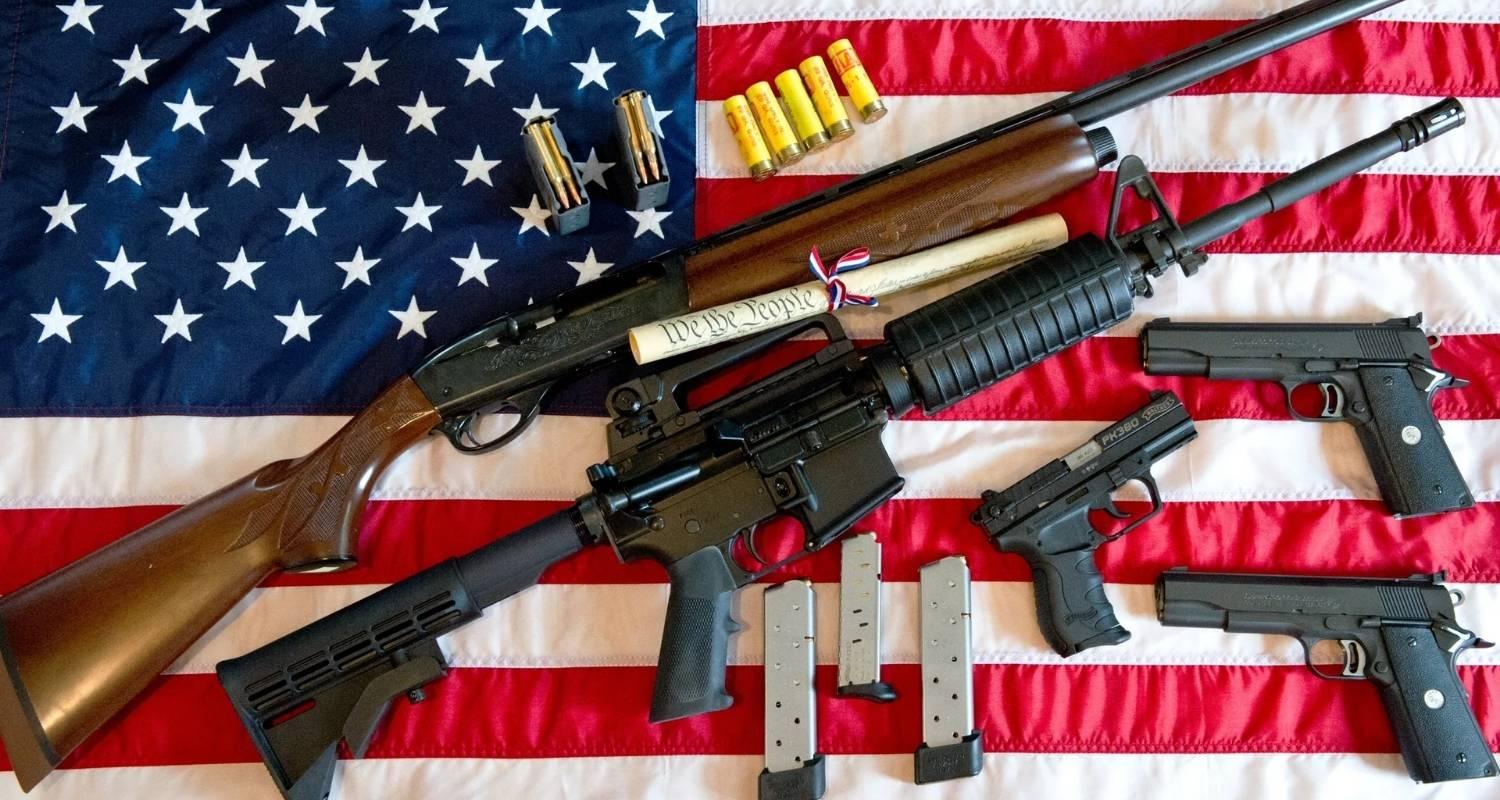
The US has closely witnessed what happens when owning a gun has the same ease as owning a gadget. One form, an instantaneous background check, locating a gun shop and selecting a firearm is all that stands between desiring a gun to acquiring a gun. According to 2017 data from World Population Review, the US with less than 5 per cent of the world’s population has the world’s highest gun ownership rate; almost 121 firearms per 100 residents.
Also read: US mass shooting in Louisiana leaves 8 kids dead, shooter killed
In 2024, the country went a step ahead and came up with a novel way for firearm owners to buy ammunition; through vending machines. A Texas-based company called American Rounds installed vending machines in supermarkets in the state of Alabama, Oklahoma and Texas making it even easier for the public to restore bullets.
When the Constitution is not an excuse
The public surveys and polls have made amply clear how almost all lawmakers, including Republicans and Democrats, non-gun owners and gun owners, professionals and business men alike want some sort of universal and stringent background checks in place before they can legally own a gun. The mandatory restrictions and licensing of all gun owners and thorough background checks will not be an anomaly but what is virtually followed in every civilised country of the world.
Gun ownership in the US is rooted in the Second Amendment of the Constitution which protects an individual’s right to possess a firearm, particularly for purposes such as self-defence at home. A fact reflected in numbers and crime metrics alike.
As of 2021, the US had the highest homicide-by-firearm rate among high-income countries, according to the Institute for Health Metrics and Evaluation. Using the Constitutional provision as a template, supporters of gun rights have argued that stricter laws would infringe on constitutional freedom. Gun lobbies allegedly have exploited the provision.
Every couple of years, an unforgettable tragedy and an avoidable mass shooting gets the public on the streets protesting for stricter gun controls and stringent background checks. Like the one in Las Vegas in 2017, which led to the killing of 60 people. A year later, a mass shooting at Marjory Stoneman Douglas High School in Parkland, Florida, left 17 dead.
There is no dearth of celebrities who have spoken against the weapon industry without mincing words. In 2022, following the Uvalde shooting, Jimmy Kimmel directly attacked the power corridors of the US, saying how, “They don’t want to speak about this. They’d rather sweep this under the rug. Most Americans support keeping guns out of the hands of criminals and want background checks… But cowardly leaders are not listening to us. They are listening to people who write them cheques, who keep them in power.”
This partly explains why there is no federal requirement for those purchasing a gun to have any firearm safety training either. Following the Las Vegas tragedy, American singer Tim McGraw said how there is some common sense that’s necessary when it comes to gun control. “They want to make it about the Second Amendment every time it’s brought up. It’s not about the Second Amendment.” As strongly alleged, it is about the gun lobby wielding major influence over federal and state policies.

 Follow us