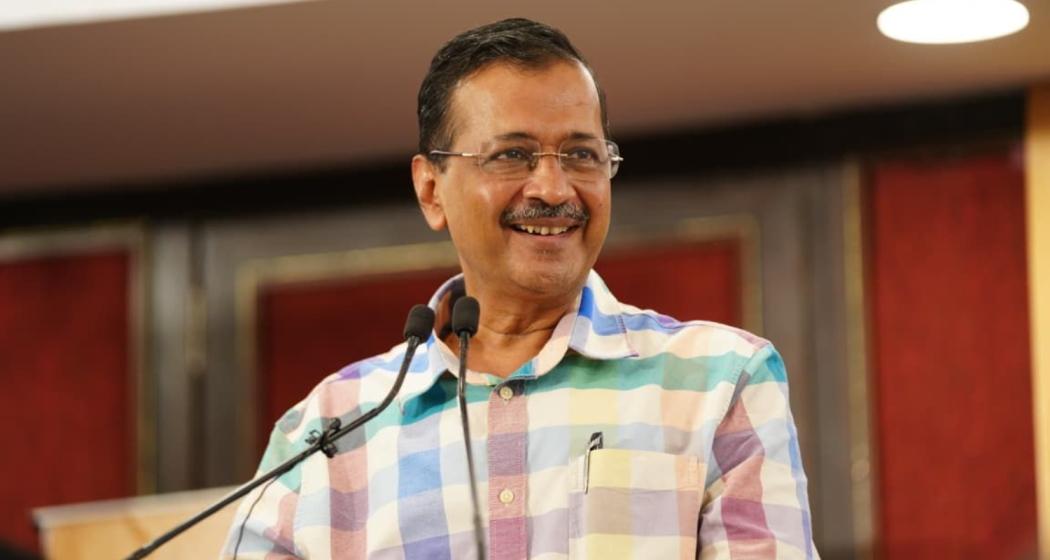
The Aam Aadmi Party supremo Arvind Kejriwal on Friday announced that the Assembly elections in Punjab might be advanced by three months to November this year from February 2027, when they are actually scheduled. The ruling party in Punjab is best placed among all parties for an early election, as the opposition parties are yet to organise themselves into election mode.
While there is no word from the Election Commission of India so far, there has been speculation for some time that, due to the second phase of the Census, which will be underway during January and February, elections in Punjab and other states where they are due around that time might be advanced to November or December this year. There is a strong likelihood of the elections being advanced, which may explain why Kejriwal chose to go public with the possibility before the ECI.
This is going to be a “do or die” battle for the AAP. The party’s existence is at stake. It has lost power in Delhi, and most of its MPs have already left. For the AAP, the Punjab elections will be an existential fight. Given what happened to the Trinamool Congress in West Bengal following its electoral defeat, the AAP cannot afford to take any chances. Otherwise too, the party faces an uphill task in Punjab, a state known for replacing incumbent governments. Barring 2012, Punjab has always witnessed a change of government. Even in 2012, it was a close contest between the ruling Shiromani Akali Dal-Bharatiya Janata Party alliance and the Congress in terms of vote share. The difference was just about one percentage point.
The AAP’s only hope is a fragmented opposition, which, though not in disarray, is certainly not well organised. The Congress, the principal opponent and the main challenger to the ruling party, is not yet in the battle mode it should have been. It continues to be dogged by the leadership issue. Although the party high command has reiterated time and again that there will be no leadership change, an element of uncertainty persists. The Congress has a perennial tussle at the top over who will become the Chief Minister. If the party is able to resolve the issue to everybody’s satisfaction, it could emerge as a formidable challenger to the AAP.
While the Shiromani Akali Dal has managed to revive itself after two consecutive devastating debacles in 2017 and 2022, the party is yet to return to its pre-2017 position. Even if it manages to reorganise and regroup, it is unlikely to be in a position to form a government on its own. The SAD has always depended on the BJP in Punjab to form a government. While, before the advent of the AAP, it enjoyed commanding dominance in rural areas, it lacked sufficient support in urban areas to form a government independently. The BJP traditionally compensated for this weakness.
Also read: Two years on, Naidu’s deft balancing act in Andhra
With the BJP so far insisting on going it alone, the SAD does not stand much chance of coming close to government formation. However, if it succeeds in consolidating its position compared to 2017 and 2022, it is likely to do so at the AAP’s expense, which in turn could benefit the Congress.
BJP’s bravado notwithstanding, the party is not in a position to make any significant impact in Punjab at this stage. Its presence remains largely restricted to urban areas, primarily among Hindu voters. The party appears buoyed by its performance in the 2024 General Elections, when it secured 18.5 per cent of the vote. However, it is unlikely to replicate that performance, as Assembly and parliamentary elections are entirely different contests.
All three opposition parties — the Congress, the Akali Dal and the BJP — are well versed in fighting elections. Even if the elections are held in November, there are still four months left, which is ample time. The ruling party, however, enjoys the advantage of being in government, wielding power and placing the “right people in the right places”.
However, given the West Bengal experience, where the Election Commission of India ensured the removal of officials whose impartiality was in doubt, Punjab may also witness a massive reshuffle, especially since opposition parties have consistently accused the AAP of misusing the official machinery.
Although there is nothing official about Kejriwal’s early election announcement, it has already triggered a sense of urgency among rival political parties to work out their strategies and fix organisational shortcomings. The AAP, for its part, has been in election mode for quite some time, with its entire leadership positioned in Punjab as it faces an existential challenge. The party’s concerns may have deepened further after the TMC debacle in West Bengal, which eventually led to the party’s decimation.

 Follow us