By VIMAL SUMBLY
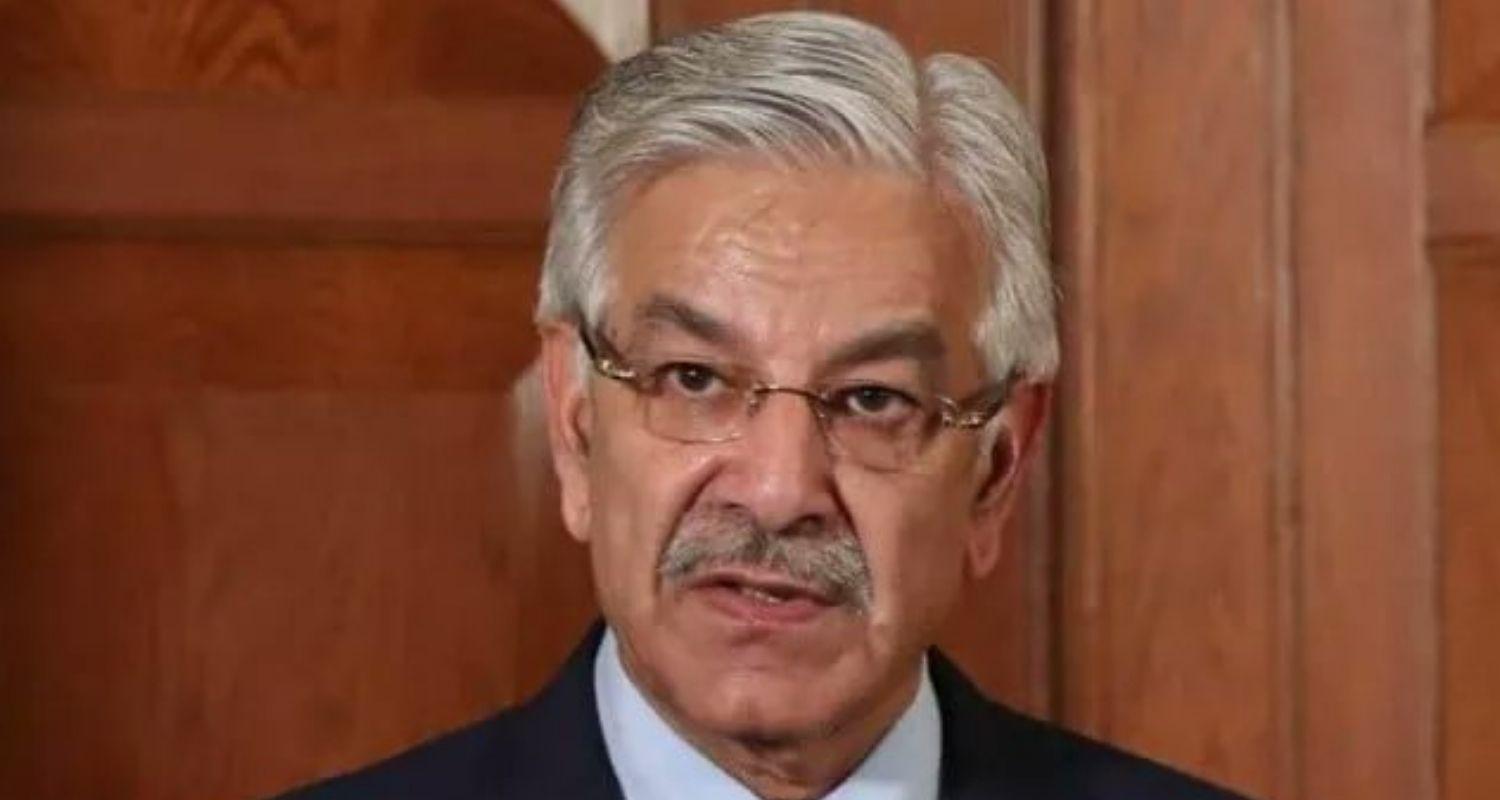
It is good that, at least, Pakistan’s political establishment has realised that the United States has used Pakistan as a “toilet paper” and eventually thrown it away after use. This was admitted by no less a person than Pakistan Defence Minister Khwaja Asif in the country’s National Assembly.
Contrast this with US President Donald Trump having hosted Pakistan military chief Asim Munir for lunch in June last year in the aftermath of Operation Sindoor. The high-profile lunch, probably for the first time and most likely the last time, had shaken the US diplomatic equilibrium in South Asia. The US under President Trump was seen having taken a completely different stance by warming up to Pakistan through its military chief, while seemingly sidelining India.
Even in India, Prime Minister Narendra Modi’s critics were holding it against him, terming it as his “diplomatic failure” since he once used to enjoy a good personal equation with Trump. It indeed was in complete bad taste that the Pakistan military chief had been hosted for lunch in the White House immediately after hostilities with India. Moreover, Munir was not only the agent provocateur but also the architect of Pahalgam terror attack, which eventually led to hostilities between the two countries. Munir poses himself like a radicalised mullah than a professional military commander.
It goes without saying that Pakistan hardly stands any chance with India in any sort of military confrontation. The narrative, built up by that country aside, and sadly bought by the Indian opposition parties, Pakistan eventually pleaded for a ceasefire once India retaliated lock, stock and barrel.
Trump claimed credit for making the two countries stop the war. He had his own agenda of furthering his claims over the Nobel Peace prize that is eluding him so far and most probably always will. He hosted Gen Munir, instead of the elected Pakistani Prime Minister Shahbaz Sharif, for lunch to get endorsement for the Nobel Peace Prize. And Munir paid for the White House lunch by supporting Trump’s claim for the Nobel Peace Prize.
Correspondingly, Trump adopted a hostile posture towards India in terms of the tariffs on trade. Initially, he raised the reciprocal tariff on Indian imports from three per cent to 25 per cent and then doubled it to 50 per cent as penalty for India buying the Russian oil. Trump claimed that by buying Russian oil, India was helping it to continue with the war on Ukraine. China imports more Russian oil than India but there was no punitive tax on China because of this.
The US has now reduced the tariffs on India to 18 per cent after the two countries agreed on a trade deal. This is one per cent less than the tariff the US charges on Pakistan.
In the meanwhile, the US also imposed an immigration ban on several countries, including Pakistan but excluding India. This was the first shock for Pakistan after the “newfound bonhomie” between its army chief and the US President. It goes without saying that these things really do not matter to Munir as the only thing he is concerned about is his iron grip on the government in Pakistan. He still feels safe in the knowledge that he has Trump behind him.
Also read: Caliph Munir and his Caliphate in the making
Pakistan Defence Minister Khwaja Asif’s rants against the US have both historical and contemporary reasons. Historically Pakistan did stand by the United States since the 1980s, after the then military dictator General Zia Ul Haq allowed his country to be used for training Afghan rebels/ mujahideen against the Russian Army in Afghanistan.
Later, another dictator Gen Parvez Musharaf also provided Pakistan military bases to the US for its operation against Taliban government in Afghanistan for shielding Al Qaeda terrorists, including its founder-head Osama bin Laden. Al Qaeda was responsible for the 9/11 terror attack that shook the United States.
Embarrassingly for Pakistan, Bin Laden was later found in Pakistan and was killed there by the US forces.
Asif may be crying hoarse today that Pakistan’s decline started since then, but it was the same Pakistan Muslim League headed by Nawaz Sharif which supported Zia’s policies that time. Pakistan got huge international aid in terms of finances and weapons in the bargain. In the process it fomented trouble in two Indian states of Punjab and Jammu and Kashmir.
Pakistan not only trained the Afghan Mujahideen, it used the training camps to train the Punjab and Kashmiri militants also. It supplied a huge quantity of arms and ammunition, first to Punjab militants and later to Kashmiri militants. It served its policy of “bleeding India with thousand cuts” very well. It had already tried to inflict two deep cuts on India.
But as then US Secretary of State Hillary Clinton famously remarked and reminded Pakistan that “you can’t keep snakes in your backyard and expect them to bite your neighbours only”, Pakistan started suffering the “snake bites” in due course of time. In an ironic development, Pakistan, which has always been the fountainhead of radical and extremist Islamism and terrorism, is now crying wolf about being the “victim” of terrorism.
The euphoria in Pakistan over Trump hosting its military chief for lunch in the immediate aftermath of the Operation Sindoor has already fizzled out. The Pakistan government seems to have realised, rather sooner than expected, that diplomatic relationships are not the sole discretion of a single person. No matter how desperate Trump may be for Nobel Peace Prize, even for him it will not be so easy to divert from the long-established diplomatic route in South Asia. The US warmth towards Pakistan ended at the White House dining table itself.
Khwaja Asif’s sharp and critical remarks against the US are apparently aimed at the country’s military chief as well. Since Munir considers his “personal equation” with Trump a badge of honour and power, stronger than the stars he wears on his uniform, any criticism against the US will obviously be not to his liking.
The Pakistan Defence Minister has conveyed the message to the US that just hosting the country’s military chief for lunch in the White House does not serve any purpose for the country. Pakistan, today, remains as abandoned as it was before Asim Munir’s White House lunch. And that is all the US could offer and more so Trump, for whom everything is dispensable. If he can dispense with trusted allies like Canada, European Union and NATO, Pakistan stands nowhere and Khwaja Asif put it so well, just like a “toilet paper” that can be easily discarded after use.

 Follow us