
Trending:
Separatist movement comes full circle in Kashmir
Now that the Jamat-e-Islami is willing to participate in elections, has the separatist movement come full circle in Kashmir? Follow us
News Arena Network - Srinagar - UPDATED: May 17, 2024, 03:58 PM - 2 min read
File Photo.
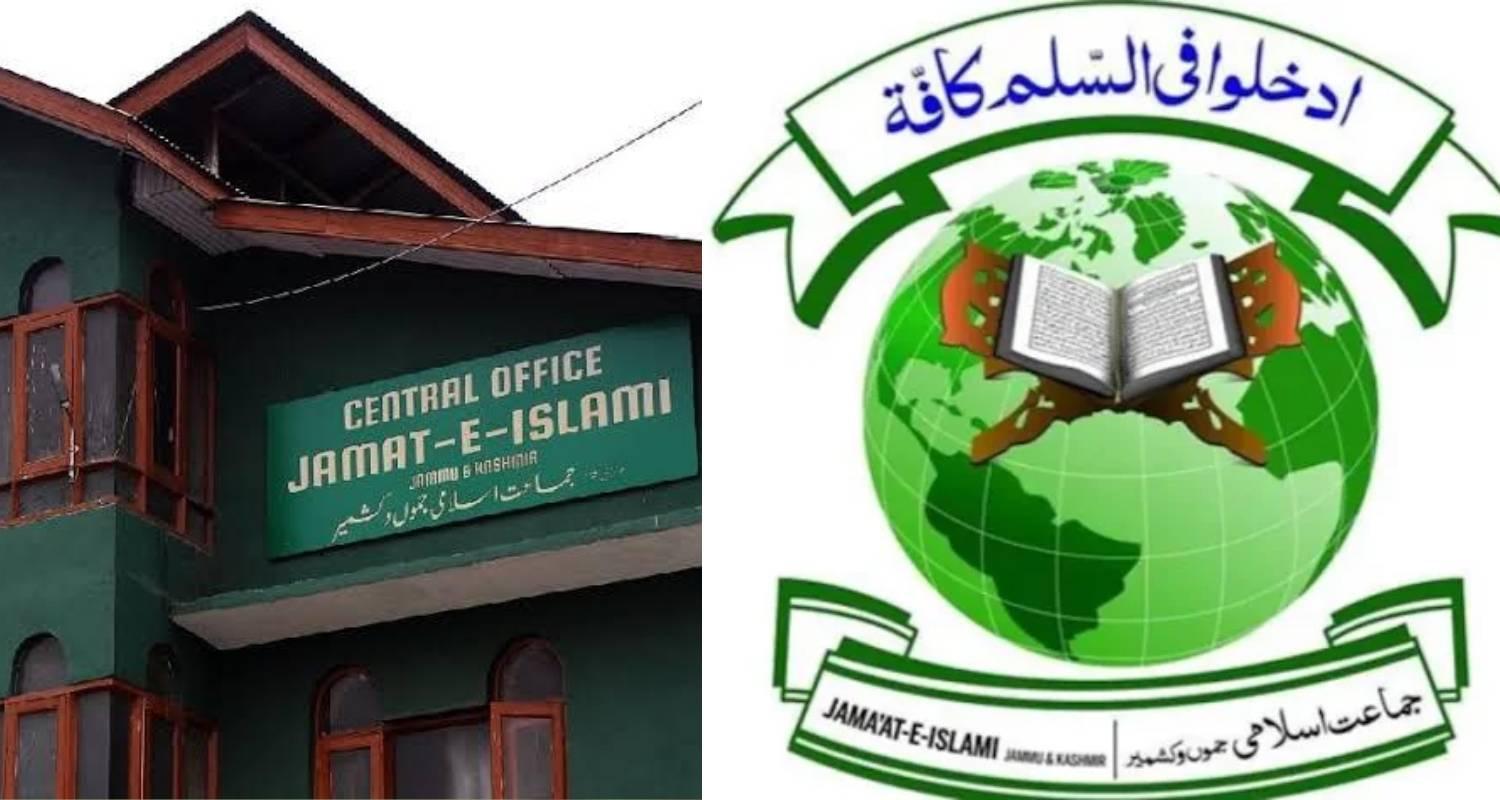
The separatist movement appears to have come full circle in Kashmir. Recently the Jamaat-e-Islami leader Ghulam Qadir Wani announced at a press conference that his organization was prepared to participate in the assembly elections, which have to be held before September under the Supreme Court of India directions, if the government of India lifts the ban on it.
The demand was seconded by former Jammu and Kashmir Chief Minister and National Conference leader Omar Abdullah also, who favoured lifting the ban from the Jamaat-e-Islami.
Otherwise, the Jamaat-e-Islami and the National Conference are two bitter rivals. Jamaat-e-Islami and its militant wing were responsible for the killing of so many National Conference leaders and workers, as well as other political leaders and workers, during the peak of militancy in Kashmir.
Jamaat-e-Islami was banned in 2019 in the aftermath of the abrogation of Article 370. Jamaat-e-Islami's willingness to participate in the elections is going to be a watershed moment in an already eventful sequence of events taking place in Kashmir since August 5, 2019, when Article 370 of the Indian Constitution was abrogated.
Although there was initially strong resistance against the abrogation of Article 370 in Kashmir, with all the mainstream political parties, including bitter rivals, closing ranks against it, over a period everyone appeared to reconcile to the reality that abrogation was an irreversible fact of history.
This was coupled with the firm hand with which militancy was dealt, at the same time providing a healing touch to the common Kashmiris. The government of India has managed to succeed to a great extent in isolating the militants and discouraging local youth from joining the militant ranks.
Plus the massive push to tourism in Kashmir has led to a complete turnaround of the economy, at least in the capital city of Srinagar. During the peak tourist season, an ordinary hotel room which would cost not more than Rs 5000 per night, now sells for as much as Rs 25,000 per night. This is reflective of the total boom in the tourism industry that has a ripple and trickle-down effect on other sectors.
The 38 per cent polling percentage in the Srinagar parliamentary constituency on May 13 was not an isolated incident. It was just a part and consequence of a series of developments that are taking place in Kashmir, particularly since the abrogation of Article 370.
Jamaat-e-Islami, in a way, was the fountainhead of separatist and extremist militancy in Kashmir. Although the armed militancy was started by the Jammu and Kashmir Liberation Front (JKLF), which claimed to be a “secular” organization, its roots were deep in the extremist religious ideology, much similar to that of Jamat-e-Islami.
JKLF may have claimed to be a “non-religious” organization, but its ideological affinity with Jamaat-e-Islami was natural. It can be safely said that in the initial days of militancy in Kashmir, starting from 1989, JKLF only acted as an armed wing of the Jamaat-e-Islami.
However, after the JKLF started to be seen as growing taller than the Jamaat-e-Islami, it found its militant wing, Hizbul Mujahideen, also known as ‘Hizb’ in short form. Both the JKLF and Hizb initially worked in close coordination providing all sorts of support to each other since they had a mutual interest.
As happens with all such movements, the two started to rival each other over the dominance in Kashmir valley. Then started some internecine incidents, which led to the killing of each other’s members.
Gradually, the JKLF was weakened and Hizb took control of the entire militancy in Kashmir thanks to the support from the Inter-Services Intelligence (ISI) of Pakistan.
Hizb and Jamaat-e-Islami were involved in killing hundreds of innocent people, who also included its political opponents like the members of the mainstream parties including the National Conference and the Congress.
While the Jamat-e-Islami “officially” observed a complete boycott of all the elections, which took place in 1996, it did support some candidates individually. Jamaat-e-Islami did support the People’s Democratic Party founded by Mufti Mohammad Sayeed, a former union Home Minister who later became the Chief Minister of Jammu and Kashmir.
The colour of the PDP flag is green like that of Jamat-e-Islami. Its election symbol, “pen and inkpot” once belonged to Jamaat-e-Islami. PDP’s affiliation with Jamaat-e-Islami goes beyond the colour of its flag and election symbol.
Apparently having realised that the people of Kashmir have moved past the extremist and secessionist era and are looking forward to living a normal democratic life, the Jamaat-e-Islami seems to have taken the most pragmatic decision of participating in electoral politics. Otherwise, it would have risked political irrelevance.
During the peacetime prior to 1989, the Jamaat-e-Islami remained quite a marginal and inconsequential force in Kashmir. It gained authority only during the militancy. Before the militancy it used to participate in electoral politics. Its founder late Sayeed Ali Shah Geelani was a three-time MLA.
In the 1987 assembly elections, the Jamaat-e-Islami had stitched together an alliance of like-minded parties and named it as Muslim United Front. Geelani and Sayeed Salaudin, the Pakistan-based chief of Hizbul Mujahideen, both contested the elections.
While Geelani won, Salaudin lost from Lal Chowk, in an election, that was widely alleged to be rigged. Salaudin was allegedly beaten up by the supporters of the National Conference candidate Ghulam Mohiudin Shah.
Salaudin later fled to Pakistan and commanded and dictated the extremist movement from there only. For a long time, he was the de facto ruler of Kashmir, ordering executions of people and issuing diktats that were strictly followed and observed. Both his sons worked in the Jammu and Kashmir government. Both were sacked later for anti-national activities.
As the militancy started to lose its sheen, because of multiple reasons, people in Kashmir started identifying themselves with mainstream politics. Jamaat-e-Islami's decision to participate in the elections is only the result of these developments.
It is not just a coincidence that all this has happened during the BJP regime at the centre or during the Prime Ministership of Narendra Modi. This regime did actually show the will that there will be zero tolerance for terrorism and secessionism.
Over and above, the regime went ahead with its promise of abrogating Article 370, which actually nourished the exclusivist and secessionist feelings in Kashmir. The moment it was abrogated, the secessionists suffered a psychologically mortal blow.
As assembly elections are likely to be held after the General Elections, which are currently underway, the course has already been set. In the assembly elections, the participation is going to be massive.
In all likelihood, it is going to be a repeat of the electoral battles of the 1980s, with a belief among people that the elections this time will not be rigged. Although there were several factors responsible for the emergence of secessionist and extremist militancy in Kashmir, rigged elections were definitely one of the most important of those.
Meanwhile, Kashmir promises to be looking forward to a new beginning for the assembly elections.