
Trending:
Two years on, Naidu’s deft balancing act in Andhra
The Telugu Desam Party-led NDA government in Andhra Pradesh marks two years in office with a focus on reviving Amaravati, restoring investor confidence, and expanding infrastructure. However, fiscal strain, rising debt, and heavy welfare commitments continue to challenge the state’s balancing act between development and financial stability. Follow us
News Arena Network - Chandigarh - UPDATED: June 13, 2026, 01:31 PM - 2 min read
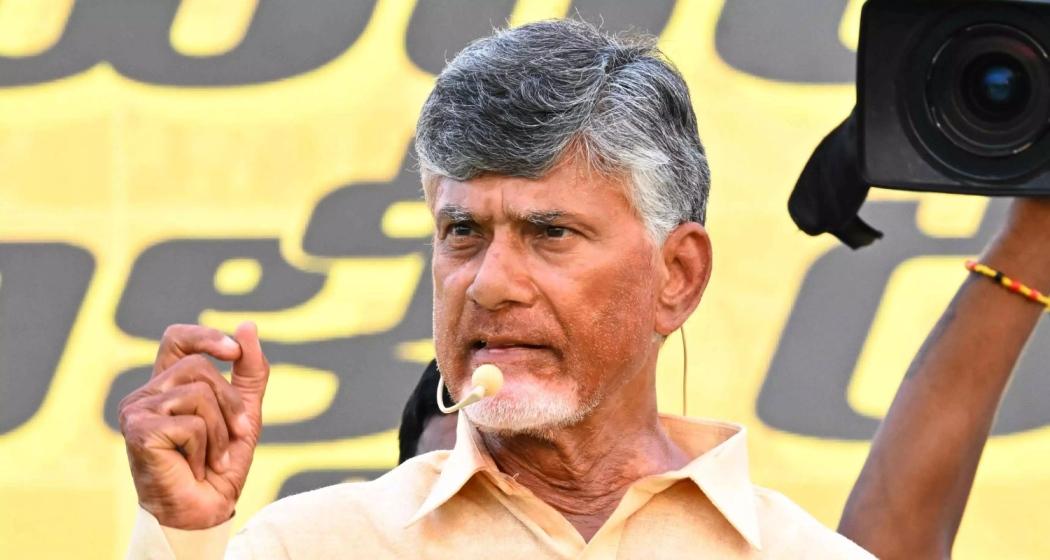
Chief Minister of Andhra Pradesh, N. Chandrababu Naidu. (File photo)
Restoration of investor confidence with proactive policies, aggressive adoption of technology in governance, and revival of works on Amaravati, the dream capital city project, are the key highlights of the Telugu Desam Party-led NDA government in Andhra Pradesh as it completed two years in office on June 12.
With the TDP being part of the central coalition, the advantage of a ‘double engine’ sarkar has certainly helped AP in terms of the flow of central funds. However, the state finances are under severe strain, as reflected by the growing fiscal deficit and burgeoning public debt.
Welfare spending has been a defining feature of AP. The financial crunch poses a major challenge for Chandrababu Naidu as he struggles to strike a balance between welfare commitments and development imperatives and mobilise resources to fulfil poll promises and fund the ambitious projects that are integral to his Vision-2047.
The NDA coalition, comprising the TDP, BJP, and Jana Sena Party, stormed to power in 2024 with an unprecedented mandate, bagging 164 of the 175 Assembly seats and 21 of the 25 Lok Sabha seats.
Naidu, a four-time Chief Minister who has weathered many political storms in the past, is tapping into his vast experience to steer the state out of choppy waters. The ‘investor-friendly’ image, focused approach on governance and fiscal reforms, and tough anti-corruption measures are his major strengths.
Fiscal Strain
The present regime has inherited a deeply strained fiscal position from the previous YSR Congress Party government from 2019 to 2024.
AP’s debt-to-GSDP ratio has ballooned to 34.1%, far exceeding the 20% limit recommended by the 14th Finance Commission. The state's outstanding liabilities stood at Rs 4.9 lakh crore as of 2024, with off-budget borrowings adding another Rs 5 to 6 lakh crore to the burden. This reflects the fiscal profligacy of the previous regime.
High debt servicing costs and off-budget liabilities constrain fiscal flexibility. The state needs to allocate nearly Rs 55,000 crore for interest payments by 2025, representing almost 20% of its revenue receipts. Nearly 40% of the state's revenue expenditure now goes towards interest payments and salaries, leaving very few resources for capital investments or social programmes.
Also read: Centre clears ₹13,000-crore Great Nicobar Airport Project
By 2025–26, the state's overall liabilities are expected to surpass Rs 11.2 lakh crore, which includes more than Rs 6.3 lakh crore from off-budget borrowings. The off-budget component is particularly alarming, as government entities have raised loans without legislative approval, which are comparable to official debt figures. The primary use of these borrowings has been for recurring expenses rather than building capital assets.
According to the fiscal health index published by NITI Aayog in 2025, Andhra Pradesh ranked 17th among the 18 states analysed, indicating a high level of budgetary strain.
Realising the capital dream
The revival of works on the Amaravati project, stalled during the previous regime, has been the biggest achievement of the Naidu government. When Prime Minister Narendra Modi himself re-launched the works on the ultra-modern capital city in the Vijayawada-Guntur region, it sent a strong political message to the sceptics.
Soon after coming to power in June last year, Naidu has been relentlessly working on reviving his dream project and has also secured loans from the World Bank and other financial institutions. Being a crucial ally of the NDA government, he also has solid backing from the Centre in executing the ambitious project.
The Parliament passed the Andhra Pradesh Reorganisation (Amendment) Bill, granting statutory status to Amaravati as the sole official capital of the state. Recently, the Union Cabinet approved two major infrastructure projects in Amaravati. These include an office complex and a residential township for government employees. The total investment for these projects is over Rs 2,500 crore.
The works on the project — a brainchild of Naidu — have been moving at a brisk pace. Phase I of Amaravati, comprising 92 projects, is estimated to cost Rs 64,910 crore. This includes infrastructure, housing, government buildings, and 19 iconic structures such as the Assembly building, a signature bridge, an NTR statue, a riverfront road along the Krishna, and major highway linkages.
Fast-tracking the Polavaram irrigation project, considered the lifeline of AP, is also credited to Naidu’s proactive approach.
Winds of Change
The main criticism against Jagan Mohan Reddy, Naidu’s predecessor and bete noire, was that his government’s hostile approach had scared away potential investors. Several industries exited the state.
Clearly, the mood has changed and investors’ confidence is back.
The State has attracted investment interest of Rs 23 lakh crore from various companies over the past two years, projected to create 23 lakh jobs. The government highlighted its "Speed of Doing Business" initiatives, with 800 companies expressing interest and 25.3% of national FDI flowing into the state.
In the last two years, 800 companies have evinced interest in investing in the state. Out of the Rs 23 lakh crore investment pledges, Rs 21.6 lakh crore are coming in the form of Memoranda of Understanding (MoU), said an official press release.
The Rs 16,000-crore Advanced Medium Combat Aircraft (AMCA) programme infrastructure project started its work in the state in just 36 days, while Naidu discussed with Prime Minister Narendra Modi to amend rules to attract Google AI data centre.
Out of the MoUs inked under the NDA government, more than 60 percent have crossed the stage of submitting detailed project reports (DPRs) to reach the grounding stage, the officials said.
Among the marquee investments announced during the last two years was Google’s proposed US$15-billion AI data centre in Visakhapatnam, considered one of the largest technology investments ever proposed in the state. Electronics giant LG Electronics also accelerated plans for a ₹5,000-crore manufacturing facility at Sri City. Similarly, ArcelorMittal Nippon Steel’s greenfield steel plant, foundation for which was laid at Anakapalle last month, is expected to be the largest of its kind in the country.
From destruction to development
On the eve of completion of two years in office, Chandrababu Naidu said his government is on the path to achieving economic revival, infrastructure expansion, and technology-driven governance. He claimed that his government had brought the state from “destruction” to the path of “development.”
“We are working continuously to fulfil people’s hopes and aspirations, with welfare, development, and good governance as our goals. The coalition government is striving for the welfare of “every section,” including farmers, women, youth, employees, and labourers,” Naidu said in a post on X.
Focus on flagship projects
Though the financial position of the state is not very encouraging, Naidu has accelerated progress on flagship projects like Amaravati and Polavaram.
The government has secured central support for both the projects and is determined to complete Polavaram by December 2028.
Naidu’s emergence as a crucial ally of the NDA 2.0 has proved beneficial for the state. For instance, his negotiations ensured financial backing for the Vizag Steel Plant, which he described as “a historic moment etched in steel”.
The government’s “Vision-2047” document outlines a long-term strategy for sustainable development, with initiatives like “WhatsApp Governance” enhancing transparency. Additionally, investments from global players like Google in Visakhapatnam signal a business-friendly environment, bolstered by Modi’s assurance of taxation stability.
“With the people’s blessings, we shall herald a new era of prosperity under the leadership of the Prime Minister,” Naidu said. The coalition’s unity has strengthened TDP’s position both regionally and nationally, giving Naidu leverage in coalition negotiations.