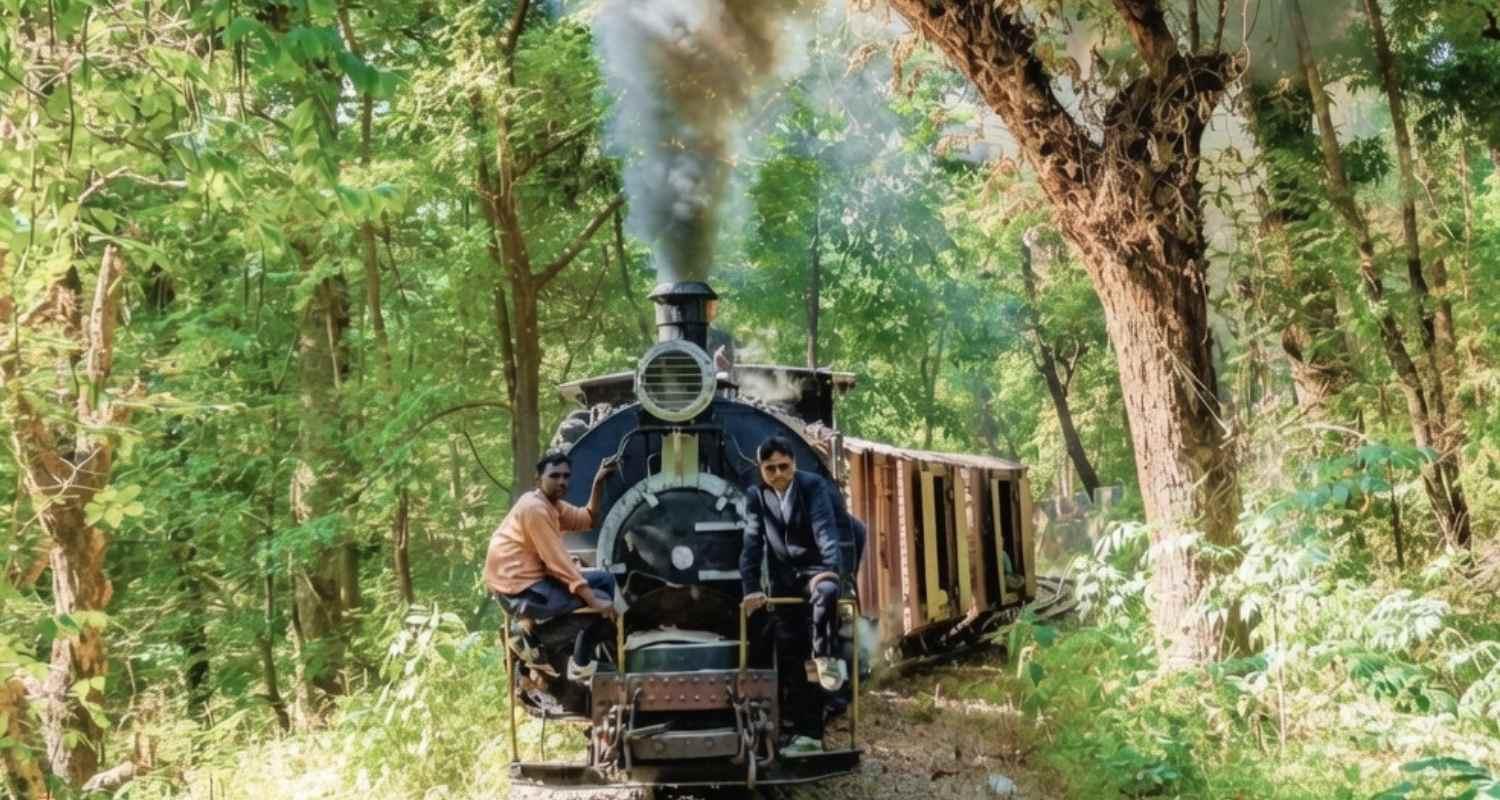
Snaking through mist-laced ridges, echoing with its unhurried ‘chug-chug ', the Darjeeling Himalayan Railway (DHR) has long been less a mode of transport and more a moving memory. Now, this century-old ribbon of steel is preparing to trade its mountain silences for a global spotlight. In a first-of-its-kind moment, the iconic “toy train” will represent India at UNESCO’s World Heritage Site Managers’ Forum in Busan, South Korea — an eight-day congregation of 21 nations beginning July 16. For DHR, this isn’t just participation; it is a debut on the world stage as a storyteller of India’s living heritage.
“This is not merely representation — it is recognition,” remarked DHR Director Rishabh Chowdhury, underscoring the symbolic weight of the moment. The railway, he explained, will present not just its engineering legacy but its cultural heartbeat — the delicate interplay between Darjeeling’s identity and the train that has, for generations, stitched together its people, landscapes, and stories.
At Busan, the narrative will go beyond nostalgia. It will explore how a heritage system survives not by resisting change, but by negotiating with it. The forum’s central theme —preserving “living heritage”— aligns seamlessly with DHR’s own evolution, offering both a platform and a classroom.
Because behind the romance lies a quiet reinvention.
Once viewed as a relic, the railway has undergone a subtle yet determined transformation under the Northeast Frontier Railway. Its revival story is not loud, but it is profound. Century-old steam locomotives — numbers 606A, 607B, and 801B — have been painstakingly restored using indigenous expertise, breathing life back into machines that once seemed destined for museums.
Yet, the miracle isn’t just mechanical.
In a region perpetually threatened by landslides and monsoon fury, the DHR has developed a reputation for resilience bordering on defiance. Tracks buried one day are often cleared the next. Services resume with remarkable urgency, as if the railway refuses to let the mountains dictate its rhythm.
At the same time, the experience itself has been reimagined. Heritage now coexists with curated tourism: glass-roofed Vistadome coaches, themed journeys like the ‘Jungle Tea Safari’ and the ‘Bagheera Trail,’ and dining cars that turn travel into theatre. Stations such as Ghum, Sukna, and Tindharia are being carefully reworked—not erased, but reinterpreted—preserving their old-world charm while accommodating modern expectations.
This is not preservation frozen in time. It is preservation in motion.
Busan, then, will not just hear about a railway. It will encounter a philosophy: that heritage, to endure, must breathe; that history, to remain relevant, must evolve without surrendering its soul.

 Follow us