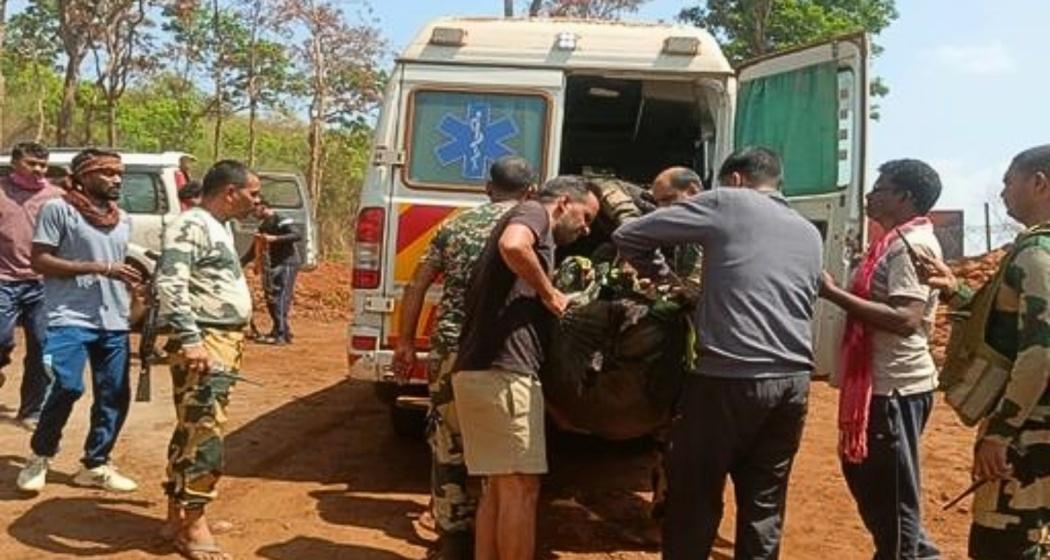
Three personnel of the District Reserve Guard (DRG), including an inspector, were killed and another injured on Saturday when an improvised explosive device (IED) detonated during a demining operation in Kanker district of Chhattisgarh.
The blast occurred in a forested area under Chhotebethiya police station limits, near the Narayanpur district border, as a DRG team was conducting an operation to trace and defuse explosives planted earlier by Naxalites.
During the exercise, security personnel located an IED. The device, however, exploded while they were attempting to neutralise it, critically injuring four personnel engaged in the operation.
Inspector Sukhram Vatti, constable Krishna Komra and constable Sanjay Gadhpale succumbed to their injuries at the site. Another injured constable, Parmanand Komra, was shifted for treatment and is receiving medical care.
The incident marks the first blast linked to Naxalite activity in the state since March 31, when the country was declared free from armed Maoists.
Inspector General of Police, Bastar Range, Sundarraj Pattilingam, outlined the broader context of ongoing anti-Naxal operations in the region. He said that intelligence inputs gathered over recent months, including information from surrendered Maoist cadres, had enabled security forces to locate and neutralise a large number of explosives.
Also read: Malaria outbreak hits anti-Maoist operations in Jharkhand
“However, in today's unfortunate incident, the IED accidentally exploded while the Kanker district police team was trying to defuse it, resulting in the death of three personnel and serious injuries to one,” Pattilingam said.
The Bastar range, comprising seven districts including Kanker, has witnessed sustained operations aimed at dismantling remnants of Naxalite networks. Security forces have intensified search and demining exercises in forested pockets where insurgents had earlier planted explosives to target patrols and disrupt movement.
Saturday’s explosion underscores the persistent risks faced by personnel engaged in such operations, particularly in areas with a history of insurgent activity. The process of detecting and defusing IEDs remains among the most hazardous aspects of counter-insurgency efforts, often requiring close-range handling under unpredictable conditions.
Authorities continue to rely on a combination of ground intelligence, surveillance, and coordinated field operations to secure affected regions and prevent further incidents. The injured constable remains under medical supervision as efforts continue to stabilise his condition.

 Follow us