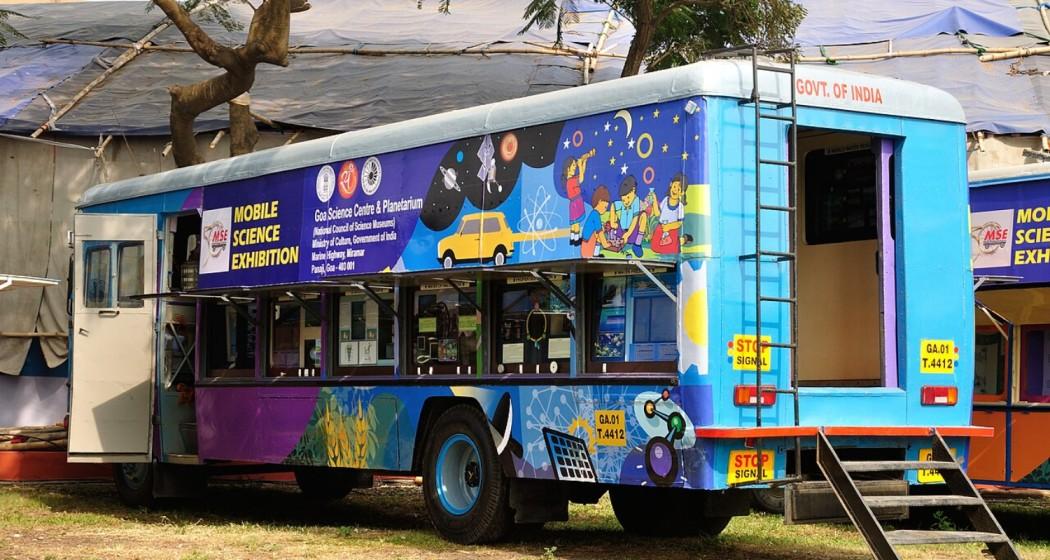
The Goa government has launched a mobile 360-degree digital planetarium and STEM outreach programme titled ‘Taare Zameen Par’, aimed at promoting scientific thinking and curiosity among school students, particularly in rural areas.
The initiative, rolled out on April 15 by Chief Minister Pramod Sawant, will be implemented across PM SHRI schools with a focus on government institutions.
Sawant said the programme seeks to move beyond textbook-based education and encourage scientific temperament, curiosity and critical thinking through experiential learning.
The outreach features an inflatable mobile planetarium equipped with advanced digital projection systems, offering immersive and interactive astronomy sessions for students.

“It also includes hands-on STEM kits to encourage a learning by doing approach, enabling students to better understand science and technology concepts through practical exposure,” Sawant said.
Envisaged to cover schools across Goa, particularly in remote and underserved regions, the programme will operate through a dedicated mobile bus, making science education more accessible.
Also read: Chatbots' medical information is inaccurate, incomplete: Study
Programme mentor and science communicator Rohit Nikam said the outreach, under the “Sparks of Curiosity” initiative, aims to bring astronomy and science
closer to students through interactive experiences.
“The key attraction is the 360-degree digital planetarium, which makes such rare experiences accessible to rural students. Along with this, we demonstrate curriculum-based exhibits and hands-on activities like water rocket launches,” he said.
Nikam added that the programme has already reached nearly one crore people across India, including in states such as Punjab and border areas of Kashmir, helping bridge gaps in science education in remote regions.

Teachers who attended the sessions highlighted the impact of the initiative on students’ learning.
Gauravi Naik from Utkarsh High School in Rivona, Sanguem said the planetarium offered a rare opportunity usually limited to science centres.
“Around 50 students attended and gained practical understanding of topics like stars and the solar system, strengthening their concepts in science and geography,” she said.
Shivani Lolayekar from Government High School, Zambaulim said the initiative provided valuable hands-on exposure.
“It has enabled students to better visualise and understand concepts related to space. It has boosted their interest and excitement in learning,” she added.
The programme aims to widen access to experiential science education and foster greater interest in STEM subjects among students across the state.

 Follow us