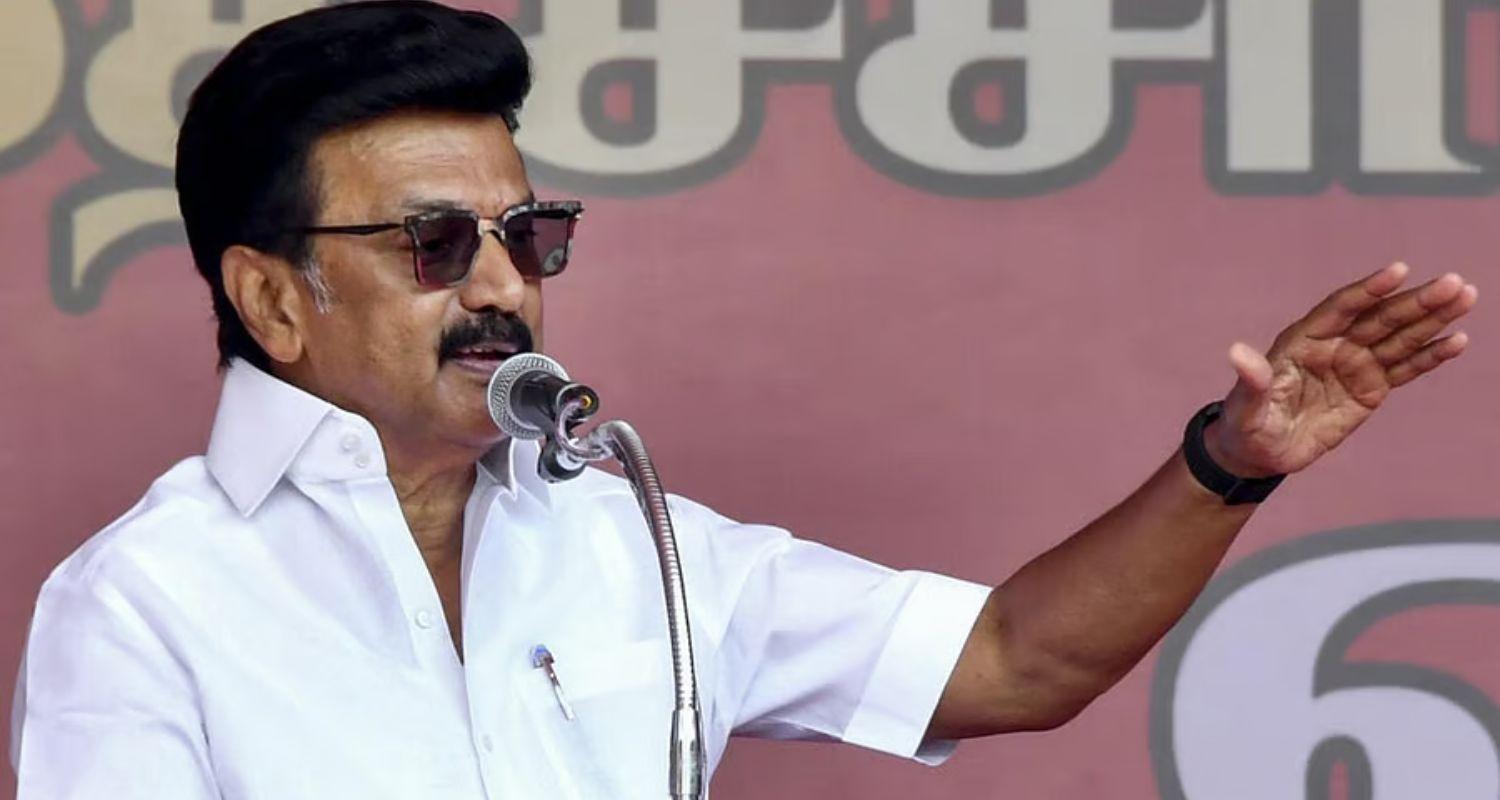
Tamil Nadu Chief Minister MK Stalin on Saturday launched a strong attack on recent CBSE curriculum changes linked to the National Education Policy 2020, calling them a “deeply concerning and well-planned attempt” that reinforces fears of Hindi imposition.
In a sharply worded statement, Stalin said the move goes beyond routine academic reform and reflects a broader political agenda by the BJP-led NDA government to prioritise Hindi under the pretext of promoting “Indian languages.”
Criticising the implementation of the three-language formula, Stalin argued that it effectively compels students in non-Hindi-speaking states to learn Hindi.
“For students in southern states, this is nothing but compulsory Hindi by another name,” he said, raising questions about the lack of reciprocity in the policy.
He asked whether students in Hindi-speaking states would similarly be required to learn languages such as Tamil, Telugu, Kannada, Malayalam, Bengali, or Marathi. According to him, the absence of such provisions highlights a structural imbalance.
The Chief Minister also pointed to inconsistencies in the Union government’s approach, noting that Tamil has not been made compulsory in Kendriya Vidyalayas, nor has there been adequate recruitment of Tamil teachers— despite claims of promoting linguistic diversity.
He further questioned the practical feasibility of implementing the policy, citing concerns over the availability of trained teachers, infrastructure, and financial resources.
“This appears to be yet another centrally driven scheme lacking planning, resources, and accountability,” Stalin said.
Framing the issue as one of federalism, Stalin warned that the policy could create structural advantages for Hindi-speaking students in higher education and employment, thereby deepening regional inequalities.
He also stressed that at a time when students must prepare for emerging sectors such as artificial intelligence, animation, VFX, gaming, and comics, additional linguistic burdens could hinder their academic progress and critical thinking.
Calling the move “an assault on cooperative federalism,” Stalin accused the Centre of ignoring repeated concerns raised by several states, including Tamil Nadu.
“India’s strength lies in its diversity, not in enforced uniformity,” he said, cautioning that disturbing this balance could have serious consequences.
Stalin also turned his criticism towards the opposition AIADMK, questioning its stance on the issue.
He specifically asked whether AIADMK leader Edappadi K Palaniswami and NDA allies would accept such measures or “stand up, at least once, for the future, identity, and rights of our students.”
The remarks come amid growing political debate over language policy and education reforms, with the issue likely to remain a key point of contention between the Centre and several opposition-ruled states.
Also read: DMK’s Udhayanidhi files papers for Chepauk constituency

 Follow us